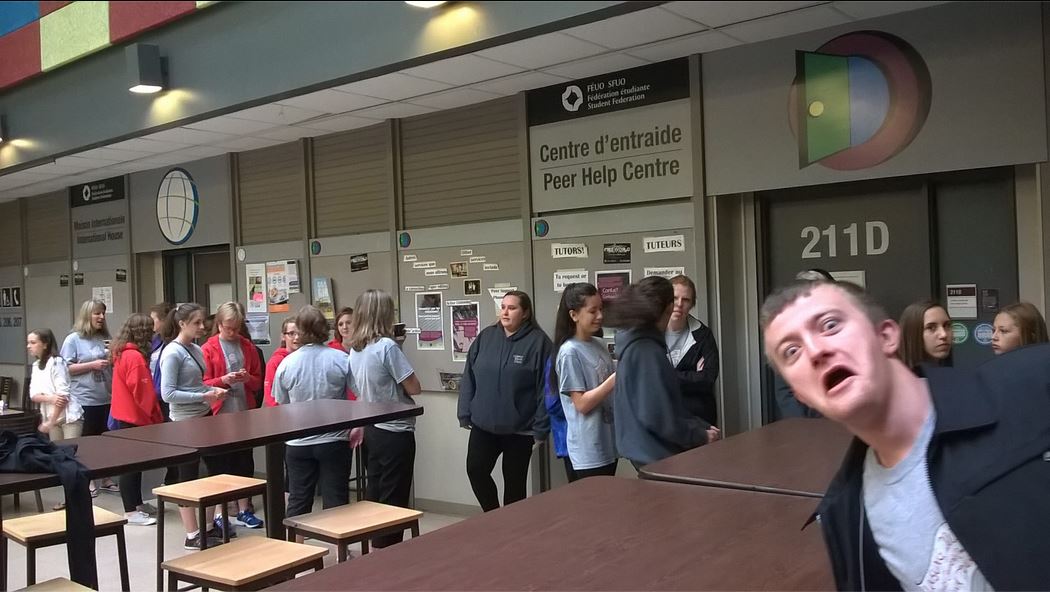
Today was a very eventful day. We went to the Museum Of Canadian History, the mall and had our first mass rehearsal for Unisong!
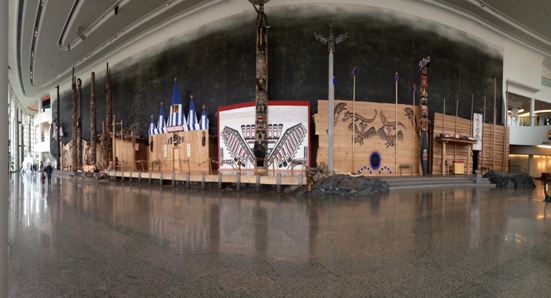
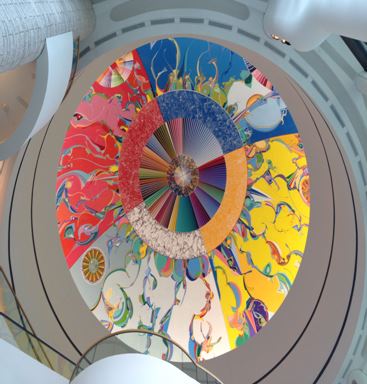
We woke up quite early to grey skies and the smell of rain, making sure we were dressed in the right choir tee shirt for the day (it matched the sky). Crossing the river into Québec, we went to the Canadian Museum of History – a riveting and informative experience. We learned about the Confederation and Rebellions of 1867. Another exhibit was the Magna Carta, which was showing two of the six documenting the original Magna Carta. There were many other exhibits at the museum: one dedicated to Terry Fox and the other about the ancient Greeks.
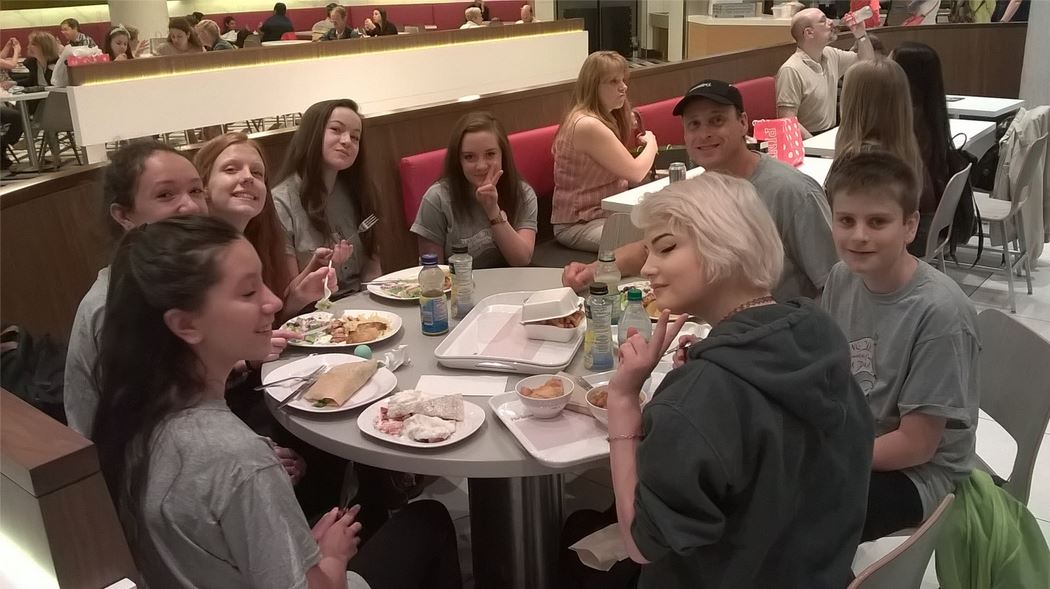
The trip to the mall was an explosion of free time and choir children running loose. There was a surprisingly eco friendly serving system, using plastic trays and plates and metal cutlery. When done with the dishes, facility operators cleared and cleaned so they could be used once more.
photo by Paul Vanhoutteghemphoto by Paul Vanhoutteghemphoto by Paul Vanhoutteghemphoto by Paul Vanhoutteghemphoto by Paul Vanhoutteghem
The first mass rehearsal could be best described as busy, exciting and difficult. We met new people and learned new techniques for singing. The man conducting the mass choir is Mark G. Sirett and he focused attention to technique and detail. He was energetic and exuberant! I’m sure tomorrow will be filled with more fun and adventure along with singing!
People have been singing together for as long as we have kept recorded history. The history of Western choral music as we know it today had its origins in sacred music.
Gregorian chant was commonly used in churches as a form of worship. Monks would sing the passages in unison, blending their voices to create the sound that we strive to achieve in modern choir; many voices sounding as one.
https://www.youtube.com/watch?v=eC6OKIYXBxQ
As music composition matured, the use of several different tones began to be common. Polyphony, or as we began to be used in increasingly complicated iterations. As polyphonic sound increased the breadth and depth of music heard in church, composers began to seek a greater range of sound. Since women were not allowed to sing in church, composers turned to the high soprano sounds of young boys, who were able to sing the treble lines.
Church music reflected the changes of society and with the Reformation of the 16th century, sacred music was forced to adapt. In order to clarify the words sung in sacred music, reformists insisted that there by one syllable per note, thus signaling an end to the prevalence of polyphonic music, and giving rise to homophonic music. Instead of the vertical lines of melody overlapping, there melodies would move at one, on different pitches. Focus on text had another effect on music – it resulted in a greater focus on the marriage between text and melody. This is best reflected in madrigals (which we will feature in our spring concert!)
https://www.youtube.com/watch?v=1w38kHRd0vE
Choral music began to leak outside of the church, and into more secular performances. Though still used in church, choral music in the secular arena had greater license to experiment away from the rigid strictures of the church. Often instruments would double the voices of the choir, but increasingly, choirs were used to enhance instrumentation, and to add another important layer to music. The use of text allowed another layer of communication, and the audience responded appropriately. Several of the most famous choral moments in history involved the use of large choirs singing with large symphonies, as seen in Beethoven’s 9th Symphony – Ode To Joy:
https://www.youtube.com/watch?v=xBlQZyTF_LY
With the advent of modern music, many people think that choral music has fallen by the wayside. But this is categorically untrue. More than ever, people seek the togetherness and intimacy that singing with others affords. This is seen with the myriad of choral groups available in every major city in the world. The advent of technology also introduces a new kind of creativity in choral music, best illustrated with events like Eric Whitacre’s Virtual Choir. (Check out his great Ted Talk about the process!)
Though choral music has a long and illustrious history, it is far from over! If anything choral music is just getting started. After all, the joy and wonder of singing with others is something that will never go out of style!
What is your favourite kind of choral music? Let us know in the comments below!
Come and check out our annual Folk Concert on March 8th, 2014 at the Rozsa Centre, and hear some great examples of Spanish folk songs!
Folk music has a long history, and because of the nature of the music, it has no definitive historical date of origin. It is widely considered to be the ‘music of the common people’ . In the latter part of the 16th Century, only a small, elite portion of society was taught to read, and practice traditional music. The peasants, although almost all illiterate, still played, and enjoyed music. But because they could not read or write, they had to learn music using alternate methods, primarily through oral transmission.
Thus folk music is largely music that was not written down, but passed from person to person by listening and performing the songs many times. It is usually quite specific to the region and culture that it comes from. For example, many Canadian songs from the Maritimes discuss the fishing industry, because it was such an important aspect of Maritime culture.
Since there are no definitive dates for folk music, stylistic characteristics are the common determinant of music belonging to this genre.
– music acquired through oral transmission
– folk music is generally very regionally and culturally specific
– the composer for pieces of folk music is usually unknown
– there are many different versions of the same song
What are some of your favourite folk song? Tell us in the comments below!