Category: Cinema

  • Spring Concert Roundup! Songs of the Cinema

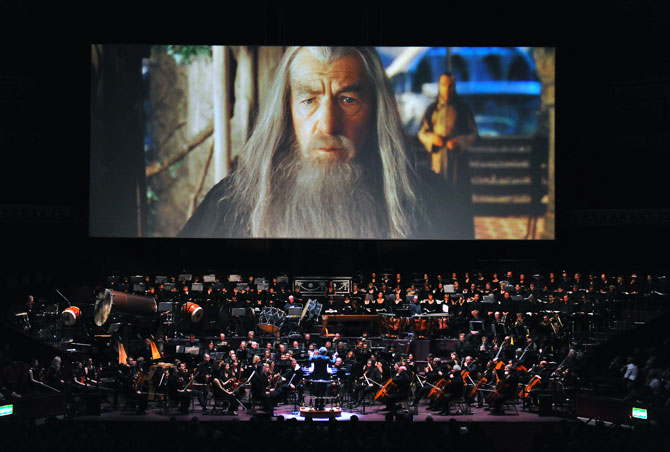
    On Saturday May 10th, 2014 we had our final concert of the year – our annual spring concert at the Rozsa Centre. This year, our theme was Songs of the Cinema, and we paid musical tribute to all of our favourite music from movies! Featuring music from The Lord Of The Rings, The Lion King, Mary Poppins, Les Miserables, and Frozen, we had so much fun singing music from our favourite films!

    We were very fortunate to have Jonathan Love as the Master of Ceremonies for our concert, as well as a myriad of amazing musicians, including David Thaiw as our fantastic drummer! Our voices were joined by those of the St. Giles choir, and the Crescent Heights High School choir. We hope you enjoyed the evening as much as we did!

    Calgary Children's Choir


    David Thaiw


    Jonathan Love


    Calgary Children's Choir


    Calgary Children's Choir


    Calgary Children's Choir


    Calgary Children's Choir


    Calgary Children's Choir


    Calgary Children's Choir

    Photography by Brieannah Mollison-Read


    Thank-you to everyone for a wonderful year of music and fun! Hope to see you at our end of year banquet on May 25th!

    = Calgary Children's Choir


  • Songs Of The Cinema: How Film Orchestras Work

    In preparation for our upcoming concert, Songs of the Cinema on May 10th 2014, we are starting a blog series of the same name, which will focus on a different aspect of ‘movie music’ each week!

    filmscore


    A film orchestra is a very specialized type of ensemble musical group. For the most part, orchestras that have been assembled to record the score for a film do not perform in public.  For the most part, the specialty of a film orchestra is to record in studio the music that has been composed for a film.

    During these recording sessions, the studio is filled with sound recording equipment, in order to capture the best sound, and minute details. In most cases, the film is projected onto a large screen in the recording studio. This adds greatly to the performance from the musicians. Film orchestras require a level of precision and technicality that greatly enhances the performances from the actors on the screen.

    Here is a great video demonstrating the scoring, and recording of the music from Canadian composer Howard Shore for the movie The Hobbit:

    Here is a similar video from Star Wars composer, John Williams:

    https://www.youtube.com/watch?v=K0ezvZo2AWc

    An interesting area in which orchestral recordings is developing is in the music for video games. Here is a video looking at the music, and orchestral recording for the Harry Potter video game:


    For those interested, this is a very informative blog that takes a look at scoring for film. It has some fascinating insights into sound recording, and orchestral film recordings.


    What do you think of film orchestras? Tell us in the comments below!

    = Calgary Children's Choir

  • Songs Of The Cinema: The Role of Music in Movies

    In preparation for our upcoming concert, Songs of the Cinema on May 10th 2014, we are starting a blog series of the same name, which will focus on a different aspect of ‘movie music’ each week!

    music-score


    Music plays an important, and often essential role in creating the appropriate atmosphere in a movie. The score of a film can help to convey subtle emotions, and enhances the performance of the actors greatly. For instance, if you watch a horror movie on mute, the film is nowhere near as frightening. The music adds, suspense, anticipation, and often foreshadows story elements.

    Another, important use of music in film and theatre, is the use of musical themes. Often, important characters in scored films will have a theme associated with their character, as in the case of the massively popular series, Star Wars. Here is the theme music written for Princess Leia:

    This music is heard throughout the film, associated with Princess Leia, and it helps the audience to familiarize themselves with her character. The most popular theme from the Star Wars films, is the infamous Imperial March. This music conveys power, and control. It is precise, and militaristic, and perfectly encapsulates the character of Darth Vader.

    https://www.youtube.com/watch?v=xPK3IJBiTDs

    One of the most subtle, and nuanced aspects of a scored film, such as Star Wars, is the use of leitmotifs. This is a musical device used most notably by Richard Wagner in his operas. A leitmotif is a musical phrase associated with a person, place, or idea. A leitmotif occurs often within a work, in different incarnations, and there can be multiple leitmotifs, depicting many people, places or ideas.. The rhythm, and structure of the leitmotif can change slightly, but it remains the same musical phrase at its core.

    The purpose of the leitmotif is to enhance the characterization and narrative of a story, by adding another layer of information through music. Leitmotifs can help foreshadow, they can serve as reminders, and character associations. Here is a brilliant example of one of the leitmotifs used by John Williams in his Star Wars score. Note how the leitmotif changes slightly in each scene, but is still musically recognizable as the same musical idea.


    What’s your favourite film score? Tell us in the comments below!

    = Calgary Children's Choir

  • Songs Of The Cinema: Famous Film Composers

    In preparation for our upcoming concert, Songs of the Cinema on May 10th 2014, we are starting a blog series of the same name, which will focus on a different aspect of ‘movie music’ each week!

    Note

    With the advent of sound in cinema, composers became of paramount importance in establishing the mood of the movie. Their work contributes greatly to the subtlety and nuance of the performances seen on screen! Here are several notable film composers:

    Bernard Herrmann: (June 1911 – December 1975)

    bernardherrmann Herrmann was an American composer, who was best known for his collaborations with the movie director, Alfred Hitchcock. His music was heard in the films Psycho, and Vertigo. As well, he composed music for Citizen Kane, The Day the Earth Stood Still, and the television program, The Twilight Zone.


    Leonard Bernstein: (August 1918 – October 1990)

    leonardbernstein

    Bernstein was an American composer, and is one of the most well known film composers. He is considered to be the first of the truly successful cinematic composers, and his work was truly prolific. His music is heard in such productions as Peter Pan, On The Town, and most famously, West Side Story.


    Elmer Bernstein: (April 1922 – August 2004)

    Elmerbernstein

    Bernstein was another American composer, and is no relation to Leonard Bernstein. His music has been heard in such movie classics as, To Kill A Mockingbird, The Black Cauldron, and most famously, Ghostbusters.


    John Williams: (February 1932 – present)

    JohnWilliams

    John Williams is one of the most famous film composers of all time, due in large part to his work on blockbuster movies. His film credits include, Jaws, E.T., Home Alone, and the first three Harry Potter films. But he is most famous for his work with George Lucas on the Indiana Jones films, and the Star Wars series.


    Howard Shore: (October 1946 – present)

    Howardshore

    Howard Shore is a Canadian composer, who has contributed to over eighty films. His film credits include, The Silence of the Lambs, Gangs Of New York, and Panic Room. Howard Shore is most famous for his film score in The Lord Of The Rings movies.


    Hans Zimmer: (September 1957 – present)

    LR-Hans-ZimmerHans Zimmer is a German composer, who has composed the music for over 100 films. His film credits include, The Lion King, The Thin Red Line, Sherlock Holmes, and Inception.


    Lisa Gerrard: (April 1961 – present)

    LisaGerrard

    Gerrard is not as famous as the other composers on the list, which is due in large part to her collaborations with Hans Zimmer, whose name is often the first associated with their collaborations. Lisa became more well known after she worked with Zimmer on the film Gladiator, but she has a myriad of titles to her name, including, Whalerider, King Arthur, the trailer music for Man Of Steel, and most recently, I, Frankenstein.


    Are you familiar with these film composers? What is your favourite film score? Tell us in the comments below!

    = Calgary Children's Choir


  • Songs Of The Cinema: Movie Musicals

    In preparation for our upcoming concert, Songs of the Cinema on May 10th 2014, we are starting a blog series of the same name, which will focus on a different aspect of ‘movie music’ each week!

    film


    Movie musicals are a genre of film, and were a natural extension of theatrical musicals, when audio technology advanced to a point where musicals could be successful on screen.

    Although there were a few short films that included music in the movie, but without an audio track. The first feature length film including both music and an audio track with dialogue (although admittedly the dialogue was sparse), was The Jazz Singer, released by Warner Brothers in 1927. This marked the golden age of movie musicals, spanning nearly three decades.

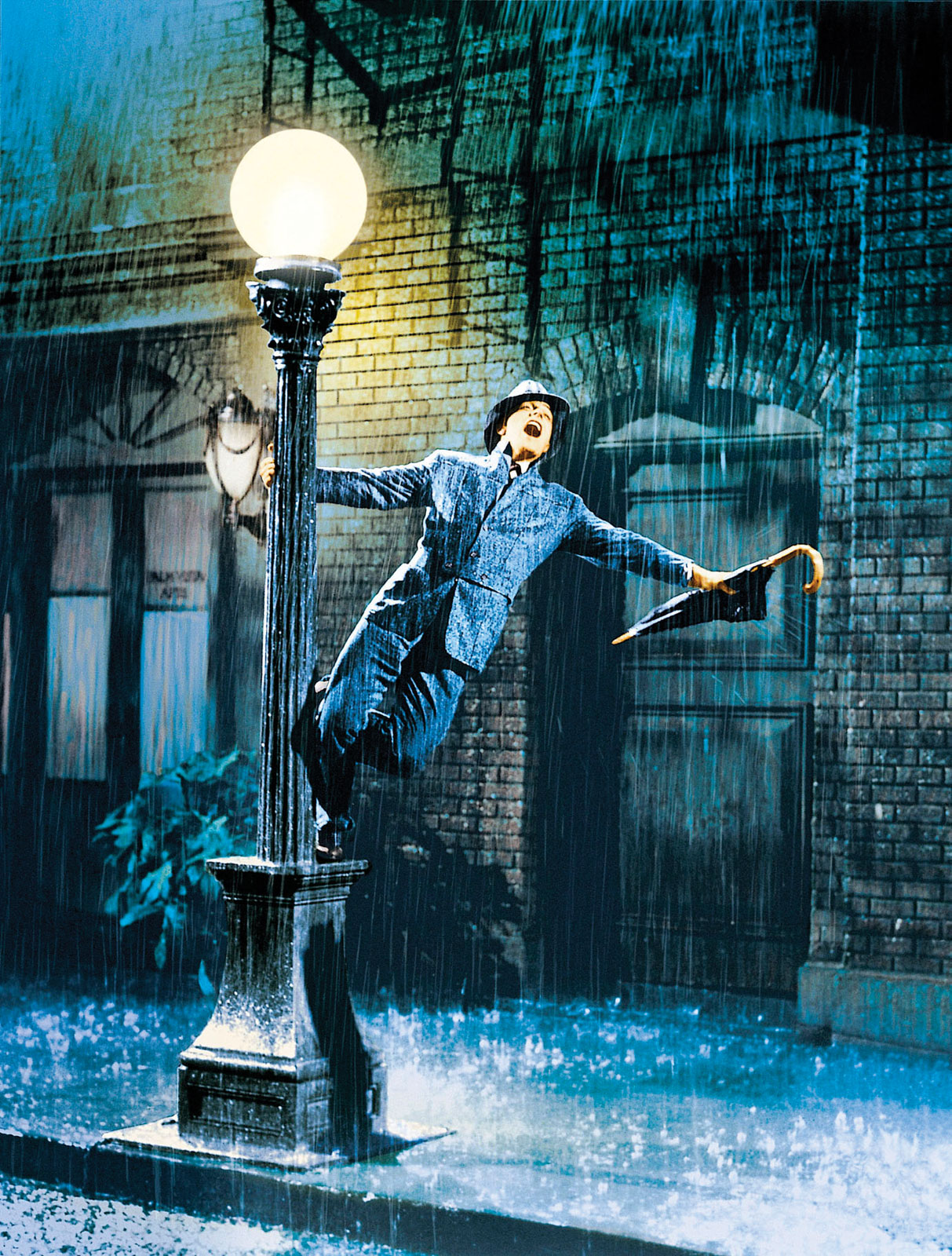
    As movie musicals grew in popularity, it made household names of several actors, including Fred Astaire, Ginger Rogers, Judy Garland, and Mickey Rooney. This era saw films like, 42nd Street, Shall We Dance, Easter Parade, and Singin’ In The Rain gain great popularity.

    Gene_Kelly_lamppost

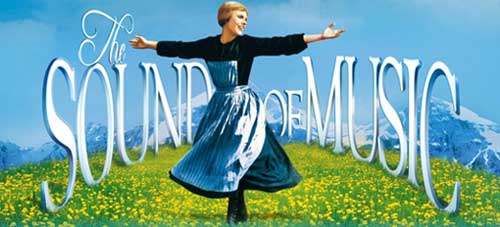
    After the 1960’s, although there were some fantastic musicals produced, including  The Sound of Music, Funny Girl, The Wizard of Oz, and West Side Story, there were also a few musical movies that did not do as well, and the studios began to produce fewer of them through the 70’s, 80’s, and 90’s.

    sound-of-music2

    Fortunately, there has been a resurgence recently in the popularity of musical movies, spurred on by Disney’s inclusion of music in their movies, seen in such films as Anastasia, the Prince of Egypt, and most recently, the movie Frozen.

    8-27-1

    Western film is not the only film that includes music in movies. Spanish operettas, called Zarzuelas, are very popular, and Indian cinema has an incredibly popular movie musical scene called Bollywood, that have begun to inspire Western cinema. This influence has been seen most notably in films like Moulin Rouge, and Slumdog Millionaire.


    So, are you a fan of movie musicals? Tell us which one is your favourite in the comments below!

    = Calgary Children's Choir

  • Songs Of The Cinema: A History of Sound In Film

    In preparation for our upcoming concert, Songs of the Cinema on May 10th 2014, we are starting a blog series of the same name, which will focus on a different aspect of ‘movie music’ each week!

    film-reel-df997


    Motion pictures have been around for over a century, but sound was first introduced to motion pictures in 1923. Before that, movies were silent, or had an audio track that was played on a phonograph synchronized to the action on screen. The idea of filming a motion picture with sound had been around since 1887, but it took several decades and many different approaches to sound recording until progress began to be made.

    https://www.youtube.com/watch?v=-uu4SIlPxh0

    The first film with sound recorded as part of the film, premiered in New York in 1923, and from there a new industry was born! Audio in film became every bit as important as the film itself. New industries sprung up to meet the new demands of audio. Sound boxes had to be created to encase the noisy cameras, so the sounds didn’t translate into the audio, hand cranks had to be silenced, and even the actors performing their roles had to accommodate the new realities of sound in film.

    Most importantly, from the perspective of music, the ability to accomodate sound in films marked the advent of music in films as well. Background music, sound effects, and eventually entire musical productions done entirely as motion pictures!

    Did you know about the history of sound in motion pictures? Tell us in the comments below!

    = Calgary Children's Choir