Tag: singing

  • Trust In Singing

    Trust In Singing

    Singing, and music in general engender many emotions, as discussed in this post. There are many positive emotions that arise from singing, as well as the occasional one. One aspect of positive emotion found particularly in choral singing, is trust. Trust is a powerful emotion because it takes time and effort to build, but can be broken in an instant.

    #1. Trusting the director:
    The director of an ensemble is the leader in many ways. From selecting the music we sing, to facilitating our learning of a new piece, to ensuring that all the disparate parts of the choir come together, to creating artistic, musical moments in live performances, the director is responsible for so many aspects of our choral experience. This would be an impossible job without the trust of the choristers under their charge.

    #2. Trusting other choristers:
    Singing with others means trusting them to do their part. Choir is about disparate parts making up a whole, and in order to do that, choristers have to subsume their ego, and blend into a sound larger, and grander than they can make by themselves. This requires a delicate balance between doing your best for the group, and supporting other choristers in doing their best for the group.

    #3. Trusting the music:
    This can be the most difficult aspect of singing, because while we are singing, we don’t actually hear the piece the way the audience does. In a performance, we must trust our training, trust the director, trust the other choristers, but most of all, we must trust the music, and the emotion we feel during a performance, to help inspire our singing, and drive us towards our best singing selves.

    How else is trust important in singing? Tell us in the comments below!

    Calgary Children's Choir


  • How Emotions Affect Singing

    How Emotions Affect Singing

    Emotion is necessary in musical expression, but our emotions can have a very strong effect on how we sing. Here are 3 ways in which our emotions can affect our singing:

    #1. Positive emotions:
    Positive emotions, such as joy, excitement, and love, often have an equally positive impact on our singing. These emotions help us to feel confident and engaged in what we’re doing, meaning our breathing is more free, our sound is focused, and we blend well with other singers around us!

    #2. Negative emotions:
    Negative emotions, such as fear, stress, or anger, can have a deleterious effect on our singing. These emotions inhibit musical expression, often dragging pitch down, introducing bodily tension, hindering supported breathing, and freedom in our singing.

    #3. Changing emotions:
    One of the most wonderful aspects of music is how engaging in it, whether through listening, or playing an instrument, can actually change your mood! If you’re experiencing negative emotions, one of the best things you can do is start singing! Singing forces you to pay attention to your body, to stay in the present moment, and to regulate your breathing that creates a meditative effect. Plus, singing in a choir with others, has been shown to have a very positive effect on mental health!

    How else might our emotions affect how we sing? Tell us in the comments below!

    Calgary Children's Choir

  • Singing For Wellness

    Singing For Wellness

    There are many studies that have shown the benefits of music on cognitive function, and childhood development, but perhaps one of the greatest benefits of music, and singing in particular is the benefits to our sense of well being.

    #1. Physical Well-being:

    Singing requires a great deal of physicality, and an excellent sense of self. Because a singer’s body is their instrument, there is a far greater emphasis placed on understanding your body. Singers need to ensure that they eat properly, sleep properly and rest their voices, so that their voices are at their best!

    #2. Mental Well-being:

    Singing is also an incredibly cerebral activity. It involves conceptualizing one’s voice internally, since a singer is unable to view, and manipulate their instrument in the same way other musicians can. Stress, fear, and uncertainty all influence the way the human voice sounds, as do excitement, anticipation, and happiness, so it is important for singers to understand, and address the emotions they are feeling.

    #3. Singing With Others:

    Perhaps the greatest benefit of singing, is that singing with others has been shown to greatly enhance one’s sense of well-being. Since choir is a social activity that requires members to pay great attention to what those around them are doing, a choir becomes a very close knit group; supporting, and unconditionally accepting the diversity of its members.

    How else can singing enhance your wellness? Tell us in the comments below!

    Calgary Children's Choir

  • The Benefit of Sectionals

    The Benefit of Sectionals

    We spend a lot of time discussing how important it is to sing as a group, to listen to the other parts, and to blend seamlessly, but it’s just as important for sections of the choir to break off sometimes and have their own time in a sectional, separate from the rest of the choir:

    #1. Bashing notes:
    At its most basic function, sectionals provide the opportunity for everyone in that section to really learn the notes and the rhythm. This is the significantly less glamorous aspect of choir, singing the same section of a piece over and over again, until everyone has the note, but it serves an important function. Not everyone learns at the same rate, and some choristers need more time within their own section to really feel confident in their part

    #2. Section unity:
    Going off in different sections of the choir is important because of the social aspect as well. There is something about identifying as a part, soprano, altos, tenors, or basses, that makes choristers feel like they belong. This is important in their singing as well. By knowing the people in your section, and their voices, you know who to rely on in the more difficult parts of a piece.

    #3. Listening:
    As we’ve discussed before, listening is just as important as singing in a choir. Breaking off into sectionals forces choristers to listen in a different, and often more nuanced way. No longer are choristers trying to hear their part against others, and blend their voices within a myriad of different timbres; instead they must contend with the difficulties of unison singing – blending their voice with others that have similar timbres, ensuring that rhythms and pitches are crisp and clear.

    How else do sectionals benefit choristers? Tell us in the comments below!

    Calgary Children's Choir

  • Discipline In Singing

    Discipline In Singing

    One of the most important aspects of learning music, is the discipline that it requires. Studying music is not like many other pursuits; it  requires continual and dedicated time, patience, and discipline.

    #1. Little by little:
    Music, like learning a new language, is best done in small, but consistent portions of time. The repetition required to really understand musical concepts, means that it is essentially impossible to ‘cram’ for music. The most successful musicians and singers understand that music is a daily practice; a habit to be worked on every day for concerted period of time. Singing is best practiced little by little, every day.

    #2. Accumulation of knowledge:
    Music is one of those areas of study in which there is always something more to learn. And musical knowledge always builds on more basic concepts learned first. Thus, in music and in singing, it is necessary to develop fundamental skills first, and then build on those skills, challenging yourself with more difficult music, as you gain the necessary skills. This requires dedication and discipline, and an understanding that the study of music is never really finished.

    #3. Process over product:
    Singing is most effectively learned when you focus on the process of singing, and not the final product. Because the nature of singing is inherently variable, a piece of music is never sung the exact same way twice. This can be difficult for beginning singers, because we live in a ‘results’ obsessed society. Understanding your instrument, how it works, what factors affect it, and how your emotions, and perspective influence your instrument, are much more important to beginner singers than whether any given performance sounded the way you wanted.

    How else is discipline a necessary component in the study of music? Tell us in the comments below!

    Calgary Children's Choir

  • Growth In Singing

    Growth In Singing

    Since many of us start singing at quite a young age (our Music Makers program starts at 3!) We can experience a lot of growth in our time as singers. This manifests both physically (our voices often don’t mature fully until we’re ~30 years old), but it also manifests in our state of mind. Here are 3 ways to manage your growth as a singer:

    #1. Adapting:
    As our voices, and our ability to manage our voices can change on a daily basis, one of the best ways to continue your growth in singing, is to be adaptable. Understand that your voice can be influenced by external forces like the weather, or air pressure. Internal forces also have a significant impact on your voice; health, energy, and mental state all play a role in the sound you produce. Adapting to these fluctuations will ensure that you continue learning about your instrument, instead of becoming discouraged by the instability.

    #2. Setting Goals:
    As with any learning objective, an excellent way to improve, is to set realistic, and manageable goals. Singing is much the same. By setting expectations for where you want to grow your singing ability, you can make slow, steady and healthy progress toward your goals. Good singing isn’t something that just suddenly materializes. It is the result of challenging yourself, and following through on a daily basis.

    #3. Keeping calm:
    Our voices can often feel as though they have a mind of our own. When our voices are still training, or they’re changing, we can sometimes feel like we aren’t really in control of what sound comes out of our mouths on any given day. While that might sometimes be true, berating yourself for producing less than stellar sound will actually have a physiological effect on your voice, creating a vicious cycle of errors. One of the sure signs of growth in singing, is the ability to forgive your mistakes, and move on, unencumbered by past errors.

    How else does your singing evolve over time? Tell us in the comments below!

    Calgary Children's Choir

  • Self-Awareness In Singing

    Self-Awareness in Singing

    Singing is different than playing any other instrument. Because a singer’s body is their instrument, singers must make an extra effort, not just to take care of their instrument, but to conceptualize that instrument from the inside out:

    #1. Self-visualization:
    Singers are not able to open up their body and view their instrument, to have it in front of them, like a piano, or to hold and manipulate it, like a guitar. Instead, singers must understand their instrument through internal visualization. It helps that, through improved technologies, we can view vocal folds through scoped cameras, or clever animations. Still, a singer needs to have a mental map of what their instrument looks like from the inside, and what the process of creating sung sound is like.

    #2. Meditative breathing:
    Because deep breathing is an essential aspect of the singing process, singers need to learn to breath in a way that is conducive to a vocal melody. This requires deep belly breathing, a process that is quite meditative. The low, calm breathing learned in singing, means that simply through the physical act of singing, we can calm our mind, and body to focus on the task of performance.

    #3. Present-centric:
    Performance of any kind requires a musician to be ‘in the moment’. This is especially true of singers, whose bodies are attuned, and will respond (sometimes negatively) to even the slightest change in mental attitude. By focusing too much on what is coming next, or dwelling on past mistakes, singers can sabotage their own performance. Understanding this, helps singers to stay in the present moment, and deliver the best performance they possibly can!

    How else does singing improve self-awareness? Tell us in the comments below!

    Calgary Children's Choir

  • Welcome to 2016-2017!

    Calgary Children's Choir Welcome blog

    Welcome to our 2016-2017 Singing Season!

    We are thrilled to welcome returning and new choristers to another year of wonderful music with the CCC! There are many wonderful events in store this year, including the celebration of our 30th Anniversary!

    September 16th-18th, 2016 – Choir Camp
    December 10th, 2016 – Christmas Concert @ St. Giles Presbyterian Church 7:00pm
    January 27th – 29th, 2017 – CCC & CYC Winter Retreat
    March 11th, 2017 – Annual Concert @ The Rozsa Centre 7:00pm
    May 12th, 2017 – 30th Anniversary Reception and Rehearsal – 6:00pm-9:00pm – Crescent Heights Baptist Church
    May 13th, 2017 – 30th Anniversary Concert Rehearsal
    May 14th, 2017 – End of Year Celebration Banquet – 5:00pm – Foothills Alliance Church

    (You can refer to our Calendar for more details!)

    *In honour of our 30th Anniversary Celebration, we are creating a Legacy Page for the website. We are asking our alumni to send us a short bio, with a photo of you currently (and maybe even one from when you sang with us!) We’d love to know more about our alumni, and what you’re currently up to! Please send bios and pictures to calgarychildrenschoir@gmail.com!

    What are you most excited about this singing season? Tell us in the comments below!

    Calgary Children's Choir

  • 3 Ways In Which Singing Makes Your More Empathetic

    3 Ways Singing Makes You More Empathetic

    Singing helps to hone many important characteristics. One of those essential traits is empathy. Here are three ways in which singing can make you more empathetic:

    #1. Listening:
    Singers need to listen to other singers, and musicians in a very subtle and nuanced manner, in order to perform at their best. This form of acute listening is important in other areas of life as well, as singers are accustomed to listening to more than just words – tone, cadence, timbre, are all important aspects of conversation, and contribute to a more empathetic listener.

    #2. Perspective:
    Part of the job of the singer is to take the character of the piece into themselves, and create a persona to embody for that performance. This perspective gives singers an enormous amount of insight into people, and how they communicate, and present themselves to the world.

    #3. Collaboration:
    Singers rarely sing by themselves. Either they have accompaniment, in the form of instrumentation, or they sing in a choral setting, with other singers. This means that singers spend much of their time collaborating with other people, developing the ability to understand others’ perspectives, and to understand where someone else is coming from.

    How else might singing help with empathy? Tell us in the comments below!

    Calgary Children's Choir

  • The Value of Singing Acapella

    The Value of Singing Acapella

    The term acapella refers to singing without any accompaniment by instruments. The word is Italian, and means, ‘of the chapel’. It refers to early sacred music, when instrumentation was not permitted inside the church, and specifically the chapel. Only human voices were permitted, and thus acapella music was created.

    There are many benefits to singing with instruments; it creates rich layers, and the timbres of the different instruments can sound so beautifully together. But there is also great value in singing acapella:

    #1. The vocal sound:
    There is something truly unique about the human voice. To hear it by itself, without other instruments distracting the ear, can often be a very intimate and human experience. It allows an audience to truly appreciate the breadth and beauty of the voice.

    #2. Intonation:
    Singing acapella music, is a unique opportunity for singers to focus on intonation in a manner that is much more internal than when singing with instruments. Without an instrument to act as a tether, singers focus on tuning their voices to one another, creating a wonderful resonance of tone, and even heartbeats!

    #3. Overtones:
    As discussed in the post, Math and Science in Music – Harmonics, different instruments create a series of different pitches above the fundamental pitch, called overtones. These pitches create the unique timbre of different instruments, and nowhere is this more evident than in the human voice. The full timbre of rich overtones in the human voice can be heard to greatest benefit when singing is acapaella.

    Why else might it be valuable to sing acapella? Tell us in the comments below!

    Calgary Children's Choir

  • 5 Ways In Which Singing Makes You Happier

    5 Ways In Which Singing Makes You Happier

    #1. Endorphins:
    Singing releases the same chemicals in your brain that exercise does. These chemicals, called endorphins are responsible for positive feelings. The more one sings, the more our brain is flooded with these chemicals, and the happier we feel! This also serves as positive reinforcement for our behavior, and it is likely why people continue to keep music in their lives!

    #2. Stress relief:
    Beyond the release of endorphins in your brain when singing, there are other beneficial physical effects from singing. In particular, proper breathing techniques; breath management, deep breathing are all associated with greater well being. The deep breathing required from singing, helps regulate breath, has been shown to improve circulation, and lower the level of cortisol (the stress hormone) in our bodies. Less stress makes for a much happier person!

    #3. Focus on the present:
    The immediacy of singing, the requirements of focus, and engagement mean that a singer has to be fully in the present moment. This may seem irrelevant, but focusing on the present is one of the tenants of meditation, and in various psychological studies, meditation has been shown to greatly increase mental well being, and one’s sense of contentment. Having a regular activity that requires this prolonged focus on the present moment, is a great boon to one’s happiness.

    #4. Learning:
    Music is an extremely complicated field, incorporating elements of science, as well as art. It is a constantly evolving field, with many areas of nuance and interpretation. As a result, those who study music, are continually learning new aspects of the field. Life-long learning has long been shown to keep our brains active and engaged, and to help stave off depression and feelings of isolation and loneliness.

     #5. Community:
    Singing in a choir means you have a built in support system. The very nature of singing in a choir, demands that you pay attention to what others are doing, that you lend your own voice and talents in support of a cause larger than yourself, and that you work to perceive the world from the view of others. This is incredibly important to our sense of happiness, because humans are social beings. The support and sense of community that a choir provides are second to none!

    How else does singing make you happy? Tell us in the comments below!

    Calgary Children's Choir

  • 3 Ways In Which Singing Makes You More Independent

    3 Ways In Which SInging Can Make You MOre Independent

    Here are three ways in which singing can make you more independent:

    #1. Uncertainty:
    Because of the transitive nature of music, and performance, musicians must become comfortable with uncertainty. A performance will never be perfect; a piece never played the same way twice. In music, there are no absolutes, and musicians are experts at accepting that. Comfort with uncertainty is important in becoming more independent, because it allows you accept and adapt to whatever comes your way.

    #2. Motivation:
    Music can seem like an exceptionally overwhelming area of study to those who have never been trained. It requires a great deal of self-motivation to continue to study music, since there are no quick fixes in learning  music. Time, patience, and perseverance are the hallmarks of musical education, and this can be intimidating to many, because it seems like there is always too much still to learn. Self-motivation is an important skill in gaining independence; it ensures that your drive to learn and succeed comes from yourself, instead of from external sources.

    #3. Discipline:
    Although music is an art form, it is also a discipline. The study of music, the act of performance, requires a self-discipline that few other areas do. Learning the music, practicing, and honing a piece for performance means an incredible amount of dedication and commitment. Discipline like this is so important in becoming independent because it ensure that you won’t give up, even when things become difficult or overwhelming.

    How else might singing make you more independent? Tell us in the comments below!

    Calgary Children's Choir


  • Joy In Singing

    Joy In Singing

    Singing has been shown to be beneficial in various ways; it improves breathing, circulation, enhances cognitive abilities, and lowers stress levels. But one of the best outcomes of singing, and particularly singing in a group is the joy and happiness

    #1. Good music:
    Music has the ability to make us feel a myriad of different emotions, which is one of the reasons why it is such a powerful art form. When we listen to good music, we experience a biological response to the music. Our brains begin to release the chemical dopamine, which is responsible for positive emotions, such as joy.

    #2. Singing with others:
    We receive pleasure from singing, not just by ourselves, but by singing in community. Many voices together can create more nuanced and layered music than singing alone. The benefits of singing with others include, increased self-esteem and confidence, a larger sense of community, and even biological changes. A recent study has shown that choir singers sync their heartbeats when they sing in ensemble!

    #3. A job well done:
    Singers often feel a sense of exaltation when they’re performing; a feeling which often extends even after the performance. The exhilaration of performing, is heightened by knowing that you did a great job. Satisfaction, pride and joy, all contribute to the euphoria of singing!

    How else might singing be joyful? Tell us in the comments below!

    Calgary Children's Choir

  • The Value of Singing With Different Ages

    = calgary children's choir

    There are many reasons why it is valuable to sing with others, but it is especially beneficial to sing with others of different ages. Here are three reasons why:

    #1. Voice types:
    For many children, being able to sing with the full spectrum of voice types is something they have to wait until they are grown to experience. Because our program runs from age 3 up until age 25, and because we often sing with adult choirs, and musical groups with varying voice types, we are able to expose our choristers to the full range of the human voice. This is essential to their ear training, and to their confidence as singers, as they move from childhood through adolescence and into adulthood.

    #2. Musical Abilities:
    We accept singers of all abilities, and this helps us to foster a community of people who above all, love singing. We believe that everyone has something to learn, and that allowing different ages, and musical abilities to come together to make music, ensures that everyone can take something valuable away from the experience.

    #3. Mentoring:
    In the Calgary Children’s Choir we have developed a mentorship program from our youngest singers to the oldest. This program ensures an inclusive, and welcoming environment for all singers, and provides support to our newest choristers, or those who need extra help with music. Our eldest choristers, look out for the youngest ones (and sometimes vice versa!), ensuring a caring, and committed group of choristers who are happy to be together and make wonderful music!

    Why do you think it is valuable for people of all ages to sing together? Tell us in the comments below!

    Calgary Children's Choir

  • Choir Camp 2015 Roundup!

    Camp Horizon

    This past weekend we were very excited to be out in Bragg Creek, on our annual retreat to choir camp! Camp is a great opportunity for our choristers to get to know one another better, to rehearse new music, and learn more about what it means to sing as part of an ensemble!

    Camp Horizon Bragg Creek

    We had a wonderful time in our drumming session with David Kovatch from One World Drum Co.!

    The Calgary Youth Choir led us in an amazing activity, in which choristers composed song in the style of an era, like the 50’s, or the 80’s, and then performed them in costume! It was so much fun that even the chaperones got in on the action!

    Our skit night was a great event, featuring the amazing musical and  compositional talents of our choristers!

    We had a lot of fun singing both in rehearsal, and around the campfire, where we would often break into four part harmony!

    It was another great year at camp full of music, fun and friendships – old and new!

    Calgary Children's Choir

    What was your favourite part of camp? Tell us in the comments below!

    Calgary Children's Choir

  • 3 Ways In Which Singing Improves Communication Skills

    Calgary Children's Choir

    #1. Listening:
    Listening is an essential aspect of singing, and of music in general, but it is also an important aspect of communicating with others. By listening to others around us, we gain a better understanding of the complete picture, and the diverse perspectives of others.

    #2. Understanding Text:
    The ability to analyze text in a piece is an important part of singing. The words add an important layer to the music, as discussed in greater detail here. Singers become very adept at understanding exactly what they are singing, and in communicating that effectively with their audience.
    Often, the text of music is set to poetry, which can not always be taken in a literal sense. Poetry uses literary devices to beautifully convey sentiment, and it requires singers to not only understand the literal sense of the words, but to deduce the metaphorical meaning as well. This subtext is essential to communicating the true spirit of a piece, and interpreting the meaning musically.

    #3. Clarity:
    Singers always seek clarity in their performances. Because of the nuance involved in vocal pieces, singers are conscious of always trying to communicate the piece clearly. Enunciation, breath management, and careful consideration of which words to highlight, are all ways in which singers can clarify the meaning of a piece. These are essential communication skills; allowing singers to effectively evoke the character and meaning of whatever they are singing!

    How else does singing improve communication skills? Tell us in the comments below!

    Calgary Children's Choir

  • Ottawa Tour 2015 – Day 5!

    Today we started with the doors to the breakfast hall being locked, so after some confusion and some well placed phone calls by Heather Fradette we got our morning meal in lots of time.

    We then walked through Ottawa to get to the national arts centre and got to see some of the prep work for Canada day! Once we arrived we warmed up and started our unisong concert! It was amazing being up on stage with all our new friends and truly singing for the joy of it!

    Capture

    Captured

    image2

    IMG_2057

    IMG_2079

    IMG_2080

    IMG_2097

    IMG_2106

    After our 10 AM concert we had some time to go for lunch and walk around down town Ottawa to enjoy the festivities. After lunch we returned to the preforming arts centre and sang/accompanied the national arts centre orchestra. The concert when really well and the absolute highlight was when we were closing the concert with nothing other when ‘Oh Canada’! We were given little paper flags to wave wildly after wards and there was an amazing sense of pride, especially when the crowed cheered and waved their flags and various items with us; It was like nothing else.

    IMG_2122

    After that we had a delicious dinner at a local restaurant and got to go up to parliament hill and see the stage and the street vendors. We then had our final concert. As soon as it was done we hurried back to the hotel to make it back to the centre in time for the fireworks. They were spectacular! We then all headed back to our rooms and headed so bed after an amazing Canada day in the capital.

    Captures

    IMG_2060

    IMG_2126

    IMG_2127

    IMG_2134

    IMG_2138

    IMG_2139

    IMG_2160

    -XOXO heather and Kyla

  • Ottawa Tour 2015 Day 3!

    Today was a very full day, rehearsing en masse with the mind-bogglingly energetic and musically brilliant Dr Sirett. We were especially 8:30 in the morning when the rehearsal started, or six-thirty back home. We would love to learn his secrets. We were a bit bogged down this morning, too, with our formal uniforms for tonight’s choir-to-choir performance.

    11667344_10200591837796074_7658805970933673614_n

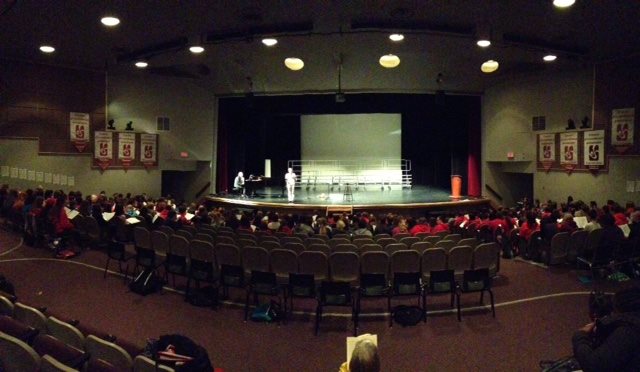
    The school we’re rehearsing in! And some sleepy choristers!

    11667344_10200591837756073_4337719261172851768_n

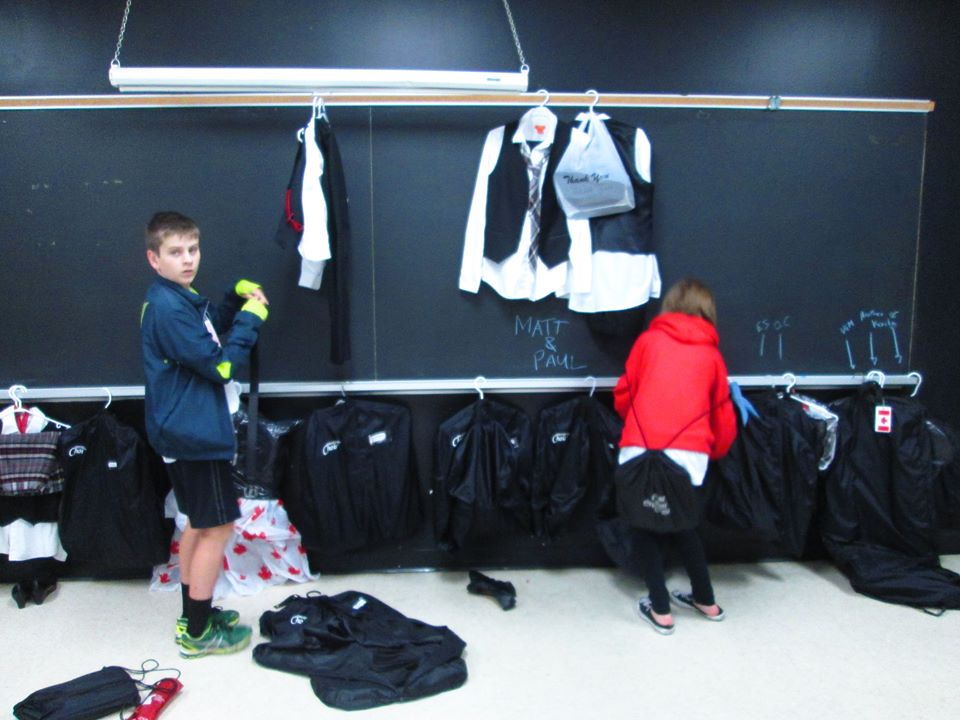
    The notations would have made it easy to find our bags… if they hadn’t moved us to a different room.

    11693894_10200591835956028_4301330518572201569_n

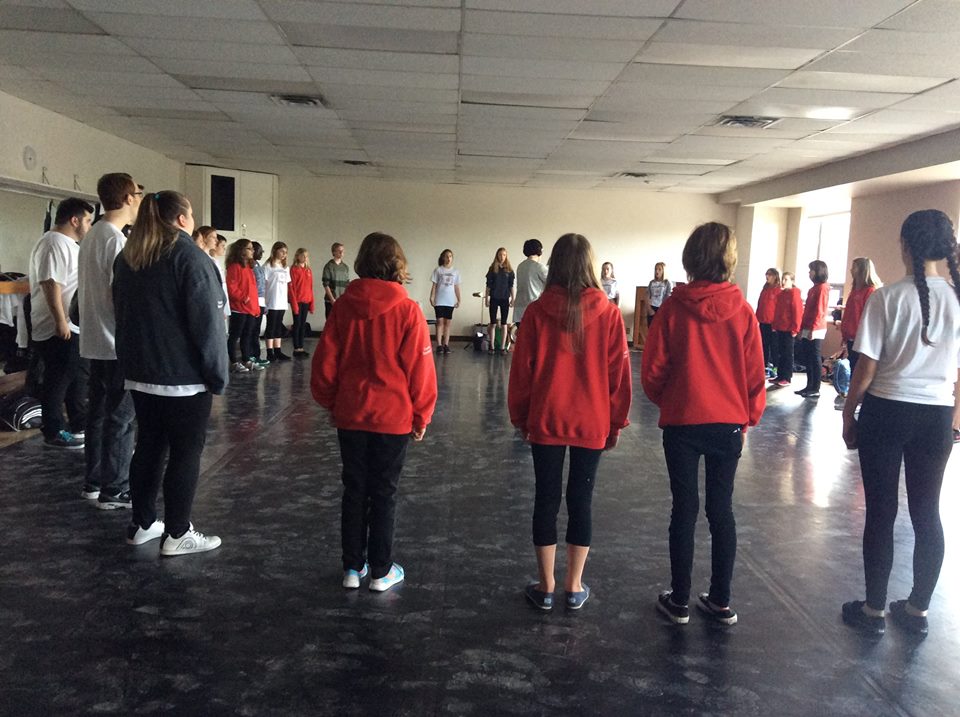
    In three hours, we managed to get through virtually all of our music, and the men even had a sectional. They know French now! We’re so proud. Even after only a few hours of rehearsal, we are really starting to come together as a mass choir under Dr. Sirett’s marvellous management. (He truly is a splendid dictator…er I mean director.) Why don’t you have a listen and see (hear) for yourself! Do we sound cohesive yet? Let us know in the comments down below!

    https://www.youtube.com/watch?v=qhT9HflBei4


    After our impressive and slightly (very!) draining three hour rehearsal, we grabbed our bag lunches and dashed to the bus, making our (frenzied) way to the War Museum.


    11539594_10200591834355988_3828639990164394242_n

    11700802_10200591834435990_1801363466364319491_n
    11061289_10200591834715997_7848554845195918635_n
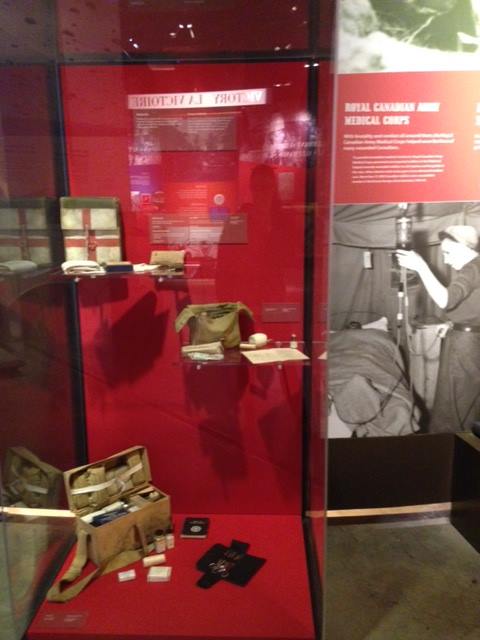
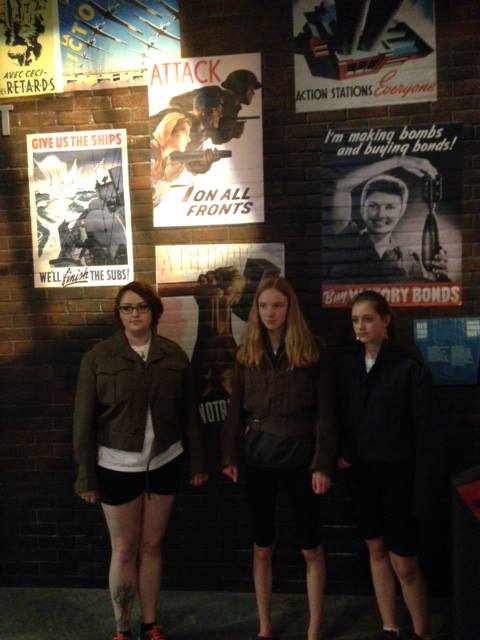
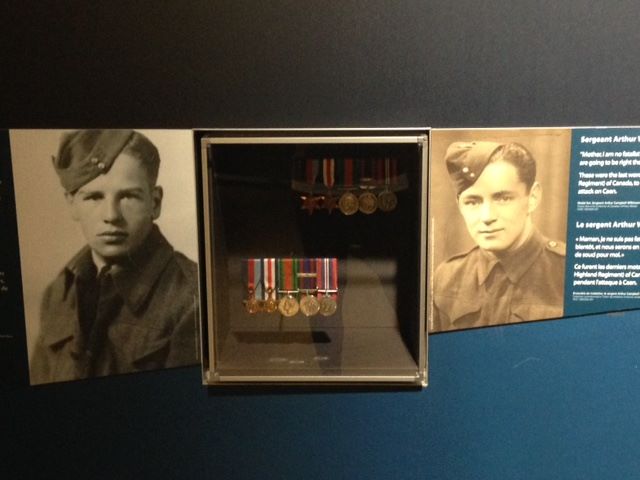
    Can you see the sleepiness or are we good actors?It’s always difficult to write about moving and painful topics like the one covered in the museum, but the choir handled it pretty gracefully. We did see lots and lots of interesting artefacts, including battlefield surgical kits from several historical wars, an honest-to-goodness Swastika flag captured by Canadian soldiers in the Second World War, and a piece of the Berlin Wall gifted to Canada by Germany after the end of the Cold War.

    11232356_10200591838716097_422716923707302784_n

    11390068_10200591837516067_1869479671114463463_n

    11402802_10200591834956003_3524300840428995358_n


    11539767_10200591834155983_9127749743218792353_n
    Oh, we also saw one of Hitler’s parade cars, which is a remarkably imposing vehicle before one considers who used it. Once that is taken into account, it becomes more than a little bit frightening. It was in incredibly good condition, with only one shattered window. Frankly, given who it belonged to, we’re surprised that such a vehicle survived.

    11403049_10200591835756023_2979271628072789564_n

    Some of the most moving parts of the experience were the WWI and WWII exhibits, which were especially poignant because of the personal accounts and vivid scenery recreations.

    988563_10200591836276036_3961143868600780610_n


    11026787_10200591837916077_8680647614368391896_n

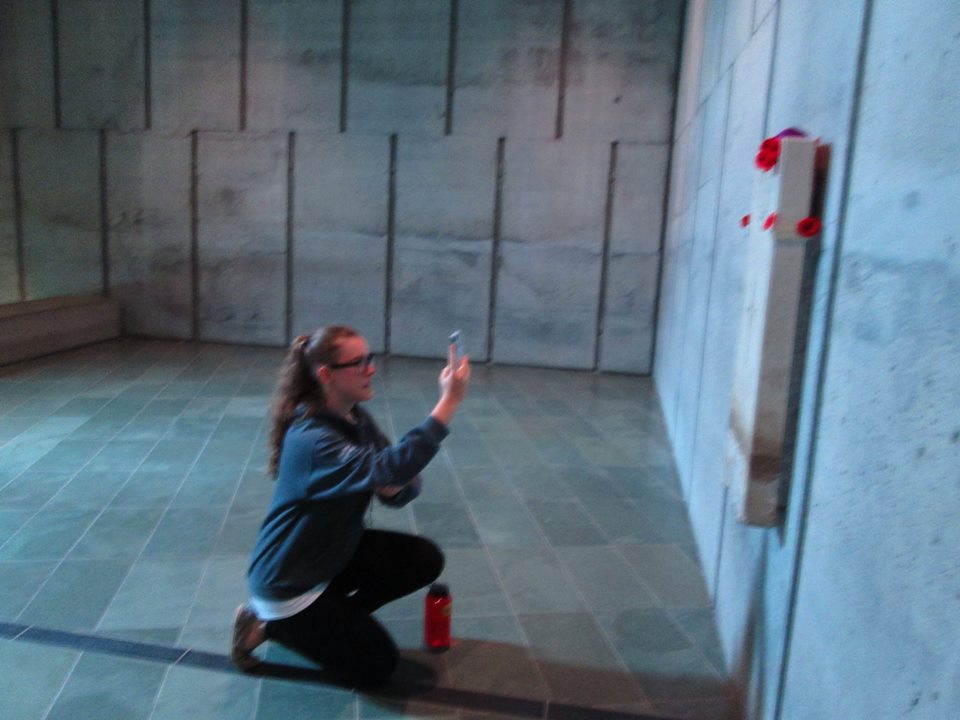
    Another sobering and thought-provoking aspect of the museum was Memorial Hall, a simple but beautifully designed tribute to fallen Canadians.

    11659443_10200591839396114_4055922351078772950_n11403039_10200591835156008_9207529099525705711_n

    Memorial Hall is set up so the sun entering through the window hits the tombstone at 11/11/11, and the permanent ‘shadow’ on the ground runs all the way through the lobby and out the building.

    The remainder of the afternoon was spent in another rehearsal, much like the first, only sleepier and fortunately shorter.

    11541908_10200591837396064_3158112686325426739_n

    After dinner, we got ready for the individual choir performances. It was lovely to hear our newfound friends singing on their own. Apparently we sounded great too!

    11000406_10200591839556118_1921188668927414629_n

    11695761_10200591834395989_3211603076804302096_n
     11146652_10200591838076081_2182891096969400578_nRehearsing…

     11703193_10200591838116082_5267724538307512054_n

    Performing!

    After the concert, we headed back to our dorms, and bed.

    10361323_10200591834275986_5327863811495920248_n

    Our one-of-a-kind T-shirts have received a lot of positive attention. Thanks Kat!

    – Victoria and Nicole

    Calgary Children's Choir

  • Ottawa Tour 2015 – Day 2!

    Today was a very eventful day. We went to the Museum Of Canadian History, the mall and had our first mass rehearsal for Unisong!

    We woke up quite early to grey skies and the smell of rain, making sure we were dressed in the right choir tee shirt for the day (it matched the sky). Crossing the river into Québec, we went to the Canadian Museum of History – a riveting and informative experience. We learned about the Confederation and Rebellions of 1867. Another exhibit was the Magna Carta, which was showing two of the six documenting the original Magna Carta. There were many other exhibits at the museum: one dedicated to Terry Fox and the other about the ancient Greeks.

    A panorama of the main entrance hall of the Museum of Canadian History


    The “Morning Star” Painting, painted on the roof of the Canadian Museum of History.

    The trip to the mall was an explosion of free time and choir children running loose. There was a surprisingly eco friendly serving system, using plastic trays and plates and metal cutlery. When done with the dishes, facility operators cleared and cleaned so they could be used once more.


    photo by Paul Vanhoutteghem
    photo by Paul Vanhoutteghem
    4
    photo by Paul Vanhoutteghem
    5
    photo by Paul Vanhoutteghem
    6
    photo by Paul Vanhoutteghem
    7
    photo by Paul Vanhoutteghem

    The first mass rehearsal could be best described as busy, exciting and difficult. We met new people and learned new techniques for singing. The man conducting the mass choir is Mark G. Sirett and he focused attention to technique and detail. He was energetic and exuberant! I’m sure tomorrow will be filled with more fun and adventure along with singing!

    – Sophie Collins

    Calgary Children's Choir

  • Ottawa 2015 Tour – Day 1

    What a day! Starting off bright and early, we met at the Calgary airport at 8:10 am.

    FullSizeRender

    We took off right before noon. The flight was a little bumpy, but fun all the same! Granola bars and good company got us through the long flight.

    boarding


    Airplane

    Arriving in Ottawa, we saw it was cloudy and cool, which is honestly a bit of a relief from the hot weather back home. After singing together on the way to our dorms and eating some well deserved pizza, our first day on tour comes to a close.

    -Kasia DeSorcy

    Calgary Children's Choir

  • Spring Concert 2015 Roundup!

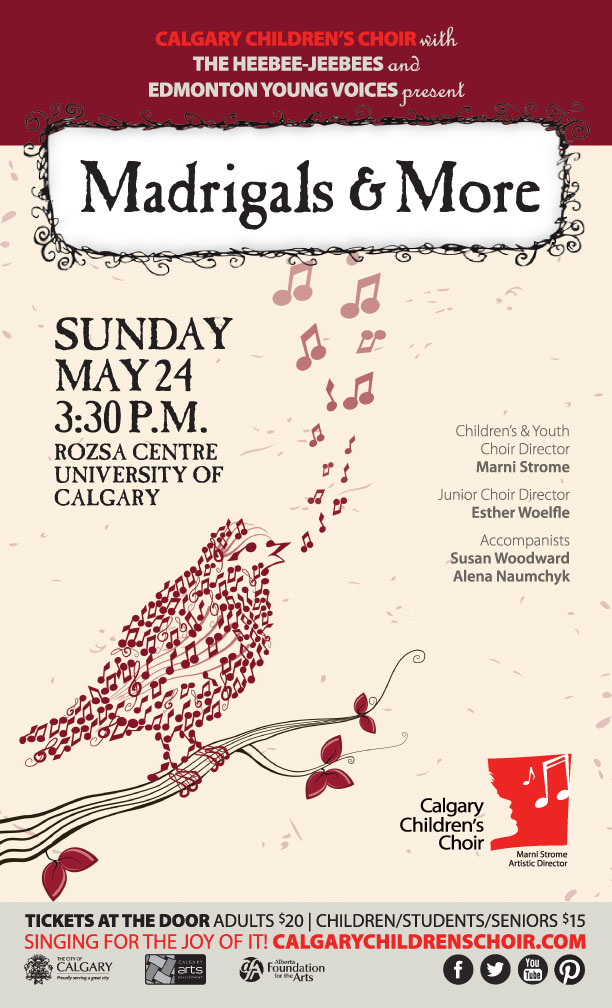
    On Sunday, May 24th, in the afternoon, we had our final concert of the year; Madrigals and More, featuring the HeeBee-jeebees, and the Edmonton Young Voices choir.

    Spring 2015 Concert

    The Rozsa Centre was decorated with a spring theme, featuring lovely maypoles designed by our Creative Consultant, Kat Long. We were thrilled to end our 2014-2015 singing on such a high note (pun intended), singing such pieces as Adiamus, Frobisher Bay, Sing We and Chant It and more!

    Calgary Children's Choir and The Heebee Jeebees


    Calgary Children's Choir and Calgary Junior Children's Choir


    Calgary Junior Children's Choir


    Edmonton Young Voices


    Calgary Children's Choir


    Calgary Children's Choir


    Calgary Children's Choir and the Heebee Jeebees and Edmonton Young Voices


    What was your favourite part of the concert? Tell us in the comments below!

    = Calgary Children's Choir


    Thank-you to our wonderful CCC community for a fantastic 2014-2015 singing season! Please check back at the end of June for our Tour Blog, as we travel to Ottawa to participate in the Unisong Choral Festival!

  • Introduction To Madrigals

    madrigals

    Our upcoming Spring Concert on May 24th, 2015 is called Madrigals and More, and unsurprisingly, will feature a type of music known as madrigals!

    Madrigals are a type of music that became popular during the Renaissance period. A madrigal is usually a secular vocal piece of music, often unaccompanied by instruments. These types of songs originated in Italy in the early 1500’s, and were the most important secular music of the period.
    Madrigals are most notable for their expressive text. Composers were fastidious in ensuring that the vocal lines they wrote highlighted and enhanced the text of the madrigals, creating another layer of expression and communication. Madrigals combined the most beautiful and descriptive poetry of the time, with lively, vivid vocal lines.

    https://www.youtube.com/watch?v=1w38kHRd0vE

    We would love for you to join us at our concert on May 24th, 2015!

    Spring 2015 Concert

  • Vulnerability In Singing

    Calgary Children's Choir

    Music strikes an interesting balance between being an art form and a discipline. It is a difficult process to learn the intricacies of  music; understanding the mathematical principles behind music concepts such as time signatures, intervals, and chord progressions. But it is equally difficult to learn how to approach music as an art form; learning to communicate subtle and nuanced emotions, understanding how the music informs text and vice versa, and personally opening up to the music.

    Approaching music from an artistic perspective, requires a great deal of vulnerability on the part of the singer, and this can be difficult to manage. Here are three thoughts on understanding the power of vulnerability in music.

    #1. Understand the music: 
    This goes beyond just understanding the structure of the music; learning the rhythm and melody of a piece. A singer needs to also understand the text they’re singing, which we discussed in greater detail here. But even more than that, a singer needs to understand how the music and the text work together; how one informs the other, and how subtleties in both music and text can convey the true nuances of the human experience. Truly understanding the many complicated layers of music is essential for a singer to communicate and connect with the audience.

    #2. Connect with the music:
    Making a personal connection with the music we are learning is not always as easy as it sounds. Sometimes we have not experienced the event, thoughts or emotions communicated in the music. Thankfully, we do not need to have personally experienced every event and emotion, for us to be able to connect to the music. This is why empathy, the emotion that allows us to see things from another’s perspective, is an important aspect of every artist. Through empathy we can imagine the event or emotion the piece is discussing, even if we do not have these experiences ourselves. Emulating the thoughts and emotions of others, and then communicating those emotions effectively is the hallmark of talented singers, actors, and artists. This connection is what allows us to express the human condition, and it is why art, music, dance and drama, are considered the emblem of civilized society.

    #3. Connect with the audience:
    One of the most important aspects of performing is connecting with the audience. Music is a wonderful, and powerful way to communicate, and in order to effectively communicate, we must forge a connection with the audience. The most effective way to do this is to allow the audience to see our own understanding, and interpretation of the music, and this comes from our own understanding, and connection with the music. The most difficult aspect of performance is allowing the audience to see that understanding; through our facial expressions, the tone of our voice, our delivery of the music, and in the emotional energy we share with our audience. This is true vulnerability in singing, and it is what allows us to truly create magical, musical moments.

    Before you can inspire with emotion, you must be swamped with it yourself. Before you can move their tears, your own must flow. To convince them, you yourself must believe. – Winston Churchill

    What are other aspects of vulnerability in singing? Tell us in the comments below!

    = Calgary Children's Choir

  • Multiple Parts VS Unison

    Calgary Children's Choir Rehearsal

    There are many different ways to sing as part of an ensemble, as we discussed in our blog post A Brief History of Choral Music. When people sing the same part at the same time, it is called Unison singing. When people sing in multiple parts it can be homophonic music – when the voices move at the same time on different pitches, or polyphonic music, when voices move at different times on the same pitches. Canons, or rounds (ex: Row, Row, Row Your Boat) are forms of polyphonic music.

    There are several benefits to both types of vocal music:

    Unison:

    Unison singing really allows singers to focus on how their voices blend together. Often, people think of unison singing as easier than singing in multiple parts, but it can be quite difficult. Since singing in perfect unison demands that all voices blend seamlessly, it can be difficult to remove ego from the process. It involves refinement, subtlety, delicacy, and a light touch.

    Multiple Parts:

    Singing in multiple parts demands that singers focus on intonation. Singers need to be in tune not only with the instruments, but with the other singers around them; listening carefully for changes in tonality, as the chords made from multiple parts change. Singing in multiple parts also provides a breadth and depth to the vocal sound, by layering the different voices and pitches.

    What do you think are the benefits of singing in multiple parts or in unison? Tell us in the comments below!

    = Calgary Children's Choir

  • The Value Of Not Performing

    Calgary Children's Choir

    The Calgary Children’s Choir has three major performances a year; our Christmas concert, our Folk Concert, and our Spring concert. Sometimes we’ll have other singing engagements sprinkled in as well. Much of the music that we learn throughout the year is chosen for one of those concerts, but sometimes we learn music without having a specific performance in mind. There are several reasons why we find value in learning music that is not for performance:

    Practical Elements:
    Often we learn a piece of music to demonstrate a certain aspect of music to our choristers. This could be anything from multi-part harmonies, to great vocal leaps, appropriate breathing techniques, or poignant text. What our choristers take from a piece of music should be from our rehearsals and exercises, our workshops and the practice they might do at home. A piece of repertoire is a valuable way to provide an example of a musical technique, but that doesn’t mean that we have to perform that piece.

    Music For Its Own Sake:
    While it is wonderful to perform, we shouldn’t think of music as valuable only in the context of performance. Much of what makes learning music so amazing – the self-discipline, the hard work, the hours of practice, are all aspects that are not readily seen in a performance. It is important that we teach our choristers that learning music is important because music itself is important, and not just the act of performing music.


    Do you think every piece you learn needs to be performed? Tell us in the comments below!

    = Calgary Children's Choir