Category: Choir

  • Math and Science In Music: Harmonics

    Math and Science In Music - Harmonics

    Music is such a wonderful pursuit for mind and body because it is not just an art form, but combines a myriad of other disciplines, including mathematics, biology, and physics. This series, Math and Science in Music will explore the many ways in which music incorporates a variety of these disciplines.

    HARMONICS

     Musical harmonics are another discovery from the field of physics. In our first post about sound waves, we discussed the fact that sound acts as a wave. A pitch is actually made up of several different waves sounding together. These are referred to as the note’s harmonic series.

    The bottom sound wave that we can most commonly hear is called the fundamental. All of the sounds that we hear above that fundamental, are referred to as overtones. They can be heard by the human ear at the same time as the fundamental, but they are significantly less obvious. The harmonics sound in order of strength, as it relates to the fundamental. The first sound we hear is the octave, followed by a fifth and a fourth.

    harmonics

    For more information on the subject of harmonics, check out this fascinating video!

    How else might harmonics be important in music? Tell us in the comments below!

    Calgary Children's Choir

  • Math and Science In Music – Sound Waves

    Math and Science in Music - Sound Waves

    Music is such a wonderful pursuit for mind and body because it is not just an art form, but combines a myriad of other disciplines, including mathematics, biology, and physics. This series, Math and Science in Music will explore the many ways in which music incorporates a variety of these disciplines.

    Sound Waves

    The way we understand sound, is a product of the scientific discipline of physics. From the study of physics, we understand that sound is a vibration; a mechanical wave of pressure through air (or sometimes water!)

    sound waveIn the diagram above you can see that the type of wave generated has a great effect on what kind of sound is eventually produced. Sound waves affect volume, pitch, timbre, and dynamic!

    Check out this interesting video for a deeper understanding of the physics of sound:


    How else is the discipline of physics used in music? Tell us in the comments below!

    Calgary Children's Choir

  • Math and Science in Music – Time Signatures

    Math and Science in Music - Time Signatures

    Music is such a wonderful pursuit for mind and body because it is not just an art form, but combines a myriad of other disciplines, including mathematics, biology, and physics. This series, Math and Science in Music will explore the many ways in which music incorporates a variety of these disciplines.

    TIME SIGNATURES

    Time signatures are used in Western musical notation to denote rhythm and metre in a piece. The time signature is found at the beginning of the piece and is usually comprised of two numbers:

    timesignum

    Math is used in a myriad of different ways when looking at time, rhythm and metre in a piece. Music is mathematically divided into equal parts using measures, and those measures are divided up into equal parts using varied rhythms. Rhythmic values usually differ from measure to measure to make a piece more interesting.

    Musicians must become adept not only at translating the rhythmic values they see into their mathematical counterparts, but they often need to subdivide those rhythms in their mind to ensure they’re keeping a steady tempo. This means that they are completing mathematical formulas in their mind, while keeping a steady tempo, and applying artistic expression to their performance! Pretty amazing!

    How else might math be used in music? Tell us in the comments below!

    Calgary Children's Choir


  • 3 Ways In Which Singing Makes You More Independent

    3 Ways In Which SInging Can Make You MOre Independent

    Here are three ways in which singing can make you more independent:

    #1. Uncertainty:
    Because of the transitive nature of music, and performance, musicians must become comfortable with uncertainty. A performance will never be perfect; a piece never played the same way twice. In music, there are no absolutes, and musicians are experts at accepting that. Comfort with uncertainty is important in becoming more independent, because it allows you accept and adapt to whatever comes your way.

    #2. Motivation:
    Music can seem like an exceptionally overwhelming area of study to those who have never been trained. It requires a great deal of self-motivation to continue to study music, since there are no quick fixes in learning  music. Time, patience, and perseverance are the hallmarks of musical education, and this can be intimidating to many, because it seems like there is always too much still to learn. Self-motivation is an important skill in gaining independence; it ensures that your drive to learn and succeed comes from yourself, instead of from external sources.

    #3. Discipline:
    Although music is an art form, it is also a discipline. The study of music, the act of performance, requires a self-discipline that few other areas do. Learning the music, practicing, and honing a piece for performance means an incredible amount of dedication and commitment. Discipline like this is so important in becoming independent because it ensure that you won’t give up, even when things become difficult or overwhelming.

    How else might singing make you more independent? Tell us in the comments below!

    Calgary Children's Choir


  • Joy In Singing

    Joy In Singing

    Singing has been shown to be beneficial in various ways; it improves breathing, circulation, enhances cognitive abilities, and lowers stress levels. But one of the best outcomes of singing, and particularly singing in a group is the joy and happiness

    #1. Good music:
    Music has the ability to make us feel a myriad of different emotions, which is one of the reasons why it is such a powerful art form. When we listen to good music, we experience a biological response to the music. Our brains begin to release the chemical dopamine, which is responsible for positive emotions, such as joy.

    #2. Singing with others:
    We receive pleasure from singing, not just by ourselves, but by singing in community. Many voices together can create more nuanced and layered music than singing alone. The benefits of singing with others include, increased self-esteem and confidence, a larger sense of community, and even biological changes. A recent study has shown that choir singers sync their heartbeats when they sing in ensemble!

    #3. A job well done:
    Singers often feel a sense of exaltation when they’re performing; a feeling which often extends even after the performance. The exhilaration of performing, is heightened by knowing that you did a great job. Satisfaction, pride and joy, all contribute to the euphoria of singing!

    How else might singing be joyful? Tell us in the comments below!

    Calgary Children's Choir

  • Choir Camp 2015 Roundup!

    Camp Horizon

    This past weekend we were very excited to be out in Bragg Creek, on our annual retreat to choir camp! Camp is a great opportunity for our choristers to get to know one another better, to rehearse new music, and learn more about what it means to sing as part of an ensemble!

    Camp Horizon Bragg Creek

    We had a wonderful time in our drumming session with David Kovatch from One World Drum Co.!

    The Calgary Youth Choir led us in an amazing activity, in which choristers composed song in the style of an era, like the 50’s, or the 80’s, and then performed them in costume! It was so much fun that even the chaperones got in on the action!

    Our skit night was a great event, featuring the amazing musical and  compositional talents of our choristers!

    We had a lot of fun singing both in rehearsal, and around the campfire, where we would often break into four part harmony!

    It was another great year at camp full of music, fun and friendships – old and new!

    Calgary Children's Choir

    What was your favourite part of camp? Tell us in the comments below!

    Calgary Children's Choir

  • 3 Ways In Which Singing Improves Communication Skills

    Calgary Children's Choir

    #1. Listening:
    Listening is an essential aspect of singing, and of music in general, but it is also an important aspect of communicating with others. By listening to others around us, we gain a better understanding of the complete picture, and the diverse perspectives of others.

    #2. Understanding Text:
    The ability to analyze text in a piece is an important part of singing. The words add an important layer to the music, as discussed in greater detail here. Singers become very adept at understanding exactly what they are singing, and in communicating that effectively with their audience.
    Often, the text of music is set to poetry, which can not always be taken in a literal sense. Poetry uses literary devices to beautifully convey sentiment, and it requires singers to not only understand the literal sense of the words, but to deduce the metaphorical meaning as well. This subtext is essential to communicating the true spirit of a piece, and interpreting the meaning musically.

    #3. Clarity:
    Singers always seek clarity in their performances. Because of the nuance involved in vocal pieces, singers are conscious of always trying to communicate the piece clearly. Enunciation, breath management, and careful consideration of which words to highlight, are all ways in which singers can clarify the meaning of a piece. These are essential communication skills; allowing singers to effectively evoke the character and meaning of whatever they are singing!

    How else does singing improve communication skills? Tell us in the comments below!

    Calgary Children's Choir

  • Welcome to our 2015-2016 Singing Season!

    6

    Welcome to another wonderful, musical year with the CCC!

    We have an exciting year lined up, with some new changes in place as our program grows and changes:

    – The Music Makers program has expanded to include two levels:
    Music Makers Level 1 is for ages 3 & 4 and is offered on Thursday from 4:45 – 5:30.
    Music Makers Level 2 is for 5 year olds and is offered on Thursday from 5:30 – 6:16.

    –  The Calgary Youth Choir now rehearses on Tuesday evenings from 5:30pm – 8:00pm.

    We have three major concerts lined up for this year:

    – Christmas concert on Saturday December 12th, 2015 at 7:00pm at the Rozsa Theatre
    -Folk concert on Saturday February 27th, 2016 at 7:00pm at the Rozsa Theatre
    -Spring concert on Saturday May 14th, 2016 at 7:00pm at the Rozsa Theatre

    Our fall choir camp will be from Friday September 25th, 2015 – Sunday September 27th, 2016.

    What aspect of choir are you most excited about this year? Tell us in the comments below!

    Calgary Children's Choir

  • Spring Concert 2015 Roundup!

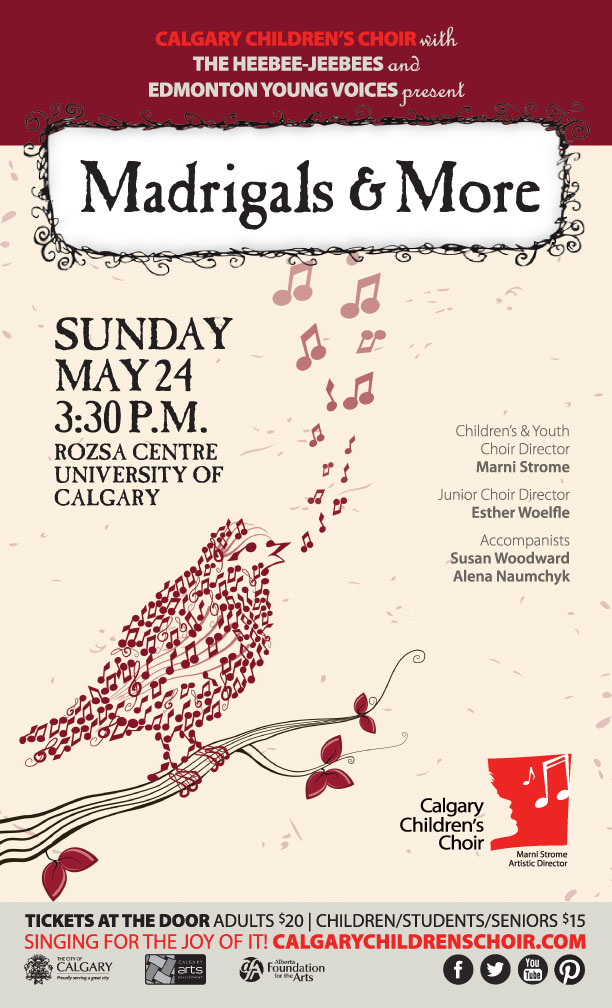
    On Sunday, May 24th, in the afternoon, we had our final concert of the year; Madrigals and More, featuring the HeeBee-jeebees, and the Edmonton Young Voices choir.

    Spring 2015 Concert

    The Rozsa Centre was decorated with a spring theme, featuring lovely maypoles designed by our Creative Consultant, Kat Long. We were thrilled to end our 2014-2015 singing on such a high note (pun intended), singing such pieces as Adiamus, Frobisher Bay, Sing We and Chant It and more!

    Calgary Children's Choir and The Heebee Jeebees


    Calgary Children's Choir and Calgary Junior Children's Choir


    Calgary Junior Children's Choir


    Edmonton Young Voices


    Calgary Children's Choir


    Calgary Children's Choir


    Calgary Children's Choir and the Heebee Jeebees and Edmonton Young Voices


    What was your favourite part of the concert? Tell us in the comments below!

    = Calgary Children's Choir


    Thank-you to our wonderful CCC community for a fantastic 2014-2015 singing season! Please check back at the end of June for our Tour Blog, as we travel to Ottawa to participate in the Unisong Choral Festival!

  • Introduction To Madrigals

    madrigals

    Our upcoming Spring Concert on May 24th, 2015 is called Madrigals and More, and unsurprisingly, will feature a type of music known as madrigals!

    Madrigals are a type of music that became popular during the Renaissance period. A madrigal is usually a secular vocal piece of music, often unaccompanied by instruments. These types of songs originated in Italy in the early 1500’s, and were the most important secular music of the period.
    Madrigals are most notable for their expressive text. Composers were fastidious in ensuring that the vocal lines they wrote highlighted and enhanced the text of the madrigals, creating another layer of expression and communication. Madrigals combined the most beautiful and descriptive poetry of the time, with lively, vivid vocal lines.

    https://www.youtube.com/watch?v=1w38kHRd0vE

    We would love for you to join us at our concert on May 24th, 2015!

    Spring 2015 Concert

  • Ottawa 2015 Tour Shirts!

    The Calgary Children’s Choir is very lucky to have a wonderful artist as part of our staff. Our Creative Consultant, Kat Long-Jones, recently created three new t-shirt designs for the choir to wear on our upcoming tour to the Unisong Choral Festival this summer!

    Kat designed these three t-shirts to be something the choristers would want to wear after tour was over, and to serve as a reminder of the fantastic time had on tour!

    Calgary Children's Choir

    Kat chose the national animal of Canada, the beaver, for the first design. Since beaver tails have such an interesting texture, Kat elected to modify the tail to include the Calgary Children’s Choir kilt pattern! The beaver is depicted holding a flag heralding the choir, and our upcoming tour destination!

    Lyrics CCC


    In this design, Kat was inspired by the popular collegiate-style t-shirts. She created a replica of the Canadian flag, using black and red text. The writing on the shirt contains the lyrics from the songs the Calgary Children’s Choir will be singing on tour. This shirt is meant to convey that the Unisong Choral Festival, and our wonderful Canadian nation is made up of music, and communities coming together.

    Red CCC


    The third design features an Inukshuk, a symbol from our northern First Nations people, and a symbol which is recognized around the world as Canadian. The Inukshuk is built as a physical marker for travellers, but also a spiritual reminder of safe journeys, and the way home. Kat designed this shirt with our choristers in mind, as they travel away from their families to represent our choir on the national stage. The Calgary Children’s Choir logo is seen as a sihouette in the moon – Singing For The Joy Of It!

    Our choristers got to see their new tour shirts at our recent choir workshop!

    Calgary Children's Choir tour shirts3


    Calgary Children's Choir tour shirts2


    Calgary Children's Choir tour shirts

    Many thanks to Kat Long-Jones for these beautiful designs! 

    Which t-shirt design is your favourite? Tell us in the comments below!

    = Calgary Children's Choir

  • Vulnerability In Singing

    Calgary Children's Choir

    Music strikes an interesting balance between being an art form and a discipline. It is a difficult process to learn the intricacies of  music; understanding the mathematical principles behind music concepts such as time signatures, intervals, and chord progressions. But it is equally difficult to learn how to approach music as an art form; learning to communicate subtle and nuanced emotions, understanding how the music informs text and vice versa, and personally opening up to the music.

    Approaching music from an artistic perspective, requires a great deal of vulnerability on the part of the singer, and this can be difficult to manage. Here are three thoughts on understanding the power of vulnerability in music.

    #1. Understand the music: 
    This goes beyond just understanding the structure of the music; learning the rhythm and melody of a piece. A singer needs to also understand the text they’re singing, which we discussed in greater detail here. But even more than that, a singer needs to understand how the music and the text work together; how one informs the other, and how subtleties in both music and text can convey the true nuances of the human experience. Truly understanding the many complicated layers of music is essential for a singer to communicate and connect with the audience.

    #2. Connect with the music:
    Making a personal connection with the music we are learning is not always as easy as it sounds. Sometimes we have not experienced the event, thoughts or emotions communicated in the music. Thankfully, we do not need to have personally experienced every event and emotion, for us to be able to connect to the music. This is why empathy, the emotion that allows us to see things from another’s perspective, is an important aspect of every artist. Through empathy we can imagine the event or emotion the piece is discussing, even if we do not have these experiences ourselves. Emulating the thoughts and emotions of others, and then communicating those emotions effectively is the hallmark of talented singers, actors, and artists. This connection is what allows us to express the human condition, and it is why art, music, dance and drama, are considered the emblem of civilized society.

    #3. Connect with the audience:
    One of the most important aspects of performing is connecting with the audience. Music is a wonderful, and powerful way to communicate, and in order to effectively communicate, we must forge a connection with the audience. The most effective way to do this is to allow the audience to see our own understanding, and interpretation of the music, and this comes from our own understanding, and connection with the music. The most difficult aspect of performance is allowing the audience to see that understanding; through our facial expressions, the tone of our voice, our delivery of the music, and in the emotional energy we share with our audience. This is true vulnerability in singing, and it is what allows us to truly create magical, musical moments.

    Before you can inspire with emotion, you must be swamped with it yourself. Before you can move their tears, your own must flow. To convince them, you yourself must believe. – Winston Churchill

    What are other aspects of vulnerability in singing? Tell us in the comments below!

    = Calgary Children's Choir

  • Multiple Parts VS Unison

    Calgary Children's Choir Rehearsal

    There are many different ways to sing as part of an ensemble, as we discussed in our blog post A Brief History of Choral Music. When people sing the same part at the same time, it is called Unison singing. When people sing in multiple parts it can be homophonic music – when the voices move at the same time on different pitches, or polyphonic music, when voices move at different times on the same pitches. Canons, or rounds (ex: Row, Row, Row Your Boat) are forms of polyphonic music.

    There are several benefits to both types of vocal music:

    Unison:

    Unison singing really allows singers to focus on how their voices blend together. Often, people think of unison singing as easier than singing in multiple parts, but it can be quite difficult. Since singing in perfect unison demands that all voices blend seamlessly, it can be difficult to remove ego from the process. It involves refinement, subtlety, delicacy, and a light touch.

    Multiple Parts:

    Singing in multiple parts demands that singers focus on intonation. Singers need to be in tune not only with the instruments, but with the other singers around them; listening carefully for changes in tonality, as the chords made from multiple parts change. Singing in multiple parts also provides a breadth and depth to the vocal sound, by layering the different voices and pitches.

    What do you think are the benefits of singing in multiple parts or in unison? Tell us in the comments below!

    = Calgary Children's Choir

  • A Brief History Of Choral Music

    choral music

    People have been singing together for as long as we have kept recorded history. The history of Western choral music as we know it today had its origins in sacred music.

    Gregorian chant was commonly used in churches as a form of worship. Monks would sing the passages in unison, blending their voices to create the sound that we strive to achieve in modern choir; many voices sounding as one.

    https://www.youtube.com/watch?v=eC6OKIYXBxQ

    As music composition matured, the use of several different tones began to be common. Polyphony, or as we began to be used in increasingly complicated iterations. As polyphonic sound increased the breadth and depth of music heard in church, composers began to seek a greater range of sound. Since women were not allowed to sing in church, composers turned to the high soprano sounds of young boys, who were able to sing the treble lines.

    Church music reflected the changes of society and with the Reformation of the 16th century, sacred music was forced to adapt. In order to clarify the words sung in sacred music, reformists insisted that there by one syllable per note, thus signaling an end to the prevalence of polyphonic music, and giving rise to homophonic music. Instead of the vertical lines of melody overlapping, there melodies would move at one, on different pitches. Focus on text had another effect on music – it resulted in a greater focus on the marriage between text and melody. This is best reflected in madrigals (which we will feature in our spring concert!)

    https://www.youtube.com/watch?v=1w38kHRd0vE

    Choral music began to leak outside of the church, and into more secular performances. Though still used in church, choral music in the secular arena had greater license to experiment away from the rigid strictures of the church. Often instruments would double the voices of the choir, but increasingly, choirs were used to enhance instrumentation, and to add another important layer to music. The use of text allowed another layer of communication, and the audience responded appropriately. Several of the most famous choral moments in history involved the use of large choirs singing with large symphonies, as seen in Beethoven’s 9th Symphony – Ode To Joy:

    https://www.youtube.com/watch?v=xBlQZyTF_LY

    With the advent of modern music, many people think that choral music has fallen by the wayside. But this is categorically untrue. More than ever, people seek the togetherness and intimacy that singing with others affords. This is seen with the myriad of choral groups available in every major city in the world. The advent of technology also introduces a new kind of creativity in choral music, best illustrated with events like Eric Whitacre’s Virtual Choir. (Check out his great Ted Talk about the process!)

    Though choral music has a long and illustrious history, it is far from over! If anything choral music is just getting started. After all, the joy and wonder of singing with others is something that will never go out of style!

    What is your favourite kind of choral music? Let us know in the comments below!

    = Calgary Children's Choir

  • 4 Ways In Which Singing In A Choir Increases Your Confidence

    Calgary Children's Choir Tour

    Musicians often have a healthy dose of confidence. It comes from the self-discipline, self-awareness, and sheer amount of practice that is a part of the process of learning music. Here are four ways in which singing in a choir can increase your confidence:

    #1. Conductor:
    Despite the myriad of jokes about what exactly a conductor’s purpose is on stage, they are actually a very important aspect of the musical process. Our director is a guide, not only through the process of learning the music; pointing out important technical aspects, and instructing us in the interpretation of the music. There is an implicit trust that develops between conductors and choristers, and that trust can be seen on stage, when a conductor has to manage the many moving parts of a performance. Unconditional trust is an inherent aspect of confidence – it allows singers to get up in front of people, and put their full heart into the performance.

    #2. Peer to peer learning:
    Confidence comes from knowing those around you support you. And what better way to support someone, than by teaching them? In a choir setting, choristers are not just learning about music from the conductor, but from those sitting around them as well. In the Calgary Children’s Choir we actively encourage peer mentorship, from implementing a buddy system between our youngest singers, and the oldest, and creating collaborative concert settings.

    #3. Opportunity to perform:
    As a choral group we have at least three large concerts that are part of our singing season. We also have several other singing engagements throughout the year. Because of this, our choristers have many opportunities to practice performing. With every concert, or performance, our choristers become more self-assured, more confident in their ability to stand up in front of an audience and sing!

    #4. Part of a team:

    When our choristers get up on stage to perform, they know that they won’t be up there by themselves; they will have the rest of the choir up there with them. That is the beauty of choral singing; many voices as one. Knowing that you have others with you, enhancing your own sound, supporting you, and together, creating something beautiful greatly increases confidence. Singing is terrific, but singing with others, is truly something special!

    Do you think singing in a choir increases confidence? Tell us in the comments below!

    = Calgary Children's Choir

  • The Value Of Not Performing

    Calgary Children's Choir

    The Calgary Children’s Choir has three major performances a year; our Christmas concert, our Folk Concert, and our Spring concert. Sometimes we’ll have other singing engagements sprinkled in as well. Much of the music that we learn throughout the year is chosen for one of those concerts, but sometimes we learn music without having a specific performance in mind. There are several reasons why we find value in learning music that is not for performance:

    Practical Elements:
    Often we learn a piece of music to demonstrate a certain aspect of music to our choristers. This could be anything from multi-part harmonies, to great vocal leaps, appropriate breathing techniques, or poignant text. What our choristers take from a piece of music should be from our rehearsals and exercises, our workshops and the practice they might do at home. A piece of repertoire is a valuable way to provide an example of a musical technique, but that doesn’t mean that we have to perform that piece.

    Music For Its Own Sake:
    While it is wonderful to perform, we shouldn’t think of music as valuable only in the context of performance. Much of what makes learning music so amazing – the self-discipline, the hard work, the hours of practice, are all aspects that are not readily seen in a performance. It is important that we teach our choristers that learning music is important because music itself is important, and not just the act of performing music.


    Do you think every piece you learn needs to be performed? Tell us in the comments below!

    = Calgary Children's Choir

  • Three Reasons Why You Should Sing Every Day

    Singing-singing-20512636-1120-756

    For many of us, singing is already a big part of our lives; we have choir rehearsals, workshops and concerts. But singing on a daily basis, even if it’s just for a few minutes at a time has several impressive benefits:

    #1. Stamina:
    As with any muscle, the more you work out your voice, the better you will sound. The voice needs constant practice to gain better breath support, vocal range, and agility. The more you practice, the longer you can sing, the better your ear will pick up the nuances of difficult repertoire, and the more comfortable you’ll be with your instrument!

    #2. Break Time:
    Singing can be a great way to change up your day, particularly if it has been a long, stressful one! Singing requires a very intense focus, and is a particularly immersive endeavour, so it can be an excellent way to clear your mind, and to relieve any stress you may be experiencing. As well, using singing as a break from the stresses of your life, can ensure better focus when you do need to return to work.

    #3. It’s so good for you:
    There are so many emotional, psychological, and physiological benefits to singing. And the more you sing, the more you can reap the benefits! From increased lung capacity, to lower levels of cortisol (the stress hormone), a recent study has even shown that singing can assist in regulating blood pressure! Singing also released endorphins in your brain, which are the ‘feel good’ hormones!

    Do you sing every day? What do you like most about singing? Tell us in the comments below!

    = Calgary Children's Choir

  • Folk Concert 2015 – ‘Home’ Roundup!

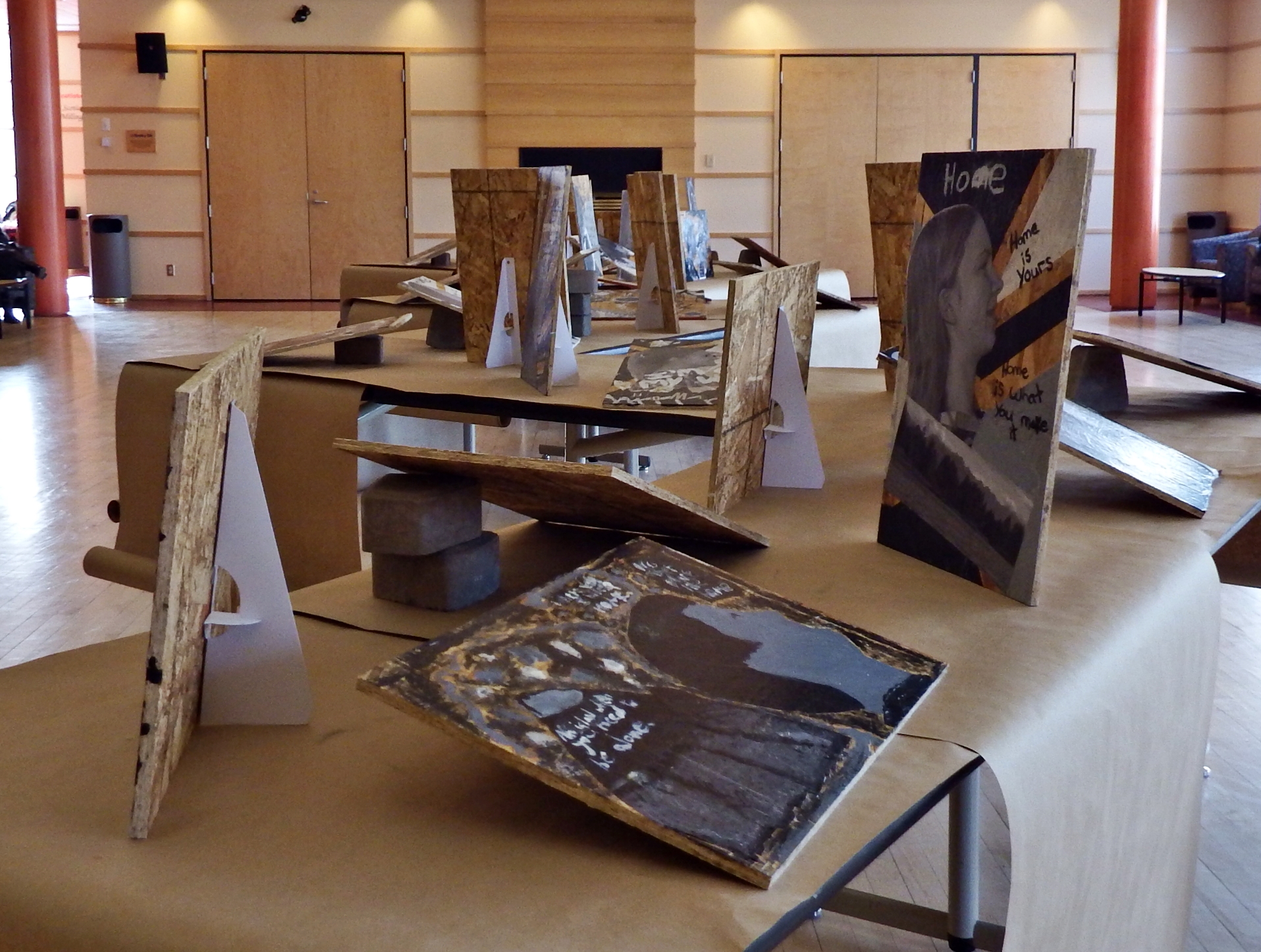
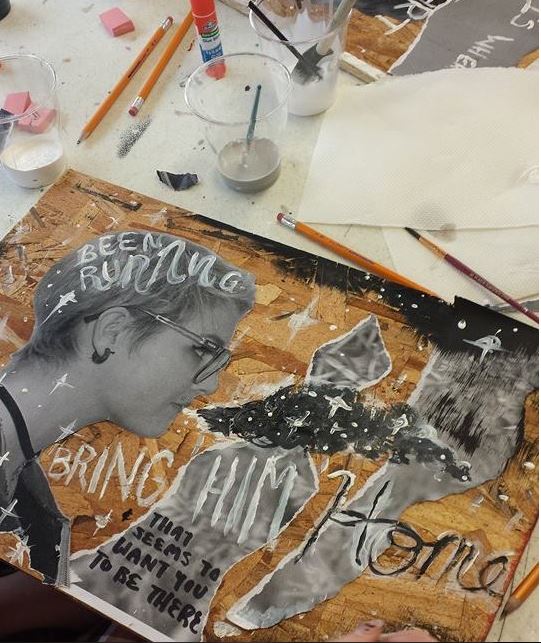
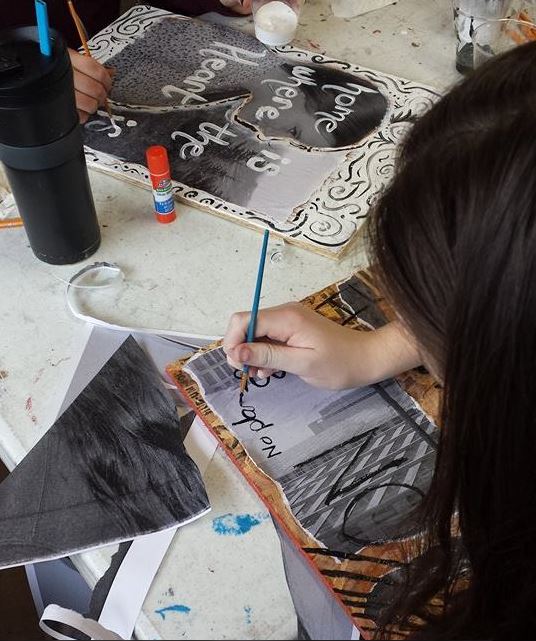
    On Sunday afternoon, March 1st 2015, the Calgary Children’s Choir performed at our annual Folk Music concert at the Rozsa Centre. The theme of this year’s Folk Concert, was ‘Home’, and our concert was emceed by our talented Creative Consultant, Kat Long-Jones. Our concert featured artwork made by the choristers at our recent Winter Retreat, and embody the choristers’ vision of ‘Home’. A big thanks to our Artist in Residence during our Winter Retreat, Lisa Hodgkinson who helped us with this beautiful project.

    We sang a variety of different pieces that encapsulated our ideas of ‘Home’, and different perspective on that theme, including: Hey Ho, Nobody’s Home, Almost Home, 900 Miles, and Woodsmoke and Oranges.

    CCC Artwork

    Kat Long Jones

    4

    Kat Long Jones


    Calgary Children's Choir

    Calgary Children's Choir

    Calgary Children's Choir


    Calgary Children's Choir

    Calgary Children's Choir

    Calgary Children's Choir

    It was a wonderful concert, and a great way to celebrate all the different perspectives on ‘Home’! Thank-you to everyone who came out to see our concert!

    What was your favourite part of the concert? Tell us in the comments below!

    = Calgary Children's Choir

  • 5 Ways In Which Singing Makes You More Creative

    creativity

    #1. Awareness:
    A singer’s instrument is different from other instruments, because it is contained within a singer’s body. This means that singers have to have an excellent awareness of their own body, and they need to visualize their voice in a way that other musicians don’t have to. The inability to see one’s instrument allows singers to think uniquely, and create their own picture of their voice, and the singing process in their mind’s eye.

    #2. Characterization:
    When singers perform a piece, they think about the meaning of the piece, and often the character embodied within that piece. Performing requires singers to adopt the persona of the music itself, and to think about the emotions, and events described by the piece. This ability gives singers a unique perspective, and insights into how others view the world; a valuable aspect of creativity.

    #3. Teamwork:
    Singers rarely sing alone. Whether they’re singing with others, or accompanied by other musicians, they need to be taking the other musicians into consideration. Performing live with other musicians requires incredible communication, usually through nuanced body language and cues, subtleties of performance, and consideration for the musical elements the other musicians bring to the performance.

    #4. Expression: 
    All musicians express emotion through their music; it is part of what makes music so compelling to listen to. But singers have an added layer of emotive power because we sing text as well. This allows singers to make connections between the music itself and the text. Often, composers have written music to reflect the words in the text, and singers need to identify those moments, and respond to them musically, to best communicate the message of the music to the audience.

    #5. Vulnerability: 
    To get up on a stage in front of other people and perform, requires an immense amount of courage. Any performer understands that every time they get up on that stage, they might fail, and fail in front of other people. This kind of courage comes from the ability to express your vulnerability, to expose your innermost thoughts and emotions, and then communicate them to an audience. and it is a powerful tool for any singer.

    “Before you can inspire with emotion, you must be swamped with it yourself. Before you can move their tears, your own must flow. To convince them, you must yourself, believe.” – Winston Churchill


    Do you think singing can contribute to creativity? Tell us how in the comments!

    = Calgary Children's Choir

  • Winter Retreat 2015 Roundup!

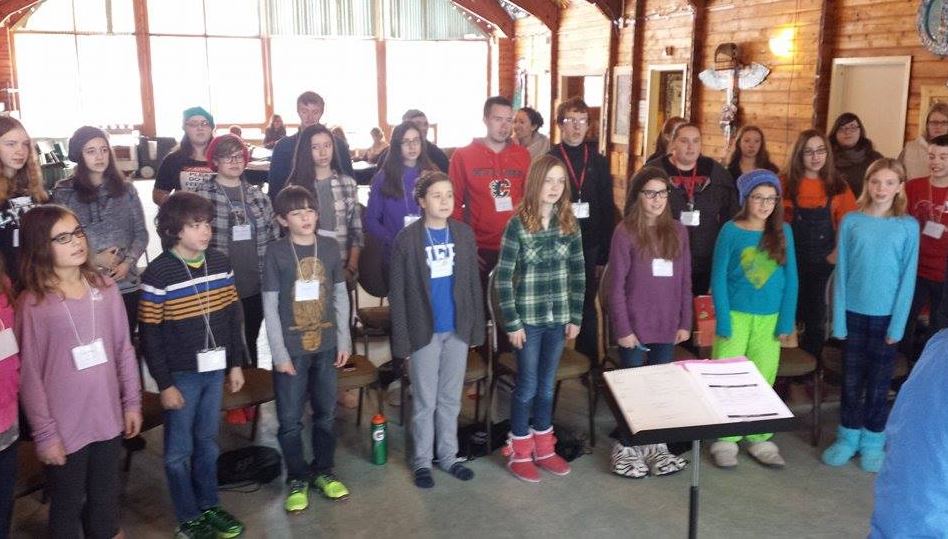
    On the weekend of January 30th, to February 1st, the Calgary Children’s Choir went up to Camp Horizon in Bragg Creek for our first ever Winter Retreat! The weekend was absolutely magnificent!

    Camp Horizon

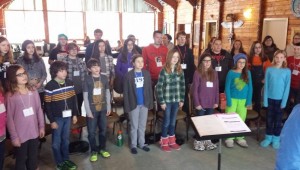
    Friday January 30th – We  arrived at camp in the evening and where excited to begin! We played a really fun-and competitive game where the groups had to out-sing each other based on different categories. Our awesome camp leader, Andrew, set up a roaring fire for us outside, and even though it was snowing it wasn’t too cold and we all bundled up to sing camp songs and tell jokes into the night. We all agreed singing in the snow was a unique experience!

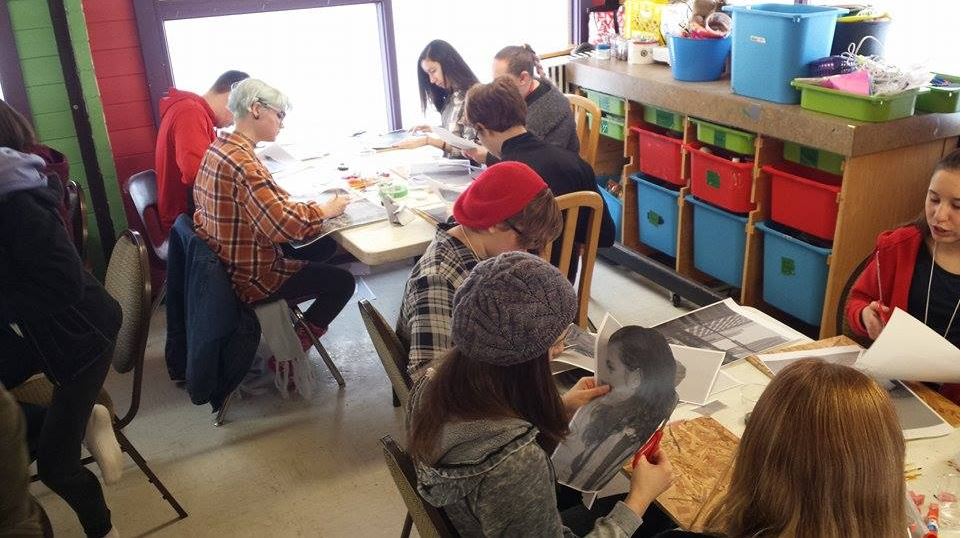
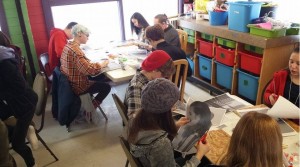
    Saturday January 31st – We awoke to a perfect fresh layer of snow, ideal for the activities ahead. After an amazing breakfast of chocolate pancakes, and a morning rehearsal, the choristers split into three groups. Each group took a turn doing music theory with Ms.Strome, an art project with our visiting artist, Lisa, and snow shoeing with Andrew.
    Calgary Children's Choir


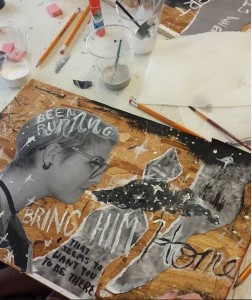
    With Lisa, the choristers turned their portraits into a unique embodiment of their visions of home. This art project will be displayed at the ‘Home’ concert coming up this March, and it was wonderful to make something so meaningful to go along with our concert.
    Calgary Children's Choir


    5


    7

    The snow shoeing expeditions were amazing. The weather was perfect and the campers got to follow animal tracks through the woods, slide down hills, and laugh in the snow whilst wearing old fashioned “beaver tail” or modern “bear claw” snow shoes. We even had races!


    3


    10


    11


    Throughout the weekend, the choristers had cards read to them with secret facts about all the choristers, and based on the facts they had to guess who the card was about. It was great to see how well we all know each other. A real turkey dinner was followed by skit night, and the choristers were true to form with funny skits, amazing singing, and poetry. As a special treat, whipped cream was provided so the choristers could have fancy hot chocolate while we played board games by the fireplace. There was Twister, Disney Charades, and more!

    Sunday February 1st – On Sunday we ate a breakfast of cinnamon buns, and had another rehearsal. The choristers really delved deep into the music, learning new pieces quickly and really fleshing out the meaning of each work. We thanked Andrew for all of his help and leadership, and Lisa for lending her amazing skills to us over the weekend. We thanked the kitchen staff with rousing applause, as we all agreed it had been the BEST camp food we’d ever had!

    Winter Retreat was a huge success and hopefully it will become an annual event!

    Calgary Children's Choir


    * Blog post and all photos by Kat Long

    What was your favourite part of camp? Tell us in the comments below!

    = Calgary Children's Choir

  • Singing Spaces


    Hearing

    The best kind of music is influenced by small, seemingly insignificant elements. Where the musicians stand or sit, how well they watch their conductor, the way in which they listen to the other performers. One of these subtle elements, is the space in which a musician performs.

    A ‘live’ space, is one in which there are many hard surfaces. This allows the sound to bounce off of those hard surface. In live spaces it takes the reverberation from your sound longer to decay. It makes your sound linger, and it sounds very pleasant to the ear. This is why everyone sounds great singing in the shower!
    Still, there are occasions when a space is too ‘live’, and the reverberation of sound can be disorienting.

    Ex: When the choir toured to New York in 1999, we performed in St. Patrick’s Cathedral, a beautiful venue that has exceptionally live acoustics.

    St._Patrick's_Cathedral

    Unfortunately, the organ, which we were using for our performance, was located at the opposite end of the cathedral to where we were performing. The cathedral was so massive, that the reverberations from the organ took a few beats to reach the choir, and the reverberating sound from the choir took a few beats to reach the organ. In that case it was very difficult to rely on the sound we were hearing as feedback, because the reverb of our singing in such a live space, was interfering with the reverb from the organ.

    A ‘dead’ space, is one in which there are sound absorbing materials present in the room. These can include carpets, wall hangings, and certain materials that are specifically designed to absorb sound. Another example of a ‘dead’ space is the outdoors. There is simply too much space for the sound waves to escape, and so the reverb from singing decays almost instantaneously. A ‘dead’ space can be very difficult space in which to perform, or even in which to practice.

    In which spaces do you prefer singing? Tell us in the comments below!
    = Calgary Children's Choir

  • The Benefits of Singing With An Orchestra


    Calgary Children's Choir

    The Calgary Children’s Choir has been very fortunate over the years to have performed with a variety of musicians both locally and internationally. It is of the utmost benefit to young minds to be as exposed to as many kinds of performances as possible. From our concerts with local musicians, to our yearly participation in Alberta Ballet’s Nutcracker, we have had several wonderful opportunities to perform with orchestras. Here are three benefits of singing with an orchestra:

    #1. Everybody is necessary:
    Although there can be many different people involved in a concert, every single member of an orchestra, or a choir, is essential to that performance. Understanding this kind of teamwork is important to one’s growth as a musician. Even if you are only one part of the entire performance, you are still an essential aspect. Performing with other musicians is a great joy, and it can be highly beneficial, both physically and mentally.

    #2. Seemingly disparate parts make up a whole:
    It is always amazing to hear how the radically different sounds of a trombone, and a violin can sound so wonderful together. Orchestras are composed of a myriad of different sounds, and it is an excellent skill to be able to determine by ear which instrument makes which sound. Performing with an orchestra enables singers to become adept at picking out different sounds, and focusing on them, at hearing subtle differences, and understanding how the disparate sounds work together. These abilities have numerous non-musical applications, like memory retention, problem-solving skills, and the ability to focus intently.

    #3. Focus is key :
    With so many elements involved in a performance, it can be easy to become distracted. This is why focus is an essential skill a singer must develop. By learning to focus on the subtle instructions a conductor gives, or the variations in sound being produced by all of the different musicians in an orchestra as well as the singers around you, a singer can truly hone this important skill. Focus is an incredibly valuable skill outside of performance, as our world becomes increasingly filled with distractions.

    What are some other benefits of singing with an orchestra? Tell us in the comments below!

    = Calgary Children's Choir

  • Welcome to 2015!

    2015 New Year celebration

    Welcome back to 2015 everyone! We have a very exciting year ahead of us, and we’re thrilled for you to join us!

    At the end of January, our Children’s Choir, and Youth Choir will be returning to Bragg Creek for a Winter Choir Camp retreat! This is the first time we’ve held a winter retreat, and we’re very excited! In March we will have our annual Folk Music concert at the Rozsa Centre, on March 22nd. On May 24th, we will have our annual spring concert, also at the Rozsa Centre.

    The Calgary Children’s Choir will be touring to Ottawa this year at the beginning of July, to participate in the Unisong festival for our second time! We are very excited to be returning to the music festival and celebrating Canada Day with good friends and good music! We will be featuring a tour blog again right here on our website so you’ll be able to follow along with the tour, and hear what the choir is doing every day!

    We are also very excited to announce that the Calgary Children’s Choir website will have online registration available for spring 2015. This will enable returning choristers to register efficiently, and new choristers to have a quick and easy way to register via the website!

    = Calgary Children's Choir


    What are you excited about for 2015? Tell us in the comments below!


  • A Child’s Carol 2014 – Christmas Concert Roundup!

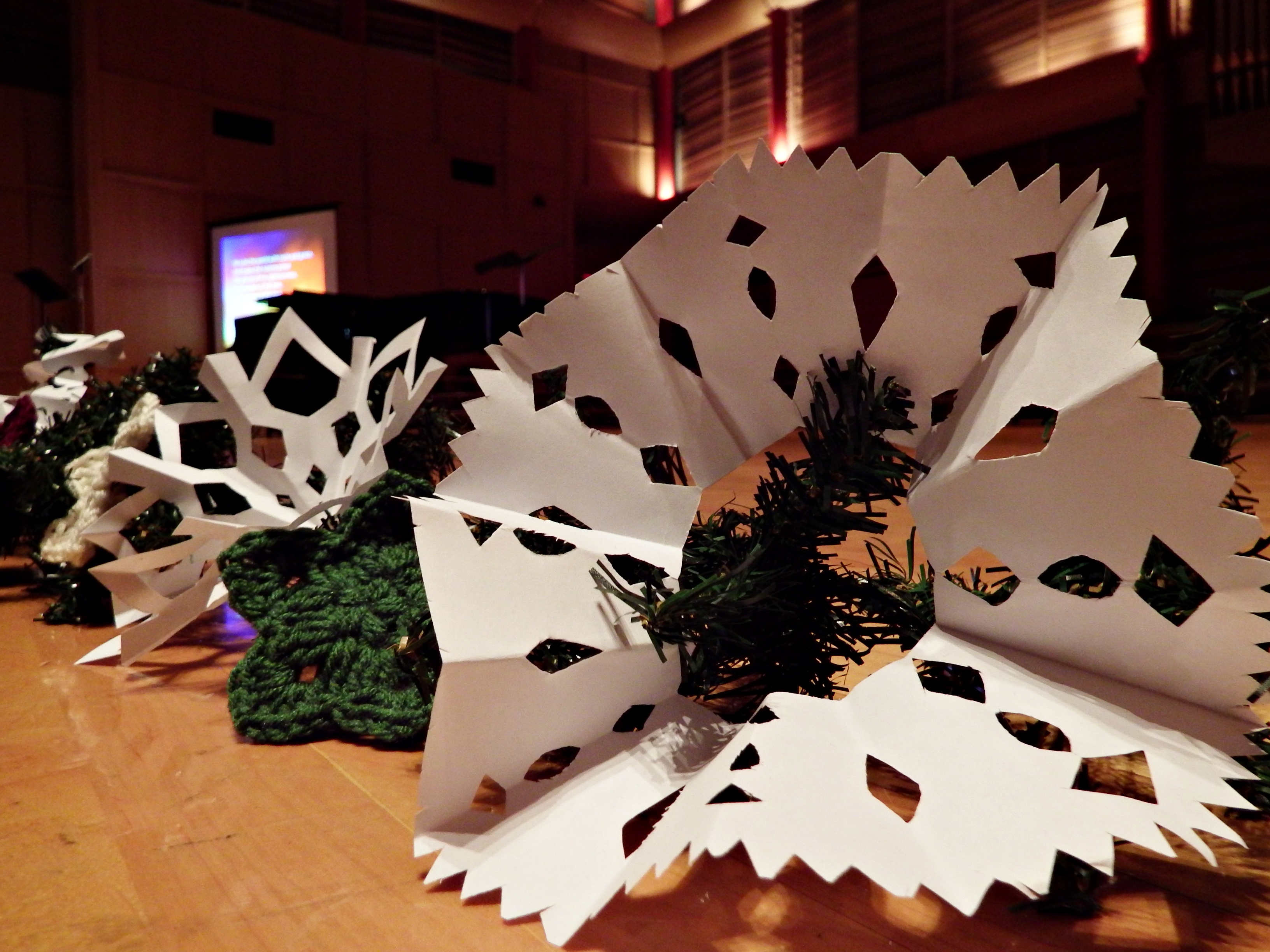
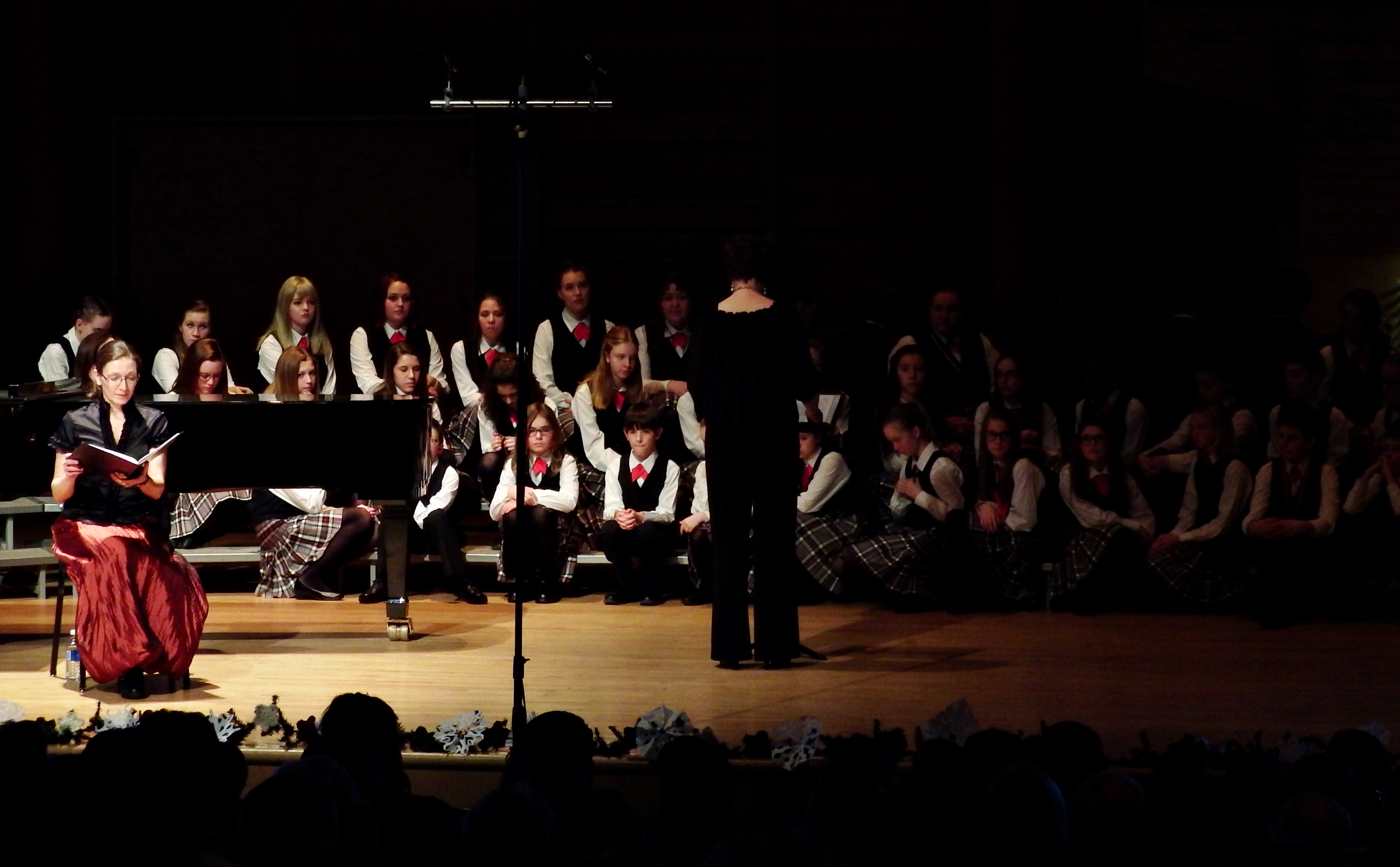
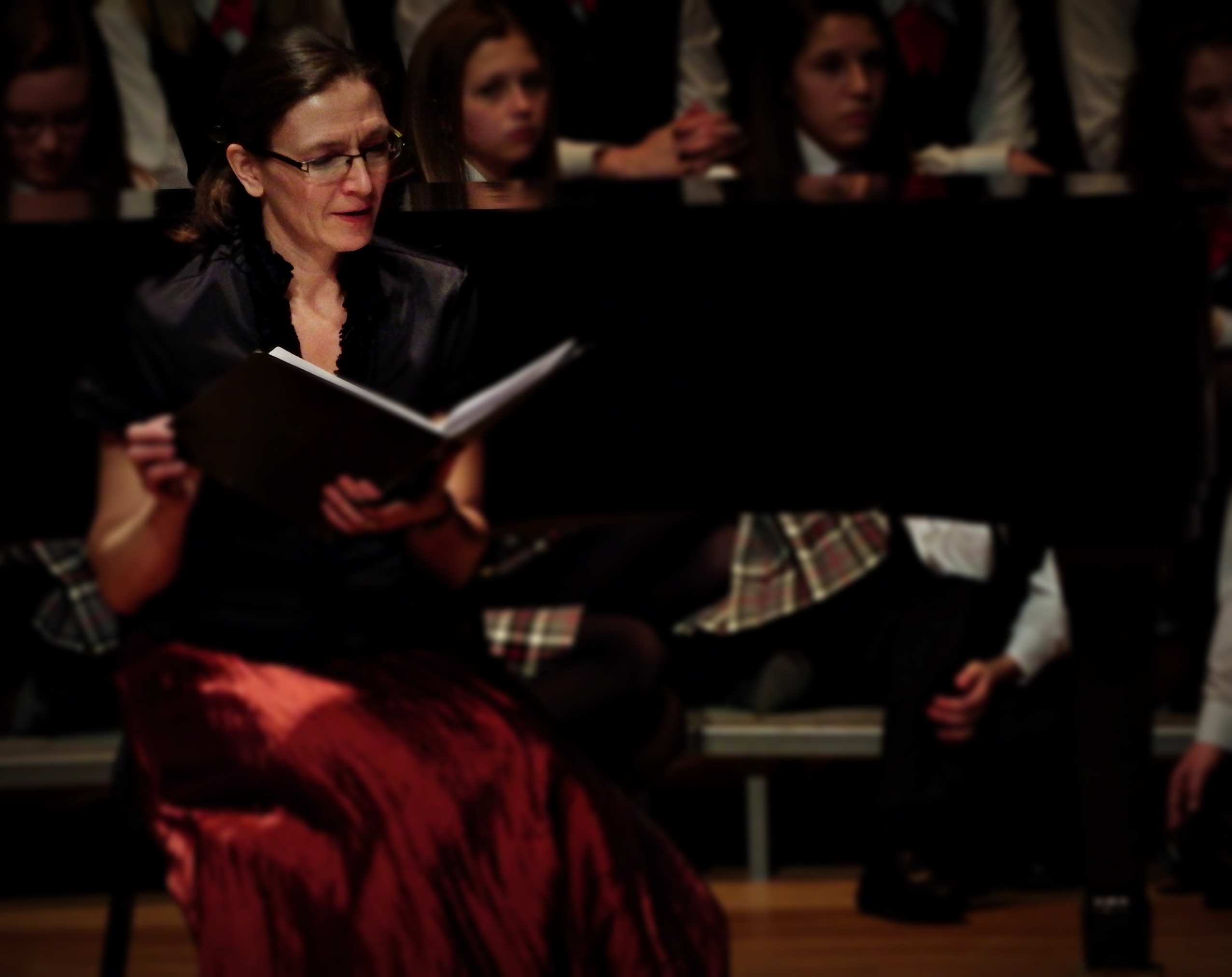
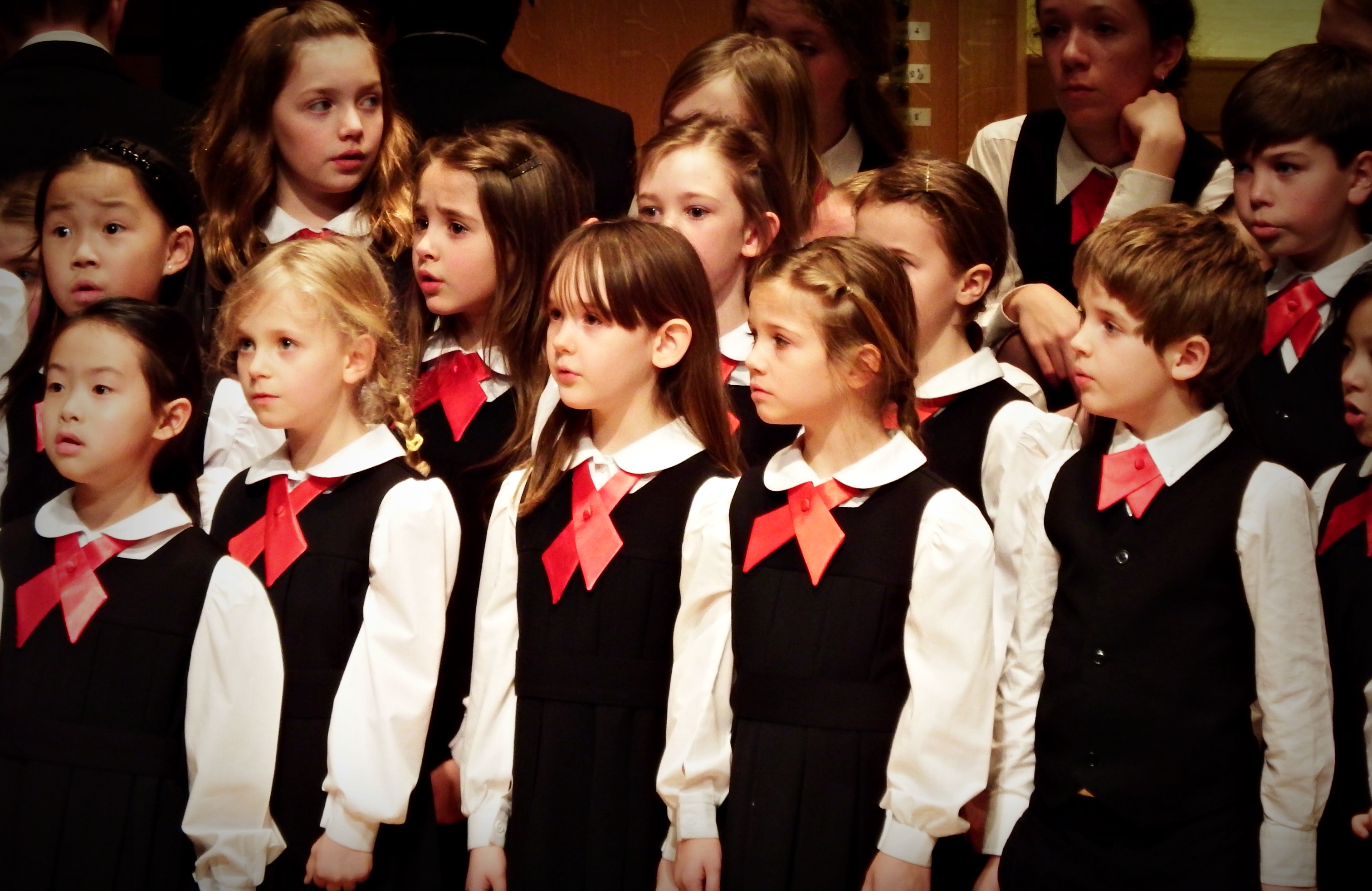
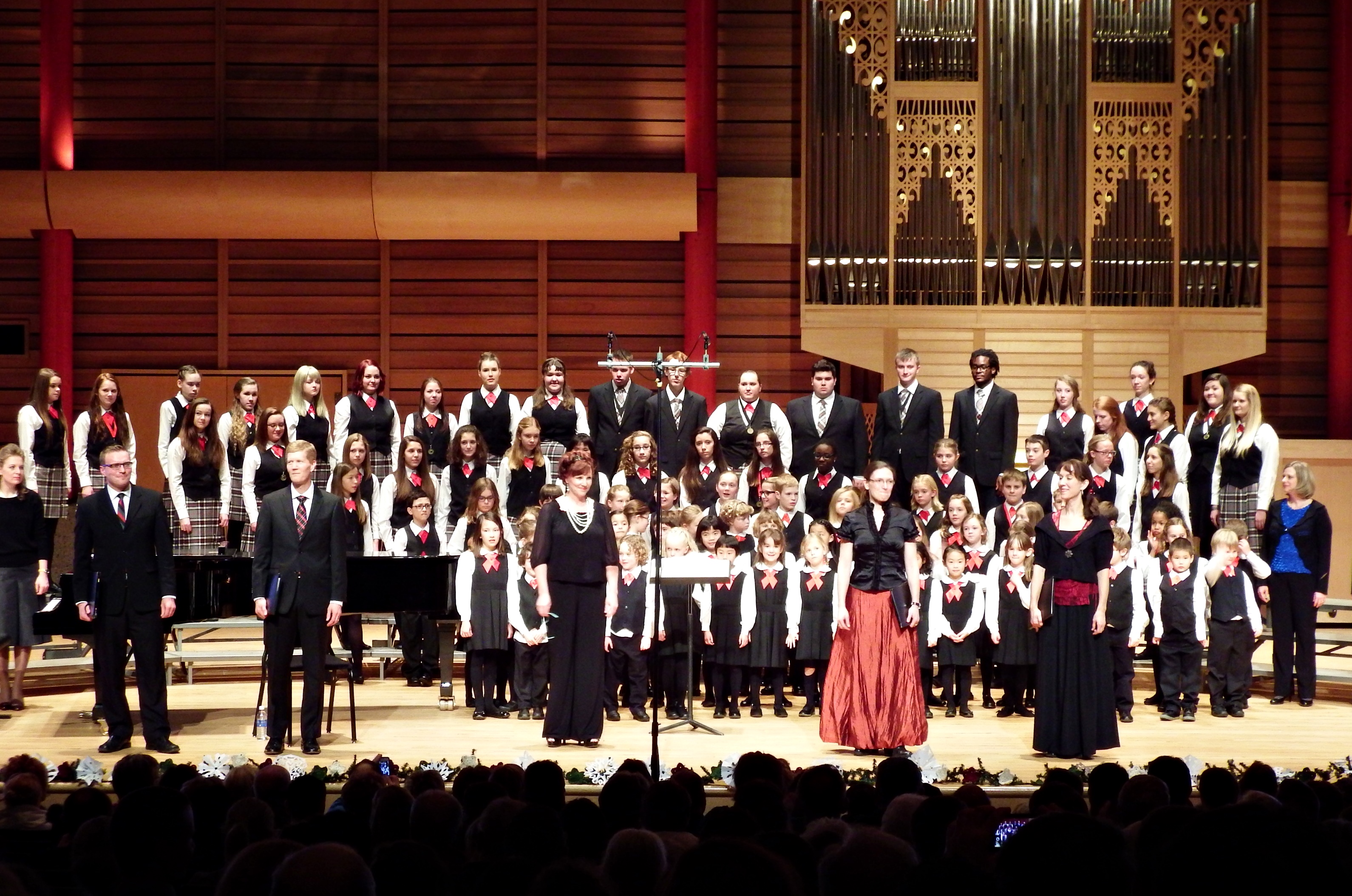
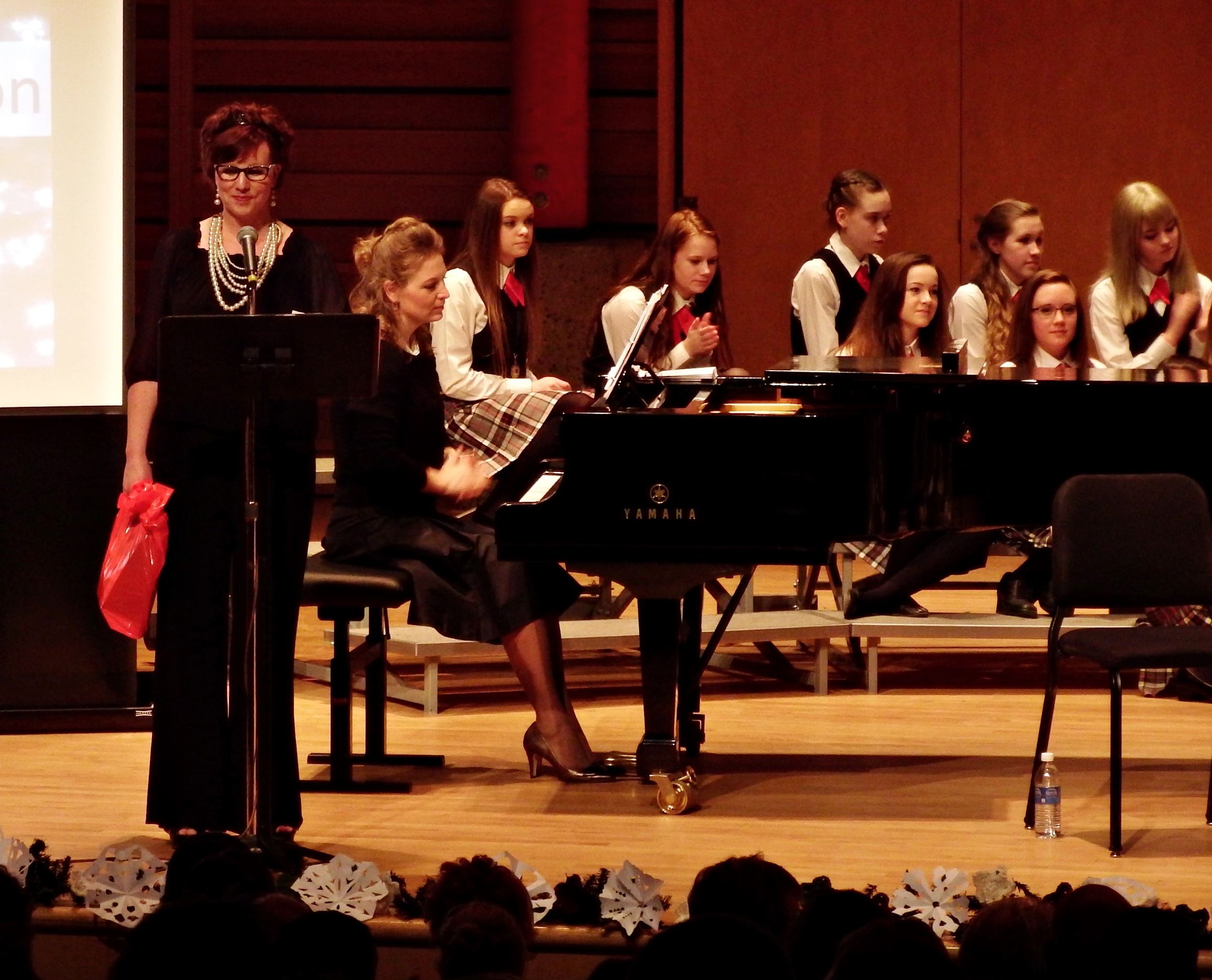
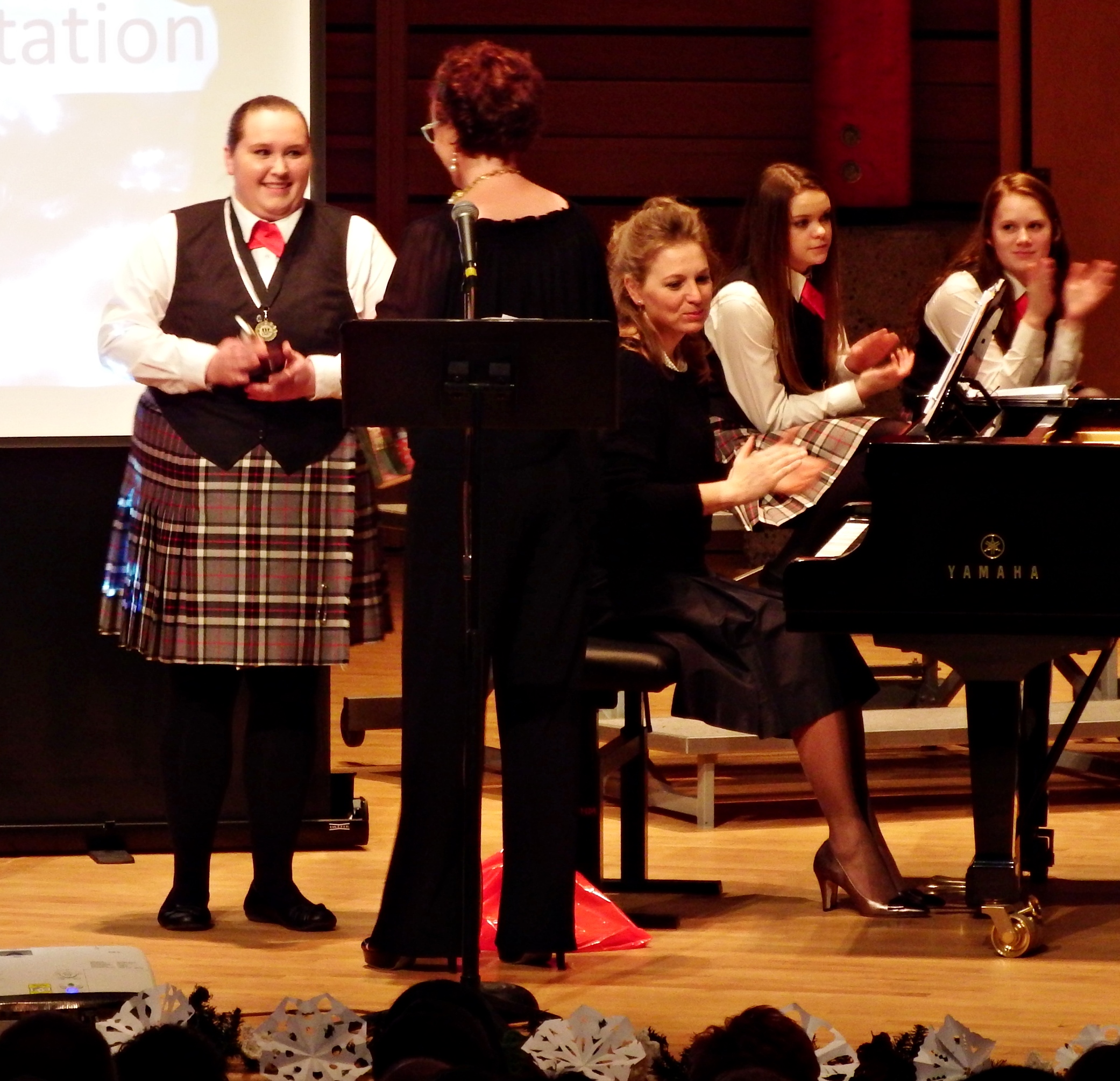
    On Saturday December 13th, we were thrilled to present The Christmas Miracle of Jonathan Toomey in concert with VoiceScapes! The evening was a wonderful combination of storytelling and holiday music. The beautiful Rozsa Centre was decorated by our amazing Creative Consultant, Kat Long, who crocheted 385 stars for us by hand! We were also very excited to present the Chandler Zawalykut scholarship to longtime member, Chantel Witherly!
    Check out these photos from the concert!

    1


    6


    12


    11


    14


    10


    15


    16


    20


    21


    22


    24


    What was your favourite part of the Christmas concert? Tell us in the comments below!

    = Calgary Children's Choir


    The Calgary Children’s Choir wishes you all a Merry Christmas, and Happy Holiday! We’ll see you all in the New Year!

  • VoiceScapes!

    We are very excited this year to be sharing our annual Christmas concert, A Child’s Carol, with the professional vocal group; VoiceScapes!


    vsgroup300

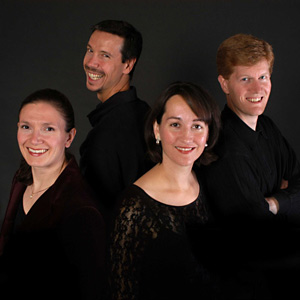
    VoiceScapes is a four member vocal group that was formed in 2000. Their members have extensive experience in vocal music, and we have been very fortunate to feature two of its members, Christina Jahn and Paul Grindlay in concert with us before! Throughout their 15 year history, Voicescapes has performed across Alberta, collaborating with a variety of Canadian musicians, in diverse vocal performances, including: the Early Music Voices Concert series, and performance with the Alberta Baroque Ensemble, the Red Deer Symphony, and the Calgary Philharmonic Orchestra.

    You can check out recordings by Voicescapes  here!

    We are thrilled to be presenting The Christmas Miracle of Jonathan Toomey with Voicescapes, on Saturday December 13th, 2014, and we hope you’ll be able to join us!

    A Child's Carol 2014


    For ticket information regarding our Christmas concert, contact our business manager, Linda White.

    The Calgary Children’s Choir will also be joining VoiceScapes on Sunday, December 21st, for their 13th annual Sing Along Messiah! We would love to see you there! Ticket information is available here.


    Are you looking forward to this year’s Christmas musical celebrations? Tell us in the comments below!

    = Calgary Children's Choir