March 16, 2019 at 7:00pm. – Tickets Now Available
Purchase yours here!
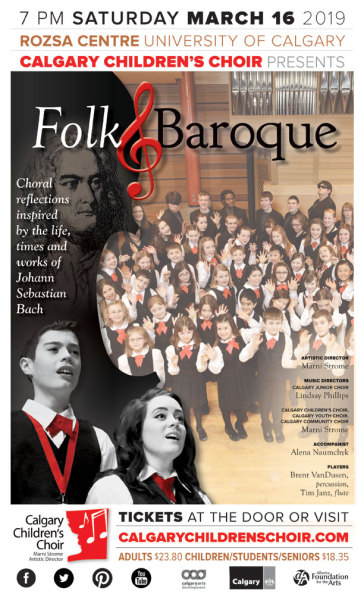

We are super excited to announce our Christmas concert, Bach to Bethlehem!
Tickets will be a hot commodity so be sure to purchase yours here!
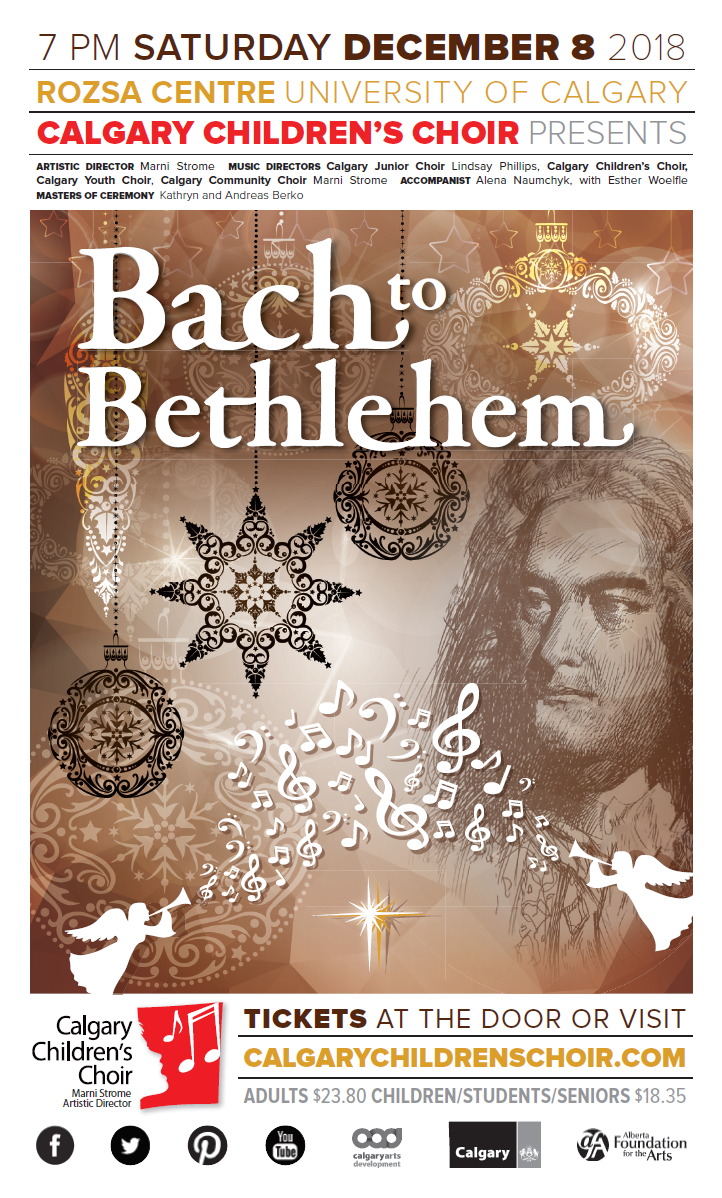
The Calgary Children’s Choir is pleased to introduce the Calgary Community Choir. This is the newest addition to our multi-age program and will welcome choristers 21 and older. Anyone with the desire to sing is invited to enroll regardless of choral experience. The long-awaited, new group will be under the direction of Marni Strome, the current musical director for the Calgary Children’s Choir and the Calgary Youth Choir.
“This has been a highly demanded group and I think now is just the right time to start it up,” says Marni Strome.
The group will be practicing once a week from 7:30pm to 9pm on Thursdays beginning Oct. 4 leading up to the Christmas concert in December. The group will then start back up in March in preparation for the final May concert. With a total of 10 rehearsals before performances, YYC CC is a low commitment group perfect for those with limited time.
“There is a possibility that with enough demand we would consider restructuring the rehearsals to span the entire year,” explains Marni, “but during this trial period we will start with less commitment and see how it goes.”
The group will be an amalgamation of the St. Giles Church Choir and Calgary Community Choir members. Members have the opportunity to enroll with the church choir and join them on Sundays for the service free of charge. Registration for the new group includes a fee of $130 per semester or $260 for the full year. We hope to see alumni and newcomers alike!
If you or anyone you know has questions about the YYC CC, contact Business Manager Linda White at info@calgarychildrenschoir.com
To register to the Calgary Community Choir please click HERE.
Happy singing!

The voice is a wonderful and singular instrument because of its unique ability to convey story. Composers have used variations in tempo, dynamics, melody, harmony and rhythm to convey a story, but singers have the added layer of text, and are thus uniquely equipped to also be storytellers. Here are 3 things singers must consider as storytellers:
#1. Compassion:
It’s essential for singers to be compassionate, because they are often telling stories of lives they haven’t lived. Conveying the experiences of others, especially when you have not shared those experiences yourself, requires a maturity, and a deep sense of empathy. Shifting your personal perspective to allow for the ideas and opinions of others to receive equal weight is an important aspect of the singer as a storyteller, especially since the stories singers are telling can be hundreds of years old; from a different time, and place.
#2. Narrative:
Telling a story that is sung requires both a compelling understanding of the text, but an even deeper understanding of how to use the music, and the human voice to convey all meanings of that text. A singer must use dynamics, tempo, inflection, enunciation, and emphasis to help them weave the text with the music to convey the true narrative.
#3. Community:
The best stories are the ones that truly resonate with a large group of people. Shared experiences shape our sense of community, and help us determine what holds shard meaning for us. Singers don’t necessarily need to have a community already, but they do need to consider the creation of one as they sing – including everyone, being open and honest, and sometimes vulnerable. Singers must be considerate of how their story will impact others; not everyone reacts to a story in the same way. Creating a safe space for storytelling through community is an important job.
What else must singers consider as storytellers? Tell us in the comments below!


Singing can help with learning in a myriad of ways, but one of the most subtle aspects of singing is in the acquisition of language. Here are three ways in which singing can help you learn more about language:
#1. Libretto:
Since the language often contained in vocal pieces is commonly in the form of libretto, there is a great deal a singer can learn from language by viewing it in the context of poetry instead of prose. Libretto often takes into account cadence, and emphasis, rhythm and pulse. This causes a singer to think about language differently than most people, because a singer needs to choose which words to emphasize, and which to de-emphasize. Singers also need to interpret what can sometimes be obscure phrases – poetry is after all, subjective. Textual analysis is an essential skill for singers, and can offer so many subtleties to the acquisition of language.
#2. Placement:
Singers spend a rather astounding amount of time thinking about their mouths. This is important because it means we are able to think not only about producing words and sound, but about how those sounds are produced. Elements of language that most people ignore, such as diphthongs, vowel modification, voiced and unvoiced consonants, and projection are the bread and butter of a singer’s life. Thus, a singer spends an inordinate amount of time thinking about where in the mouth, language is placed, and how to modify that placement to create the best vocal sound.
#3. Pronunciation:
Pronunciation is extremely important to a singer, because of the subtleties of vocal production and its changing relationship with pitch frequencies. Pronunciation becomes even more important when a singer is performing a piece in a language other than their native tongue. Where a sound is placed in English, for example, is quite a bit different than where sounds are placed in French. Additionally, many languages have sounds that aren’t found in other languages. Learning how to create these sounds is a difficult task, but an incredibly important skill for a singer!
How else can singing help in the acquisition of language? Tell us in the comments below!
Many of our choristers have gone on to study music, or arts related programs at University, and there are a variety of different career paths you can take to make music an even larger part of your life. We’ll discuss musical careers in greater detail in an upcoming series. Many of our choristers have also gone on to study other fields, but have kept music as a part of their university experience, through university choirs, or attendance at musical productions at their universities. Here are several of the benefits to studying music in university:
#1. Several paths:
There are a multitude of different degree programs that relate to music in university. The Bachelor’s of Music (BMus) is a performance based degree. The Bachelor of Arts in Music (B.A. Mus) allows students to explore a more diversified degree, with more courses in music history, music theory, composition etc… A Bachelor of Fine Arts (B.F.A.) allows students to pursue a variety of different subjects within the Arts programs; dance, drama, music, and art. There are also much more specific music programs, such as Music Therapy, or Sound Engineering, that combine music with science and technology!
#2. Exploring options:
Because music is such a varied field, it is often a requirement in most music programs to take a variety of different options. Singers, for example, are often required to take several language courses. This opens up opportunities for exploration of other areas of study, or even for study abroad programs. Musicians are also often required to take courses in other areas of the arts, such as dance, drama, art history etc… These options can really expand the scope of what being a musician means, and has led to some very interesting multi-discipline collaborations!
#3. Community:
One of the most wonderful aspects of music is the community it engenders. The musical community at universities are often a tight-knit group, since musicians have many classes together, as well as masterclasses, rehearsals, and concerts together. This community aspect spreads outside of those majoring in music though, many universities offer choirs that students in any degree program can join. There are also often recitals and concerts that are steeply discounted (and sometimes free!) for students. Studying music at university doesn’t necessarily mean majoring in music – there are some wonderful opportunities to get to know other students through musical activities!
What do you think about studying music at university? Have you considered it? Tell us in the comments below!
Music is such a wonderful pursuit for mind and body because it is not just an art form, but combines a myriad of other disciplines, including mathematics, biology, and physics. This series, Math and Science in Music will explore the many ways in which music incorporates a variety of these disciplines.
ENGINEERING INSTRUMENTS
Music is discipline for both the mind and body, which is why it’s important that we have the best tools available to enable us to play beautiful music. For those of us who are singers, our instruments are built right into our bodies, but all other musicians require a physical instrument that they can hold and manipulate to create beautiful sounds.
Crafting musical instruments requires a varied skill-set, including engineering abilities. These skills allow engineers to create instruments that have unique timbres, and tone while still conforming to the basic specifications of the instrument they are crafting.
Engineers use the physics of sound to assess how frequencies will perform within a given instruments; observing aspects like size, shape, and material to create the best and most unique tone possible. They also have to consider comfort and the aesthetic quality of the instruments; thinking about an instrument from the inside to the outside.
This isn’t just for ‘classical’ instruments either, engineering students continue to come up with new, unique sounding instruments, as part of their engineering studies. Check out this cool article about engineering students creating unique instruments at Yale!
How else is engineering important in music? Tell us in the comments below!
Music is such a wonderful pursuit for mind and body because it is not just an art form, but combines a myriad of other disciplines, including mathematics, biology, and physics. This series, Math and Science in Music will explore the many ways in which music incorporates a variety of these disciplines.
HARMONICS
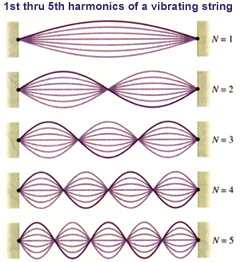
Musical harmonics are another discovery from the field of physics. In our first post about sound waves, we discussed the fact that sound acts as a wave. A pitch is actually made up of several different waves sounding together. These are referred to as the note’s harmonic series.
The bottom sound wave that we can most commonly hear is called the fundamental. All of the sounds that we hear above that fundamental, are referred to as overtones. They can be heard by the human ear at the same time as the fundamental, but they are significantly less obvious. The harmonics sound in order of strength, as it relates to the fundamental. The first sound we hear is the octave, followed by a fifth and a fourth.
For more information on the subject of harmonics, check out this fascinating video!
How else might harmonics be important in music? Tell us in the comments below!
Music is such a wonderful pursuit for mind and body because it is not just an art form, but combines a myriad of other disciplines, including mathematics, biology, and physics. This series, Math and Science in Music will explore the many ways in which music incorporates a variety of these disciplines.
TIME SIGNATURES
Time signatures are used in Western musical notation to denote rhythm and metre in a piece. The time signature is found at the beginning of the piece and is usually comprised of two numbers:
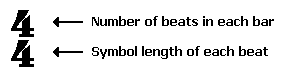
Math is used in a myriad of different ways when looking at time, rhythm and metre in a piece. Music is mathematically divided into equal parts using measures, and those measures are divided up into equal parts using varied rhythms. Rhythmic values usually differ from measure to measure to make a piece more interesting.
Musicians must become adept not only at translating the rhythmic values they see into their mathematical counterparts, but they often need to subdivide those rhythms in their mind to ensure they’re keeping a steady tempo. This means that they are completing mathematical formulas in their mind, while keeping a steady tempo, and applying artistic expression to their performance! Pretty amazing!
How else might math be used in music? Tell us in the comments below!
The Calgary Children’s Choir is very lucky to have a wonderful artist as part of our staff. Our Creative Consultant, Kat Long-Jones, recently created three new t-shirt designs for the choir to wear on our upcoming tour to the Unisong Choral Festival this summer!
Kat designed these three t-shirts to be something the choristers would want to wear after tour was over, and to serve as a reminder of the fantastic time had on tour!

Kat chose the national animal of Canada, the beaver, for the first design. Since beaver tails have such an interesting texture, Kat elected to modify the tail to include the Calgary Children’s Choir kilt pattern! The beaver is depicted holding a flag heralding the choir, and our upcoming tour destination!

In this design, Kat was inspired by the popular collegiate-style t-shirts. She created a replica of the Canadian flag, using black and red text. The writing on the shirt contains the lyrics from the songs the Calgary Children’s Choir will be singing on tour. This shirt is meant to convey that the Unisong Choral Festival, and our wonderful Canadian nation is made up of music, and communities coming together.

The third design features an Inukshuk, a symbol from our northern First Nations people, and a symbol which is recognized around the world as Canadian. The Inukshuk is built as a physical marker for travellers, but also a spiritual reminder of safe journeys, and the way home. Kat designed this shirt with our choristers in mind, as they travel away from their families to represent our choir on the national stage. The Calgary Children’s Choir logo is seen as a sihouette in the moon – Singing For The Joy Of It!
Our choristers got to see their new tour shirts at our recent choir workshop!
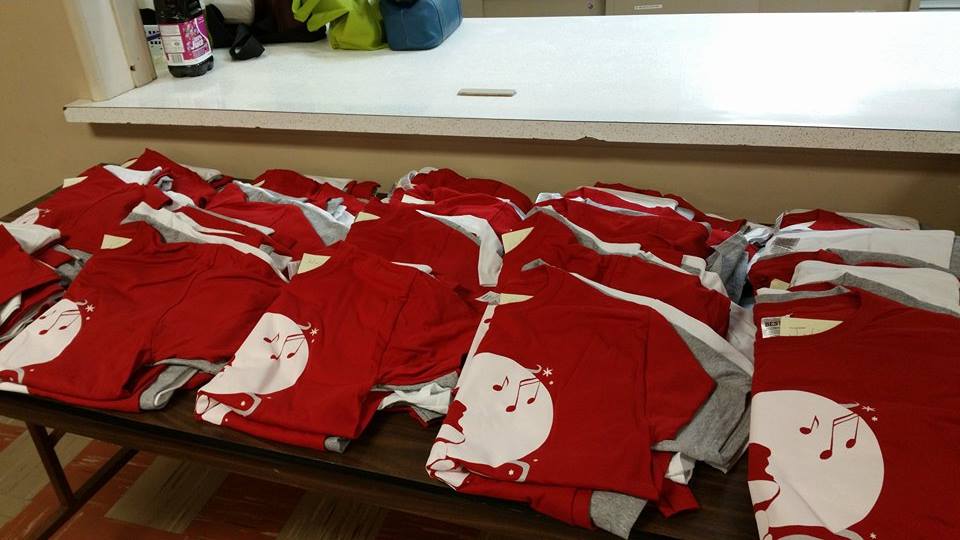


Many thanks to Kat Long-Jones for these beautiful designs!
Which t-shirt design is your favourite? Tell us in the comments below!


As our Calgary Flames play in the second round of the 2015 Stanley Cup playoffs, it seemed like a great time to write a post about two distinct aspects of our popular culture that may seem incongruous, but are in fact closely aligned – sports and singing!

Anthems:
Anthems are extremely prevalent at sporting events. Almost always, national anthems are performed before the game starts. With the advent of user-generated media content platforms, like YouTube and Vimeo, different kinds of anthems have become popular. Using their creativity, and the technology now readily at hand, anybody can create and share an anthem.
A great example of this is the ‘Never Quit’ anthem written and performed by our friends at Cowtown Opera Company!
Athletic Performance:
There are number of recent studies that demonstrate the many ways in which music can enhance athletic performance! Upbeat music with a strong, steady beat can increase an athlete’s performance by up to 20%! Slower, more lyrical music has been shown to calm and focus an athlete’s mind. As well, in sports that combine art and athleticism, such as figure skating and gymnastics, music can significantly enhance the artistry of the performance!
Atmosphere:
Sporting events always have an electric energy about them – it comes from the excitement of the fans, and the passion of the players and the crowd for the game! Using music featuring strong bass elements, and singable lyrics, sporting events can capture the excitement and energy of the crowd! And it’s not just popular music that can encapsulate that excitement. As demonstrated by the wonderful Calgary Philharmonic Orchestra, classical music like O Fortuna from Carl Orff’s Carmina Burana, can be used to great effect with some newly tweaked lyrics!
What do you think about the relationship between music and sports? Tell us in the comments below!

Music strikes an interesting balance between being an art form and a discipline. It is a difficult process to learn the intricacies of music; understanding the mathematical principles behind music concepts such as time signatures, intervals, and chord progressions. But it is equally difficult to learn how to approach music as an art form; learning to communicate subtle and nuanced emotions, understanding how the music informs text and vice versa, and personally opening up to the music.
Approaching music from an artistic perspective, requires a great deal of vulnerability on the part of the singer, and this can be difficult to manage. Here are three thoughts on understanding the power of vulnerability in music.
#1. Understand the music:
This goes beyond just understanding the structure of the music; learning the rhythm and melody of a piece. A singer needs to also understand the text they’re singing, which we discussed in greater detail here. But even more than that, a singer needs to understand how the music and the text work together; how one informs the other, and how subtleties in both music and text can convey the true nuances of the human experience. Truly understanding the many complicated layers of music is essential for a singer to communicate and connect with the audience.
#2. Connect with the music:
Making a personal connection with the music we are learning is not always as easy as it sounds. Sometimes we have not experienced the event, thoughts or emotions communicated in the music. Thankfully, we do not need to have personally experienced every event and emotion, for us to be able to connect to the music. This is why empathy, the emotion that allows us to see things from another’s perspective, is an important aspect of every artist. Through empathy we can imagine the event or emotion the piece is discussing, even if we do not have these experiences ourselves. Emulating the thoughts and emotions of others, and then communicating those emotions effectively is the hallmark of talented singers, actors, and artists. This connection is what allows us to express the human condition, and it is why art, music, dance and drama, are considered the emblem of civilized society.
#3. Connect with the audience:
One of the most important aspects of performing is connecting with the audience. Music is a wonderful, and powerful way to communicate, and in order to effectively communicate, we must forge a connection with the audience. The most effective way to do this is to allow the audience to see our own understanding, and interpretation of the music, and this comes from our own understanding, and connection with the music. The most difficult aspect of performance is allowing the audience to see that understanding; through our facial expressions, the tone of our voice, our delivery of the music, and in the emotional energy we share with our audience. This is true vulnerability in singing, and it is what allows us to truly create magical, musical moments.
Before you can inspire with emotion, you must be swamped with it yourself. Before you can move their tears, your own must flow. To convince them, you yourself must believe. – Winston Churchill
What are other aspects of vulnerability in singing? Tell us in the comments below!

#1. Awareness:
A singer’s instrument is different from other instruments, because it is contained within a singer’s body. This means that singers have to have an excellent awareness of their own body, and they need to visualize their voice in a way that other musicians don’t have to. The inability to see one’s instrument allows singers to think uniquely, and create their own picture of their voice, and the singing process in their mind’s eye.
#2. Characterization:
When singers perform a piece, they think about the meaning of the piece, and often the character embodied within that piece. Performing requires singers to adopt the persona of the music itself, and to think about the emotions, and events described by the piece. This ability gives singers a unique perspective, and insights into how others view the world; a valuable aspect of creativity.
#3. Teamwork:
Singers rarely sing alone. Whether they’re singing with others, or accompanied by other musicians, they need to be taking the other musicians into consideration. Performing live with other musicians requires incredible communication, usually through nuanced body language and cues, subtleties of performance, and consideration for the musical elements the other musicians bring to the performance.
#4. Expression:
All musicians express emotion through their music; it is part of what makes music so compelling to listen to. But singers have an added layer of emotive power because we sing text as well. This allows singers to make connections between the music itself and the text. Often, composers have written music to reflect the words in the text, and singers need to identify those moments, and respond to them musically, to best communicate the message of the music to the audience.
#5. Vulnerability:
To get up on a stage in front of other people and perform, requires an immense amount of courage. Any performer understands that every time they get up on that stage, they might fail, and fail in front of other people. This kind of courage comes from the ability to express your vulnerability, to expose your innermost thoughts and emotions, and then communicate them to an audience. and it is a powerful tool for any singer.
“Before you can inspire with emotion, you must be swamped with it yourself. Before you can move their tears, your own must flow. To convince them, you must yourself, believe.” – Winston Churchill
Do you think singing can contribute to creativity? Tell us how in the comments!

Concerts are some of the most important events for our choir during the year. Here are several tips to make sure you are organized and ready for a concert!
#1. Make sure your uniform is ready:
Our uniforms are an important aspect of our presentation as a choir, so you need to ensure that your uniform is concert ready. When you get your uniform at the beginning of the year, the first thing you should do, is check that it fits properly. And since children grow at an astounding rate, you need to check that your uniform fits, at least one week before the first concert! You also need to make sure that the uniform is clean, and is worn properly. We have a uniform guideline with photos in our Members Portal.
#2. Make sure you have your music learned:
Learning your music is an essential aspect of concert readiness. Performing is not just about singing the words and the notes that we’ve learned. It is about responding to the conductor, and the voices around you, as well as the energy from the audience, and delivering a ‘musical moment’. Each performance of a piece is different, because of these nuanced factors. Having your music learned before the concert, ensures that you can respond to each of these subtle aspects, and deliver something spectacular!
#3. Make sure you are punctual:
Arriving for a concert on time is essential. We always have an earlier call time than our performance, but this doesn’t mean you should be late. The call time is important for the choristers to have time before a performance, together, to make sure that everything feels settled, and calm before the concert. At our Christmas concert, we also take our class photos, and if you’re late, you won’t be in the photo!
How do you organize yourself so you’ll be ready for a concert? Tell us in the comments below!
On Saturday May 10th, 2014 we had our final concert of the year – our annual spring concert at the Rozsa Centre. This year, our theme was Songs of the Cinema, and we paid musical tribute to all of our favourite music from movies! Featuring music from The Lord Of The Rings, The Lion King, Mary Poppins, Les Miserables, and Frozen, we had so much fun singing music from our favourite films!
We were very fortunate to have Jonathan Love as the Master of Ceremonies for our concert, as well as a myriad of amazing musicians, including David Thaiw as our fantastic drummer! Our voices were joined by those of the St. Giles choir, and the Crescent Heights High School choir. We hope you enjoyed the evening as much as we did!


Photography by Brieannah Mollison-Read
Thank-you to everyone for a wonderful year of music and fun! Hope to see you at our end of year banquet on May 25th!
In preparation for our upcoming concert, Songs of the Cinema on May 10th 2014, we are starting a blog series of the same name, which will focus on a different aspect of ‘movie music’ each week!
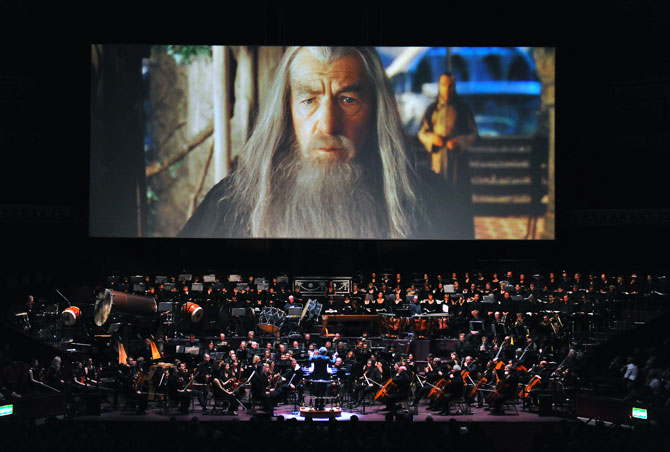
A film orchestra is a very specialized type of ensemble musical group. For the most part, orchestras that have been assembled to record the score for a film do not perform in public. For the most part, the specialty of a film orchestra is to record in studio the music that has been composed for a film.
During these recording sessions, the studio is filled with sound recording equipment, in order to capture the best sound, and minute details. In most cases, the film is projected onto a large screen in the recording studio. This adds greatly to the performance from the musicians. Film orchestras require a level of precision and technicality that greatly enhances the performances from the actors on the screen.
Here is a great video demonstrating the scoring, and recording of the music from Canadian composer Howard Shore for the movie The Hobbit:
Here is a similar video from Star Wars composer, John Williams:
https://www.youtube.com/watch?v=K0ezvZo2AWc
An interesting area in which orchestral recordings is developing is in the music for video games. Here is a video looking at the music, and orchestral recording for the Harry Potter video game:
For those interested, this is a very informative blog that takes a look at scoring for film. It has some fascinating insights into sound recording, and orchestral film recordings.
What do you think of film orchestras? Tell us in the comments below!
In preparation for our upcoming concert, Songs of the Cinema on May 10th 2014, we are starting a blog series of the same name, which will focus on a different aspect of ‘movie music’ each week!

Music plays an important, and often essential role in creating the appropriate atmosphere in a movie. The score of a film can help to convey subtle emotions, and enhances the performance of the actors greatly. For instance, if you watch a horror movie on mute, the film is nowhere near as frightening. The music adds, suspense, anticipation, and often foreshadows story elements.
Another, important use of music in film and theatre, is the use of musical themes. Often, important characters in scored films will have a theme associated with their character, as in the case of the massively popular series, Star Wars. Here is the theme music written for Princess Leia:
This music is heard throughout the film, associated with Princess Leia, and it helps the audience to familiarize themselves with her character. The most popular theme from the Star Wars films, is the infamous Imperial March. This music conveys power, and control. It is precise, and militaristic, and perfectly encapsulates the character of Darth Vader.
https://www.youtube.com/watch?v=xPK3IJBiTDs
One of the most subtle, and nuanced aspects of a scored film, such as Star Wars, is the use of leitmotifs. This is a musical device used most notably by Richard Wagner in his operas. A leitmotif is a musical phrase associated with a person, place, or idea. A leitmotif occurs often within a work, in different incarnations, and there can be multiple leitmotifs, depicting many people, places or ideas.. The rhythm, and structure of the leitmotif can change slightly, but it remains the same musical phrase at its core.
The purpose of the leitmotif is to enhance the characterization and narrative of a story, by adding another layer of information through music. Leitmotifs can help foreshadow, they can serve as reminders, and character associations. Here is a brilliant example of one of the leitmotifs used by John Williams in his Star Wars score. Note how the leitmotif changes slightly in each scene, but is still musically recognizable as the same musical idea.
What’s your favourite film score? Tell us in the comments below!
In preparation for our upcoming concert, Songs of the Cinema on May 10th 2014, we are starting a blog series of the same name, which will focus on a different aspect of ‘movie music’ each week!
With the advent of sound in cinema, composers became of paramount importance in establishing the mood of the movie. Their work contributes greatly to the subtlety and nuance of the performances seen on screen! Here are several notable film composers:
Bernard Herrmann: (June 1911 – December 1975)
 Herrmann was an American composer, who was best known for his collaborations with the movie director, Alfred Hitchcock. His music was heard in the films Psycho, and Vertigo. As well, he composed music for Citizen Kane, The Day the Earth Stood Still, and the television program, The Twilight Zone.
Leonard Bernstein: (August 1918 – October 1990)

Bernstein was an American composer, and is one of the most well known film composers. He is considered to be the first of the truly successful cinematic composers, and his work was truly prolific. His music is heard in such productions as Peter Pan, On The Town, and most famously, West Side Story.
Elmer Bernstein: (April 1922 – August 2004)

Bernstein was another American composer, and is no relation to Leonard Bernstein. His music has been heard in such movie classics as, To Kill A Mockingbird, The Black Cauldron, and most famously, Ghostbusters.
John Williams: (February 1932 – present)

John Williams is one of the most famous film composers of all time, due in large part to his work on blockbuster movies. His film credits include, Jaws, E.T., Home Alone, and the first three Harry Potter films. But he is most famous for his work with George Lucas on the Indiana Jones films, and the Star Wars series.
Howard Shore: (October 1946 – present)

Howard Shore is a Canadian composer, who has contributed to over eighty films. His film credits include, The Silence of the Lambs, Gangs Of New York, and Panic Room. Howard Shore is most famous for his film score in The Lord Of The Rings movies.
Hans Zimmer: (September 1957 – present)
 Hans Zimmer is a German composer, who has composed the music for over 100 films. His film credits include, The Lion King, The Thin Red Line, Sherlock Holmes, and Inception.
Lisa Gerrard: (April 1961 – present)

Gerrard is not as famous as the other composers on the list, which is due in large part to her collaborations with Hans Zimmer, whose name is often the first associated with their collaborations. Lisa became more well known after she worked with Zimmer on the film Gladiator, but she has a myriad of titles to her name, including, Whalerider, King Arthur, the trailer music for Man Of Steel, and most recently, I, Frankenstein.
Are you familiar with these film composers? What is your favourite film score? Tell us in the comments below!
In preparation for our upcoming concert, Songs of the Cinema on May 10th 2014, we are starting a blog series of the same name, which will focus on a different aspect of ‘movie music’ each week!

Movie musicals are a genre of film, and were a natural extension of theatrical musicals, when audio technology advanced to a point where musicals could be successful on screen.
Although there were a few short films that included music in the movie, but without an audio track. The first feature length film including both music and an audio track with dialogue (although admittedly the dialogue was sparse), was The Jazz Singer, released by Warner Brothers in 1927. This marked the golden age of movie musicals, spanning nearly three decades.
As movie musicals grew in popularity, it made household names of several actors, including Fred Astaire, Ginger Rogers, Judy Garland, and Mickey Rooney. This era saw films like, 42nd Street, Shall We Dance, Easter Parade, and Singin’ In The Rain gain great popularity.
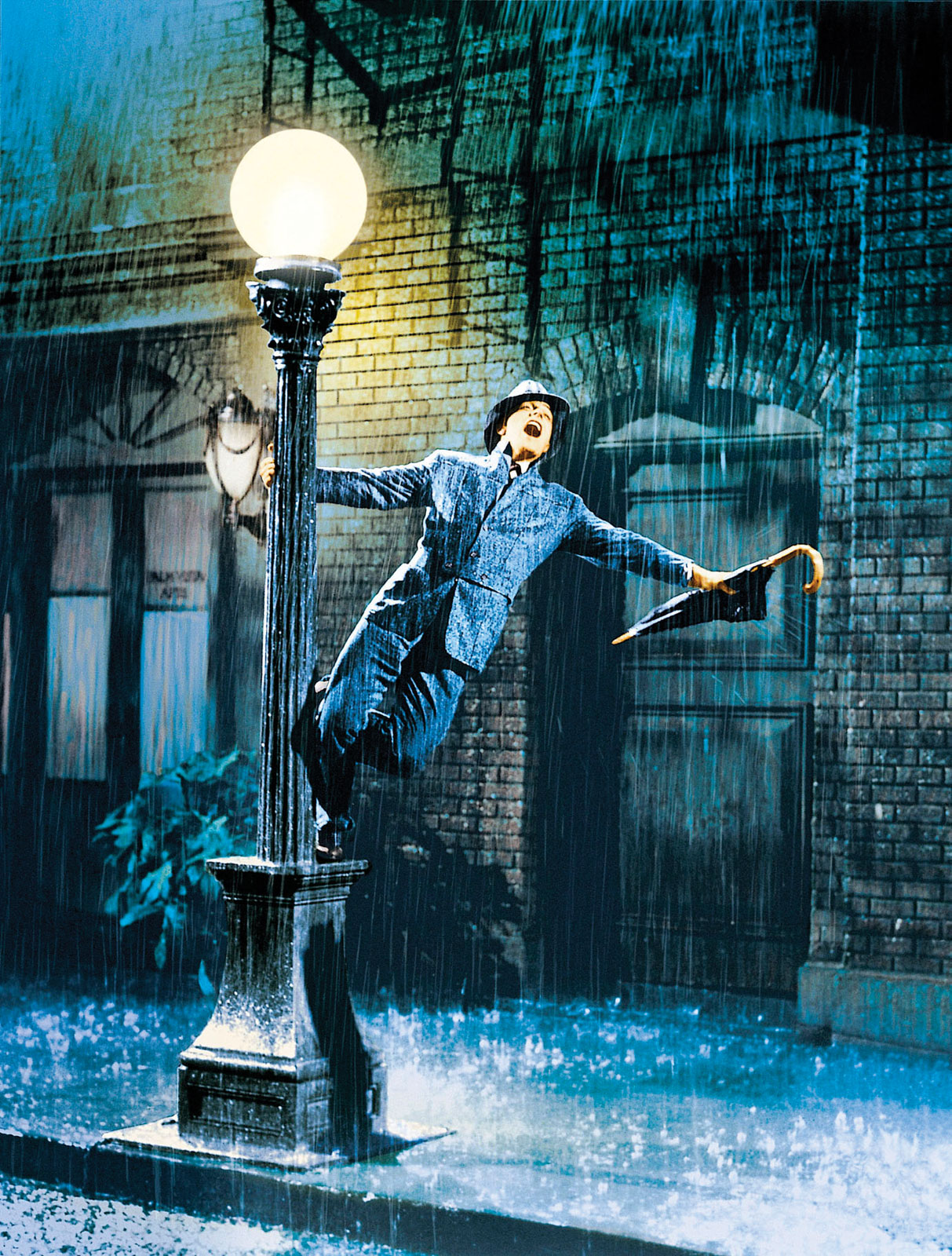
After the 1960’s, although there were some fantastic musicals produced, including The Sound of Music, Funny Girl, The Wizard of Oz, and West Side Story, there were also a few musical movies that did not do as well, and the studios began to produce fewer of them through the 70’s, 80’s, and 90’s.
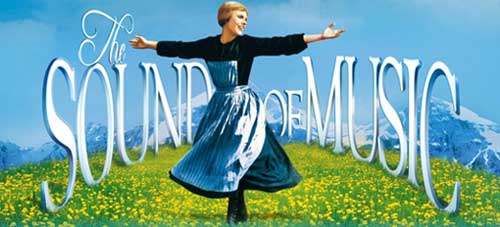
Fortunately, there has been a resurgence recently in the popularity of musical movies, spurred on by Disney’s inclusion of music in their movies, seen in such films as Anastasia, the Prince of Egypt, and most recently, the movie Frozen.

Western film is not the only film that includes music in movies. Spanish operettas, called Zarzuelas, are very popular, and Indian cinema has an incredibly popular movie musical scene called Bollywood, that have begun to inspire Western cinema. This influence has been seen most notably in films like Moulin Rouge, and Slumdog Millionaire.
So, are you a fan of movie musicals? Tell us which one is your favourite in the comments below!
In preparation for our upcoming concert, Songs of the Cinema on May 10th 2014, we are starting a blog series of the same name, which will focus on a different aspect of ‘movie music’ each week!

Motion pictures have been around for over a century, but sound was first introduced to motion pictures in 1923. Before that, movies were silent, or had an audio track that was played on a phonograph synchronized to the action on screen. The idea of filming a motion picture with sound had been around since 1887, but it took several decades and many different approaches to sound recording until progress began to be made.
https://www.youtube.com/watch?v=-uu4SIlPxh0
The first film with sound recorded as part of the film, premiered in New York in 1923, and from there a new industry was born! Audio in film became every bit as important as the film itself. New industries sprung up to meet the new demands of audio. Sound boxes had to be created to encase the noisy cameras, so the sounds didn’t translate into the audio, hand cranks had to be silenced, and even the actors performing their roles had to accommodate the new realities of sound in film.
Most importantly, from the perspective of music, the ability to accomodate sound in films marked the advent of music in films as well. Background music, sound effects, and eventually entire musical productions done entirely as motion pictures!
Did you know about the history of sound in motion pictures? Tell us in the comments below!
Often, when we’re learning music in choir, we receive sheet music, and learn the piece by reading the essential information contained in that sheet music. While learning to read music is a vital part of being a good musician, there are also several benefits from learning music aurally.

Learning music aurally is often referred to by other names; ear training, playing by ear, etc… It is an extremely important skill for any musician to develop, but it is particularly useful for singers.
Ear training allows singers to understand the note they are singing in relation to the other notes around them. Understanding the context of the music, allows singers to listen to music critically, and more thoroughly appreciate the relationship between intervals. This can be an especially important skill when singing atonal music.
Learning music aurally can also help singers to appreciate the nuances of sound. When a singer doesn’t have to focus on the written music, they are able to hear the small subtleties in intonation, timbre, and colour of the sound they are producing. This focus on the nuances of sound can greatly improve the overall choral sound, as well as individual singers’ voices.
When an entire choir is focused on the subtleties of the sound they’re creating, by learning the music aurally, they also become much more attuned to the sound the other people around them are creating. Listening critically is essential for any singer, and it greatly aids choirs in producing a blended sound; the ultimate goal of choral singing!
Do you like to learn music aurally? Tell us in the comments below!
All musicians must memorize music at some point in their careers, and singers have an extra bit of work to do when it comes to memorizing music, because there is the added layer of text that needs to be memorized.

#1. Repetition:
This seems quite basic, but one of the best techniques for memorizing music is by doing it over and over again. But repetition alone will not remain lodged in your memory. The best way to ensure quick memorization, is by focusing on a different aspect of the music every time you sing it. By making mental note of these different aspects of the music, you are hard-wiring your brain to remember multiples aspects of the music, and increasing the depth of your musical understanding at the same time!
#2. Silent Practice:
Silent practice is related to repetition, but it does not require actually singing out loud. This type of practice involves performing the piece silently in your mind. Breathing, phrasing, and dynamics are all considered and practiced, even though they’re done silently, but this technique can be used anywhere – in an apartment, in the halls at school, even on the bus!
#3. Story Telling:
Most vocal pieces include text, often a piece of poetry or prose. This can be very helpful in memorization, because instead of just memorizing words, you can memorize the overall narrative of the text. Knowing what comes next in the story aids in memorizing the specific text used to tell that story.
This is especially helpful when memorizing music in a language that is foreign to you. Understanding the meaning behind the text you are singing, makes it that much easier to commit the text to memory.
So, what techniques do you use to help you memorize music! Tell us in the comments below!
Singing For the Joy Of It is the motto of the Calgary Children’s Choir, and has been for the past 27 years! We asked Rosemarie Sherban, the choir founder, how she came up with the choir’s powerful and meaningful motto, what the motto means to her, and if the choir is still living up to the motto:

The goal of the Calgary Youth Choir Organization (as the Calgary Children’s Choir was originally known) was to create a singing environment whereby a love of singing is embraced and developed. In the past, singing was a part of any family or cultural gathering. School music programs, where once singing was the core of the music program, have now become centred around band programs. So it is up to choral programs like the Calgary Children’s Choir to give each chorister a positive experience with singing that they will, as they mature into adulthood, seek out a place to sing. Some may want to pursue a career in singing but many will not. For those who do not, it is hoped that the positive experience of singing in the choir will have them, as adults, seek out a community choir to join.
Creating a joyful choral experience can come in many forms. Perhaps it is experiencing that perfectly pitched chord or singing a song with total abandonment. It could be learning a piece of music by a great composer or singing “fun” songs around a camp fire. But what is pure joy for one child may not at all be what gives joy to others. Engaging hearts and minds creates a true joy in singing!
Is the choir living up to the motto?
From what I have observed, most definitely, yes! The repertoire and activities of the choir are very broad, providing a diverse experience for the choristers. The pictures from the Halloween concert, the recent choir tour, etc… showed the choir full of exuberance, and joy! The Faure Requiem, with the adults joining in, gives the choristers a marvelous opportunity to see that singing can be a lifetime activity.
So, do you think the Calgary Children’s Choir motto reflects our values? Tell us in the comments below!
On Saturday evening, we had our annual Folk Music Concert. This year, in honour of our tour last summer to Spain, we featured Spanish folk songs! We were thrilled to have Anastassiia Moussatova perform some amazing flamenco dance for us, and we were also very excited to have Brent Van Dusen on percussion, Michael Boyle on flamenco guitar, and our very own CCC alum Jessica Lutzak as a guest soloist! The evening was emceed by our wonderful Creative Consultant, Kat Long.
We began our day with a 10:00 dress rehearsal at the Rozsa Centre.


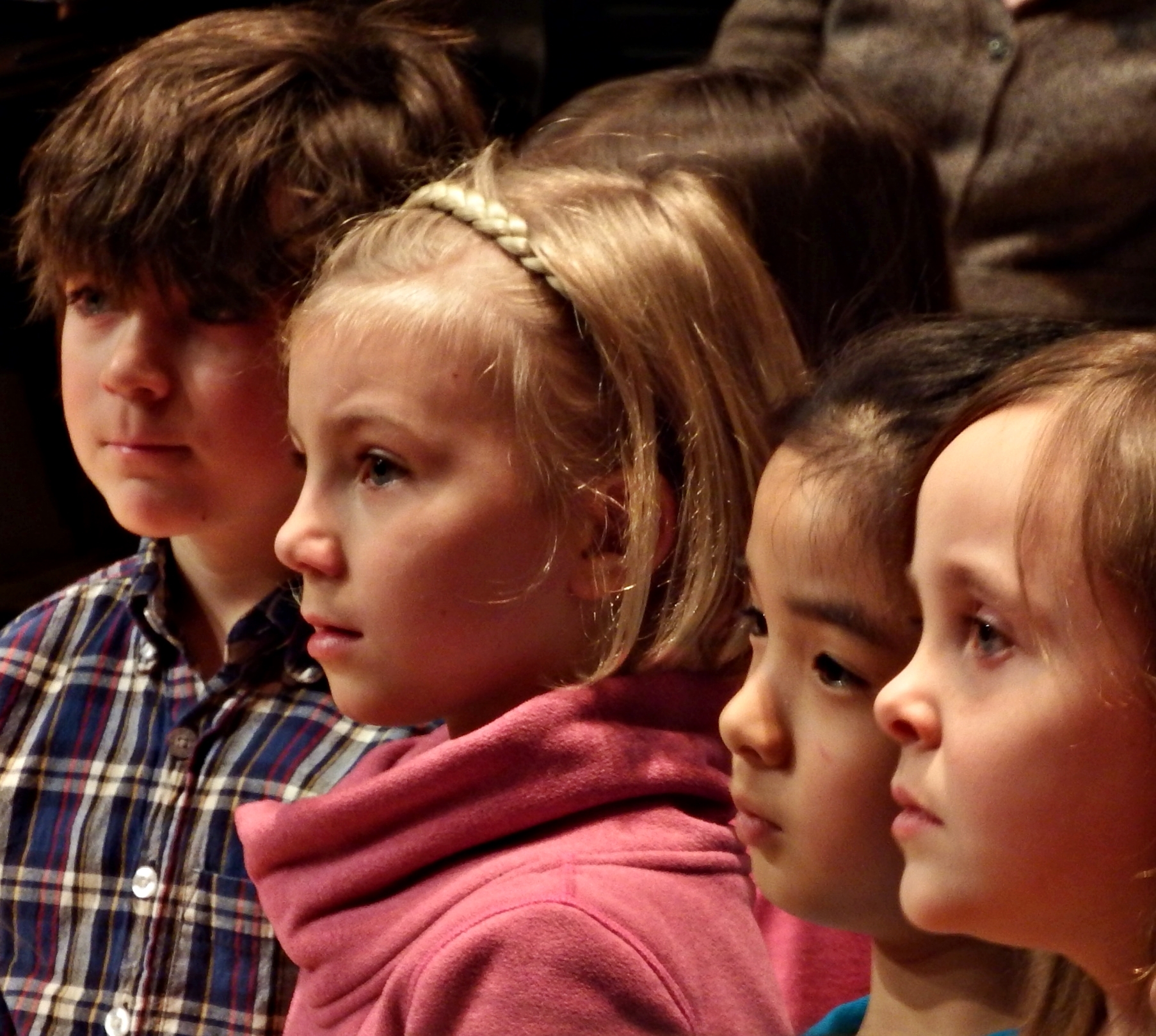

We came back at 6:00 that evening for a dress rehearsal, and then it was time for the concert!


(photography by Brieannah Mollison-Read)
We had so much fun at our Folk Music Concert! Thank-you so much to every one who came out to see us!
Tell us, what was your favourite part of the concert?
Continuing our posts about Spanish music, and in particular the Flamenco style from the Andalusian region, in today’s post we will be looking at the flamenco guitar!

The Flamenco guitar is quite similar to a classical guitar, in its structure, and sound. There are subtle differences, however, including the use of lighter woods than classical guitar, so that the top portion of the guitar plays with a ‘brighter’ sound. This is especially important for the more percussive section of Flamenco, when the guitar player taps the top of the guitar in time with the dancing! Flamenco guitars often have a section on top of the guitar that allows the guitarist to make these percussive sounds.
In general, flamenco guitars are constructed using harder woods. As well, their strings are not meant to sustain notes as well as classical guitars. This is because of the speed of flamenco, and its rhythmic quality. A lighter, faster guitar means that the flamenco music sounds crisp and patterned!
Have you ever heard flamenco guitar? What did you think?