Category: Choir

  • Trust In Singing

    Trust In Singing

    Singing, and music in general engender many emotions, as discussed in this post. There are many positive emotions that arise from singing, as well as the occasional one. One aspect of positive emotion found particularly in choral singing, is trust. Trust is a powerful emotion because it takes time and effort to build, but can be broken in an instant.

    #1. Trusting the director:
    The director of an ensemble is the leader in many ways. From selecting the music we sing, to facilitating our learning of a new piece, to ensuring that all the disparate parts of the choir come together, to creating artistic, musical moments in live performances, the director is responsible for so many aspects of our choral experience. This would be an impossible job without the trust of the choristers under their charge.

    #2. Trusting other choristers:
    Singing with others means trusting them to do their part. Choir is about disparate parts making up a whole, and in order to do that, choristers have to subsume their ego, and blend into a sound larger, and grander than they can make by themselves. This requires a delicate balance between doing your best for the group, and supporting other choristers in doing their best for the group.

    #3. Trusting the music:
    This can be the most difficult aspect of singing, because while we are singing, we don’t actually hear the piece the way the audience does. In a performance, we must trust our training, trust the director, trust the other choristers, but most of all, we must trust the music, and the emotion we feel during a performance, to help inspire our singing, and drive us towards our best singing selves.

    How else is trust important in singing? Tell us in the comments below!

    Calgary Children's Choir


  • How Emotions Affect Singing

    How Emotions Affect Singing

    Emotion is necessary in musical expression, but our emotions can have a very strong effect on how we sing. Here are 3 ways in which our emotions can affect our singing:

    #1. Positive emotions:
    Positive emotions, such as joy, excitement, and love, often have an equally positive impact on our singing. These emotions help us to feel confident and engaged in what we’re doing, meaning our breathing is more free, our sound is focused, and we blend well with other singers around us!

    #2. Negative emotions:
    Negative emotions, such as fear, stress, or anger, can have a deleterious effect on our singing. These emotions inhibit musical expression, often dragging pitch down, introducing bodily tension, hindering supported breathing, and freedom in our singing.

    #3. Changing emotions:
    One of the most wonderful aspects of music is how engaging in it, whether through listening, or playing an instrument, can actually change your mood! If you’re experiencing negative emotions, one of the best things you can do is start singing! Singing forces you to pay attention to your body, to stay in the present moment, and to regulate your breathing that creates a meditative effect. Plus, singing in a choir with others, has been shown to have a very positive effect on mental health!

    How else might our emotions affect how we sing? Tell us in the comments below!

    Calgary Children's Choir

  • Singing For Wellness

    Singing For Wellness

    There are many studies that have shown the benefits of music on cognitive function, and childhood development, but perhaps one of the greatest benefits of music, and singing in particular is the benefits to our sense of well being.

    #1. Physical Well-being:

    Singing requires a great deal of physicality, and an excellent sense of self. Because a singer’s body is their instrument, there is a far greater emphasis placed on understanding your body. Singers need to ensure that they eat properly, sleep properly and rest their voices, so that their voices are at their best!

    #2. Mental Well-being:

    Singing is also an incredibly cerebral activity. It involves conceptualizing one’s voice internally, since a singer is unable to view, and manipulate their instrument in the same way other musicians can. Stress, fear, and uncertainty all influence the way the human voice sounds, as do excitement, anticipation, and happiness, so it is important for singers to understand, and address the emotions they are feeling.

    #3. Singing With Others:

    Perhaps the greatest benefit of singing, is that singing with others has been shown to greatly enhance one’s sense of well-being. Since choir is a social activity that requires members to pay great attention to what those around them are doing, a choir becomes a very close knit group; supporting, and unconditionally accepting the diversity of its members.

    How else can singing enhance your wellness? Tell us in the comments below!

    Calgary Children's Choir

  • The Sounds of Silence

    The Sound of Silence

    Choir, and music in general is all about how to organize sound, so it seems incongruous to discuss the importance of silence in singing. But silence is an exceptionally important aspect of music, and here are three reasons why:

    #1. Audience:
    In classical settings, unlike more popular music concerts, the audience is expected to be quiet while the musicians are performing. This is so that everyone has the same opportunity to hear the subtleties and nuances of the music, so the musicians are not distracted by unnecessary noise, and because classical musicians rarely use electronic amplification.

    #2. Applause:
    Applause is generally the way an audience shows appreciation for the music they’ve just heard, but in some cultures, the audience expresses their appreciation through silence. This stems from the belief that applause interrupts the mood the music has just created. Applause is also often not used for music performed in religious ceremonies, or music that is part of a larger multi-movement work.

    #3. Enhancement:
    Within the music itself there can be silence as well. For a choir, the effect of singing acapella (without accompaniment) creates a feeling of greater intimacy with the audience. The composer can often use rests and pauses to great effect – using sudden silences as punctuation, or to enhance the emotional aspect of a given performance.
    Listen to the emotional, and musical effect of small pauses between each phrase in our performance of ‘All Too Soon’:

    How else can silence be important to music? Tell us in the comments below!

    Calgary Children's Choir

  • The Benefit of Sectionals

    The Benefit of Sectionals

    We spend a lot of time discussing how important it is to sing as a group, to listen to the other parts, and to blend seamlessly, but it’s just as important for sections of the choir to break off sometimes and have their own time in a sectional, separate from the rest of the choir:

    #1. Bashing notes:
    At its most basic function, sectionals provide the opportunity for everyone in that section to really learn the notes and the rhythm. This is the significantly less glamorous aspect of choir, singing the same section of a piece over and over again, until everyone has the note, but it serves an important function. Not everyone learns at the same rate, and some choristers need more time within their own section to really feel confident in their part

    #2. Section unity:
    Going off in different sections of the choir is important because of the social aspect as well. There is something about identifying as a part, soprano, altos, tenors, or basses, that makes choristers feel like they belong. This is important in their singing as well. By knowing the people in your section, and their voices, you know who to rely on in the more difficult parts of a piece.

    #3. Listening:
    As we’ve discussed before, listening is just as important as singing in a choir. Breaking off into sectionals forces choristers to listen in a different, and often more nuanced way. No longer are choristers trying to hear their part against others, and blend their voices within a myriad of different timbres; instead they must contend with the difficulties of unison singing – blending their voice with others that have similar timbres, ensuring that rhythms and pitches are crisp and clear.

    How else do sectionals benefit choristers? Tell us in the comments below!

    Calgary Children's Choir

  • Atmospheric Music

    Atmospheric Music

    Happy Halloween!

    In honour of this spooktacular day, we thought we would discuss how important music can be in the creation of atmosphere!

    #1. Creating tension:
    Try watching a scary movie without the sound, and suddenly, it becomes significantly less terrifying. This is because music and sound are used to great effect, in enhancing tension. By using dissonance (pitches close together), music can create a sense of suspense, and discordance that can be used, usually quite subtly, to heighten the emotional aspects of a scene.

    #2. Mimicry:
    Instruments can be used to great effect to mimic terrifying sounds. Wind instruments are extremely successful at making ghostly winds, and fluttering, and violins can be used to mimic screaming sounds. Percussive instruments like cymbals, clavicles, chimes, are very versatile at mimicking familiar sounds. These instruments can be used within pieces, or as their own sound effects to create a sense of creepy familiarity!

    #3. Leitmotifs:
    Leitmotifs are musical phrases, designed to represent a person, place or idea. In the movie Jaws, the sinister shark is represented by a minor second interval, played over and over again. The viewer becomes attuned to those pitches, and understands that whenever they are played, it means the shark will make an appearance. This greatly enhances the scary atmosphere of the movie. Leitmotifs are often used in horror films to foreshadow the villain’s arrival!

    How else does music contribute to creating an atmosphere? Tell us in the comments!

    Calgary Children's Choir

  • Discipline In Singing

    Discipline In Singing

    One of the most important aspects of learning music, is the discipline that it requires. Studying music is not like many other pursuits; it  requires continual and dedicated time, patience, and discipline.

    #1. Little by little:
    Music, like learning a new language, is best done in small, but consistent portions of time. The repetition required to really understand musical concepts, means that it is essentially impossible to ‘cram’ for music. The most successful musicians and singers understand that music is a daily practice; a habit to be worked on every day for concerted period of time. Singing is best practiced little by little, every day.

    #2. Accumulation of knowledge:
    Music is one of those areas of study in which there is always something more to learn. And musical knowledge always builds on more basic concepts learned first. Thus, in music and in singing, it is necessary to develop fundamental skills first, and then build on those skills, challenging yourself with more difficult music, as you gain the necessary skills. This requires dedication and discipline, and an understanding that the study of music is never really finished.

    #3. Process over product:
    Singing is most effectively learned when you focus on the process of singing, and not the final product. Because the nature of singing is inherently variable, a piece of music is never sung the exact same way twice. This can be difficult for beginning singers, because we live in a ‘results’ obsessed society. Understanding your instrument, how it works, what factors affect it, and how your emotions, and perspective influence your instrument, are much more important to beginner singers than whether any given performance sounded the way you wanted.

    How else is discipline a necessary component in the study of music? Tell us in the comments below!

    Calgary Children's Choir

  • The Importance of Early Music Education

    The Importance of Early Music Education

    Every day we learn more about the many benefits of music education. There have been numerous studies in recent years highlighting the myriad ways in which learning music can benefit people in both mind, and body! Nowhere is this more evident than in early childhood:

    #1. Sound is natural:
    Sound is everywhere. It is as much a part of our natural world as anything else. Teaching children to feel the beat, or hear pitches organized in a certain way, feels as natural to them as learning to identify the colours they see around them, or to count the number of blocks they’re playing with. By teaching them musical concepts at an early age, we reinforce that music and sound are a natural part of our lives, and we provide guidance to our children about how to navigate those sounds.

    #2. Fundamentals:
    By teaching small children the fundamentals of music early, we ensure that by the time they are old enough for junior choir, or even private lessons in a particular instrument, they possess an inherent understanding of the fundamentals of music. Learning music at such a young age, also helps children develop a fundamental understanding of language, how to use their bodies and even basic mathematical concepts!

    #3. Early socialization:
    It is very rare that one learns music completely by oneself. Our music programs reinforce the concept of learning with others. Music is a shared experience; learning with others helps children to reinforce the concepts they’re learning, as they watch other children, and learn in different ways from each other. It also helps to socialize children early, preparing them to interact well with others.

    You can learn more about our Early Music Education program, the Music Makers here!

    How else is early music education important? Tell us in the comments below!

    Calgary Children's Choir

  • Present Focused Performance

    Present Focused Performance

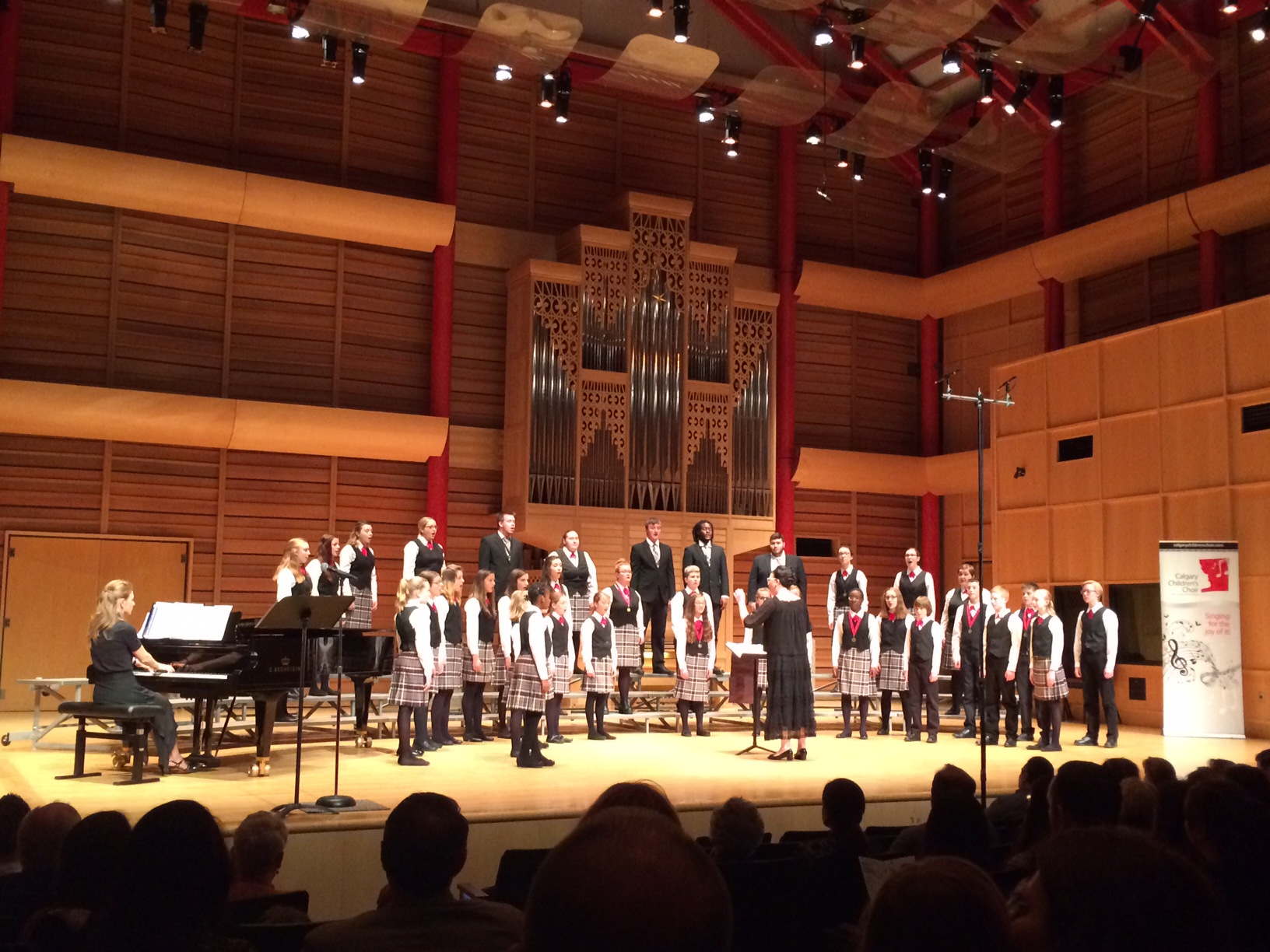
    Performing is a unique aspect of singing with a group. By the time a performance rolls around, the basic necessities of learning a piece of music are already accomplished. The notes, and rhythms have been learned, the words have been memorized. Performance evokes something completely different in musicians. It makes demands of your present self:

    #1. Forgiving Mistakes:
    One of the most beautiful things about music is that there is never perfection. A performance only highlights this, because there are a myriad of factors that contribute to a successful performance, and very rarely do they all go off without a hitch. In a choir setting, there is also the variable of many more voices. Thus, mistakes, even small ones are bound to happen in a live performance. To stay present focused, instantaneous forgiveness of any mistakes is crucial.

    #2. Responsiveness:
    In a choral performance, the conductor is not simply there to keep the beat, or to bring everyone in on their respective entrances. It is the unique responsibility of the conductor to respond to the energy of both the audience and the performers, to enhance the musicality at any given moment. By remaining focused on the present, singers are able to respond to the slightest direction from their conductor, making the performance that much more sensitive and nuanced.

    #3. Creating a moment:
    Performing is different from just learning a piece of music, and singing it for yourself. By allowing an audience to hear the music that you have spent time and energy working on, a new opportunity opens up. Performers who are present focused, can respond, in real time to the reactions, emotion, and energy from their audience, heightening heightening the musical experience for all! Creating a musical moment like this can only happen when a performer is focused on the present.

    How else does performance encourage you to stay focused on the present? Tell us in the comments below!
    Calgary Children's Choir

  • Growth In Singing

    Growth In Singing

    Since many of us start singing at quite a young age (our Music Makers program starts at 3!) We can experience a lot of growth in our time as singers. This manifests both physically (our voices often don’t mature fully until we’re ~30 years old), but it also manifests in our state of mind. Here are 3 ways to manage your growth as a singer:

    #1. Adapting:
    As our voices, and our ability to manage our voices can change on a daily basis, one of the best ways to continue your growth in singing, is to be adaptable. Understand that your voice can be influenced by external forces like the weather, or air pressure. Internal forces also have a significant impact on your voice; health, energy, and mental state all play a role in the sound you produce. Adapting to these fluctuations will ensure that you continue learning about your instrument, instead of becoming discouraged by the instability.

    #2. Setting Goals:
    As with any learning objective, an excellent way to improve, is to set realistic, and manageable goals. Singing is much the same. By setting expectations for where you want to grow your singing ability, you can make slow, steady and healthy progress toward your goals. Good singing isn’t something that just suddenly materializes. It is the result of challenging yourself, and following through on a daily basis.

    #3. Keeping calm:
    Our voices can often feel as though they have a mind of our own. When our voices are still training, or they’re changing, we can sometimes feel like we aren’t really in control of what sound comes out of our mouths on any given day. While that might sometimes be true, berating yourself for producing less than stellar sound will actually have a physiological effect on your voice, creating a vicious cycle of errors. One of the sure signs of growth in singing, is the ability to forgive your mistakes, and move on, unencumbered by past errors.

    How else does your singing evolve over time? Tell us in the comments below!

    Calgary Children's Choir

  • Self-Awareness In Singing

    Self-Awareness in Singing

    Singing is different than playing any other instrument. Because a singer’s body is their instrument, singers must make an extra effort, not just to take care of their instrument, but to conceptualize that instrument from the inside out:

    #1. Self-visualization:
    Singers are not able to open up their body and view their instrument, to have it in front of them, like a piano, or to hold and manipulate it, like a guitar. Instead, singers must understand their instrument through internal visualization. It helps that, through improved technologies, we can view vocal folds through scoped cameras, or clever animations. Still, a singer needs to have a mental map of what their instrument looks like from the inside, and what the process of creating sung sound is like.

    #2. Meditative breathing:
    Because deep breathing is an essential aspect of the singing process, singers need to learn to breath in a way that is conducive to a vocal melody. This requires deep belly breathing, a process that is quite meditative. The low, calm breathing learned in singing, means that simply through the physical act of singing, we can calm our mind, and body to focus on the task of performance.

    #3. Present-centric:
    Performance of any kind requires a musician to be ‘in the moment’. This is especially true of singers, whose bodies are attuned, and will respond (sometimes negatively) to even the slightest change in mental attitude. By focusing too much on what is coming next, or dwelling on past mistakes, singers can sabotage their own performance. Understanding this, helps singers to stay in the present moment, and deliver the best performance they possibly can!

    How else does singing improve self-awareness? Tell us in the comments below!
    Calgary Children's Choir

  • Welcome to 2016-2017!

    Calgary Children's Choir Welcome blog

    Welcome to our 2016-2017 Singing Season!

    We are thrilled to welcome returning and new choristers to another year of wonderful music with the CCC! There are many wonderful events in store this year, including the celebration of our 30th Anniversary!

    September 16th-18th, 2016 – Choir Camp
    December 10th, 2016 – Christmas Concert @ St. Giles Presbyterian Church 7:00pm
    January 27th – 29th, 2017 – CCC & CYC Winter Retreat
    March 11th, 2017 – Annual Concert @ The Rozsa Centre 7:00pm
    May 12th, 2017 – 30th Anniversary Reception and Rehearsal – 6:00pm-9:00pm – Crescent Heights Baptist Church
    May 13th, 2017 – 30th Anniversary Concert Rehearsal
    May 14th, 2017 – End of Year Celebration Banquet – 5:00pm – Foothills Alliance Church

    (You can refer to our Calendar for more details!)

    *In honour of our 30th Anniversary Celebration, we are creating a Legacy Page for the website. We are asking our alumni to send us a short bio, with a photo of you currently (and maybe even one from when you sang with us!) We’d love to know more about our alumni, and what you’re currently up to! Please send bios and pictures to calgarychildrenschoir@gmail.com!

    What are you most excited about this singing season? Tell us in the comments below!
    Calgary Children's Choir

  • Spring Concert 2016 Roundup!

    Calgary Children's Choir

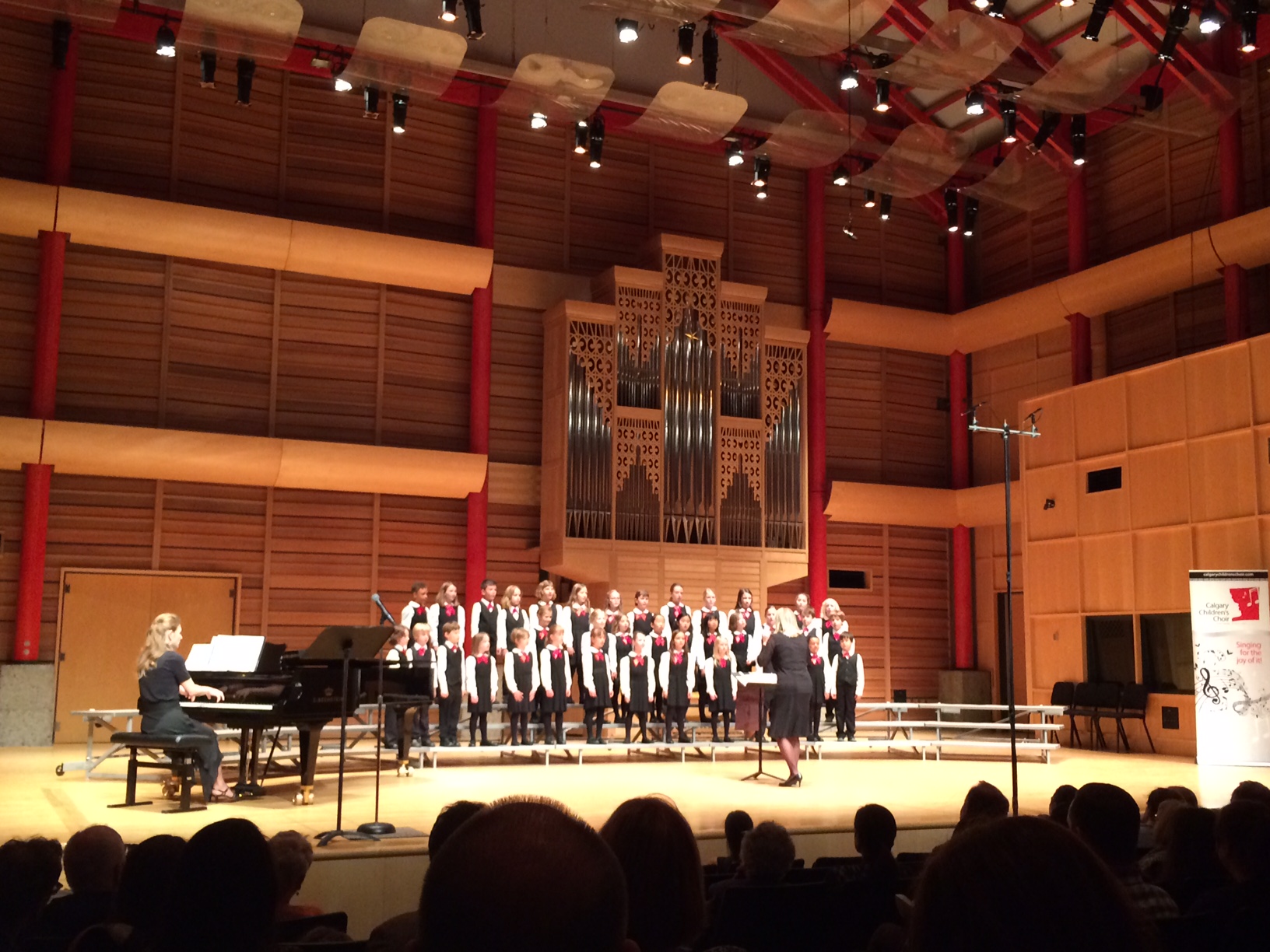
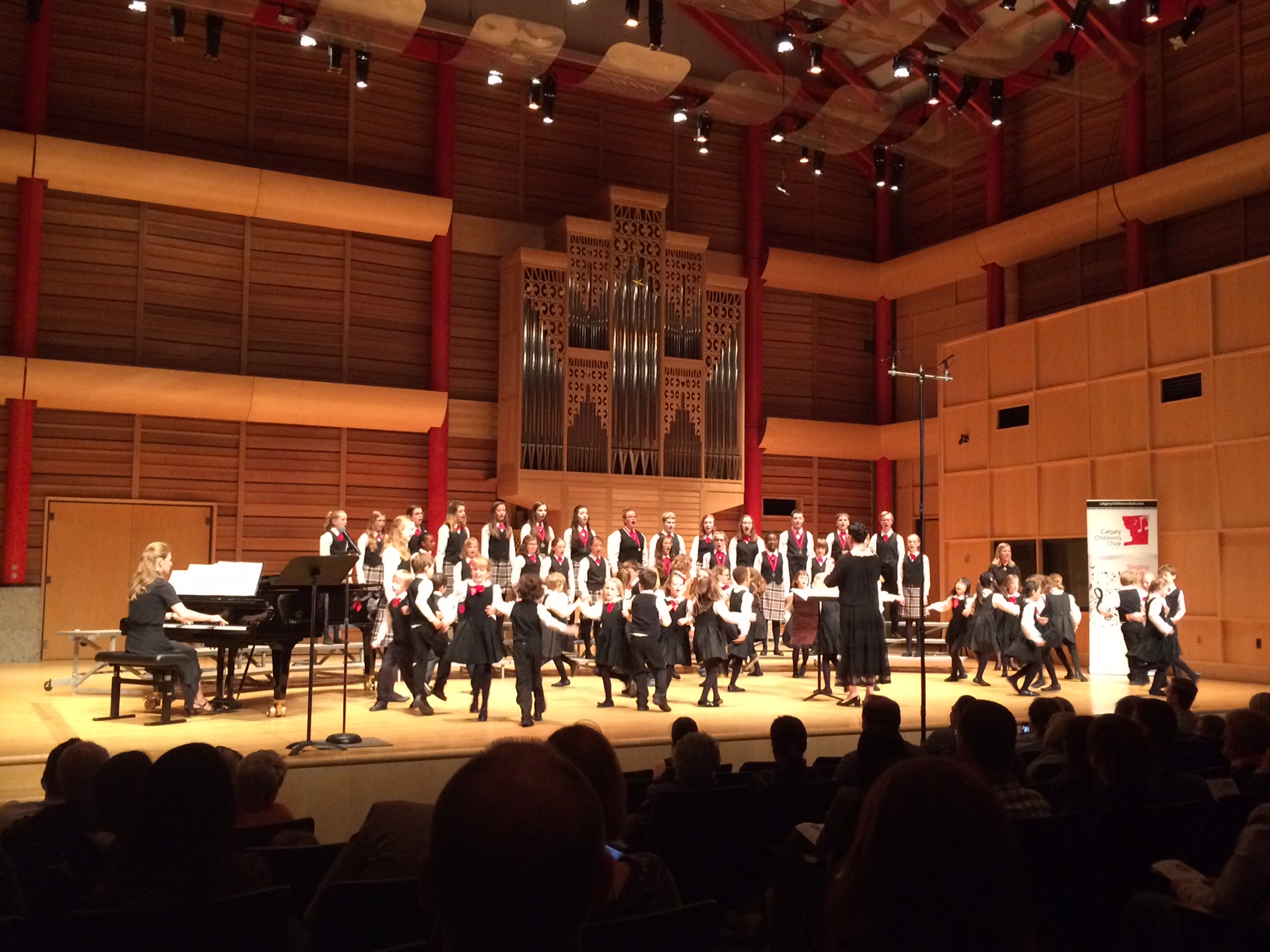
    Our concert took place at the Rosza Centre on Saturday, May 14, and featured the incomparable Jonathan Love as host and collaborator.  Much of our music fit loosely into a theme of nature, and more specifically birds – as we performed pieces such as “The Bluebird”, by C.V. Stanford, “Be Like A Bird” by Sheila Wright, and the Beatles’ “Blackbird”. We finished the evening with Haydn’s “The Heaven’s Are Telling”, with Alena Naumchyk on organ, four string players: Tor Ellergodt, Elizabeth  MacDonell, Leo Zhang , and Stephanie Huynh, and our very own choristers, Kyla Fradette, Josh Carr, and Emilia Grindlay, who sang the trio in this piece. Kyla Fradette also arranged the Pentatonix’ “Take Me Home” for CYC, and Robbie Downey sang the solo in “Blackbird”.

    Calgary Children's Choir

    Calgary Children's Choir

    Our juniors, conducted by Esther Woelfle, were a focused group of singers, who performed two polished pieces with beautiful, unforced sound. And we had a debut performance from our Music Makers (age 4 and 5) conducted by Kathryn Berko, stealing the show on cuteness alone, not to mention a very convincing rendition of “There was an Old Woman”.

    Calgary Childrens Choir

    Jonathan Love took everything to the next level, by composing poems which linked the pieces together, regardless of topic!! Jonathan was able to teach parts of his poetry to some of our choristers on the day of the concert, and they memorized their individual lines and delivered them without a hitch that evening.  An anecdote about Jonathan’s poetry-writing skills: we realized, one hour before the show, that there was a transition in the program with no poem. Not only that, we needed to somehow link the piece “Goin’ Down to Cairo”, an American folk song “play party”, with the rest of the program (mostly about birds and nature). In fifteen minutes, Jonathan had composed a poem for this section. Part of that poem is as follows:

    When birds of a feather flock together
    What do you think they do?
    They don’t conspire on a telephone wire
    Or preen like a cockatoo.

    Well, the preening’s done. It’s to have some fun
    And whenever they get the chance,
    They’ll do their nails and splay their tails
    And they all have a country dance.

    They walk the walk and squawk the squawk
    While the bass and the fiddle play
    The flappers flap – naturally, perhaps,
    And they dance till the light of day

    Suffice to say, we all had a lot of fun putting this concert together. The kids worked very hard and enjoyed the great energy, talent, and sense of fun that Jonathan brought to the experience.

    We look forward now to our year-end celebration banquet, and plans for next year including our 30th Anniversary Celebration in the Spring of 2017. Stay tuned for more information about that! Online registration for our 2016-2017 season is now open!

    -Marni Strome

    (Photos by Christina Jahn)

    What was your favourite part of the concert? Tell us in the comments below!
    Calgary Children's Choir

  • Musical Professions – Music Teacher

    Music Teacher

    This is the first post in our newest series, Musical Professions, in which we will be taking a closer look at the myriad of careers available to those with a background in, and a passion for music!
    Many musicians chose to pursue a combination of these musical professions, making them incredibly versatile and well-rounded!

    Music Teacher

    There are several different kinds of music teachers:

    Private lessons:
    This usually involves one on one lessons with a teacher who specializes in a specific instrument. Students choose a specific instrument, and their teacher instructs them in how to play the instrument, what techniques to use, what repertoire is best, and often how to perform in public on that instrument. Private lessons can also be taken in music theory, and history.

    Music in school:
    Musicians who work within a school board system have a variety of different responsibilities. Many of these teachers are band or choir teachers, and must develop curriculum both for musical classes, as well as extra curricular musical activities. These musicians have often earned a degree in Education, in addition to their musical qualifications, and they must be well-rounded musicians, able to assist and guide their students, in a variety of musical pursuits.

    Extracurricular musical activities:
    These musical activities are usually extra curricular, and can take a myriad of different forms; community choir, youth orchestra, etc… The music teachers who create these programs have to be self-motivated, and engaged in the community, because they’re often creating brand new programs to serve a musical need not met in the school setting.

    Music teachers can have a very big impact on their students; explaining difficult concepts, often from a very young age, and encouraging and inspiring their students to continue with their musical studies.

    Have you ever thought of being a music teacher? Tell us in the comments below!

    Calgary Children's Choir

  • Studying Music At University

    Studying Music In University

    Many of our choristers have gone on to study music, or arts related programs at University, and there are a variety of different career paths you can take to make music an even larger part of your life. We’ll discuss musical careers in greater detail in an upcoming series. Many of our choristers have also gone on to study other fields, but have kept music as a part of their university experience, through university choirs, or attendance at musical productions at their universities. Here are several of the benefits to studying music in university:

    #1. Several paths:
    There are a multitude of different degree programs that relate to music in university. The Bachelor’s of Music (BMus) is a performance based degree. The Bachelor of Arts in Music (B.A. Mus) allows students to explore a more diversified degree, with more courses in music history, music theory, composition etc… A Bachelor of Fine Arts (B.F.A.) allows students to pursue a variety of different subjects within the Arts programs; dance, drama, music, and art. There are also much more specific music programs, such as Music Therapy, or Sound Engineering, that combine music with science and technology!

    #2. Exploring options:
    Because music is such a varied field, it is often a requirement in most music programs to take a variety of different options. Singers, for example, are often required to take several language courses. This opens up opportunities for exploration of other areas of study, or even for study abroad programs. Musicians are also often required to take courses in other areas of the arts, such as dance, drama, art history etc… These options can really expand the scope of what being a musician means, and has led to some very interesting multi-discipline collaborations!

    #3. Community:
    One of the most wonderful aspects of music is the community it engenders. The musical community at universities are often a tight-knit group, since musicians have many classes together, as well as masterclasses, rehearsals, and concerts together. This community aspect spreads outside of those majoring in music though, many universities offer choirs that students in any degree program can join. There are also often recitals and concerts that are steeply discounted (and sometimes free!) for students. Studying music at university doesn’t necessarily mean majoring in music – there are some wonderful opportunities to get to know other students through musical activities!

    What do you think about studying music at university? Have you considered it? Tell us in the comments below!

    Calgary Children's Choir

  • 3 Ways In Which Music Makes You a Better Problem-Solver

    3 Ways Music Makes You Better Problem Solver

    Music has untold benefits for those who study it, and one of those great benefits is the ability to solve problems in creative and unique ways:

    #1. Perspective Shift:
    Music, and in particular singing, demands the ability to understand things from other perspectives. The ability to approach a problem from multiple perspectives is essential. Creative solutions require adaptability, and innovation, and this can often be achieved by studying a problem from different angles.

    #2. Breaking It Down:
    Solving a problem is not like turning a switch on and off. It is about the ability to take something large, and break it down into smaller manageable pieces. Learning a new piece of music is very similar. Though we aim to learn how the piece works together as a whole, particularly larger works need to be broken down into smaller, manageable parts, so that we don’t get overwhelmed or discouraged.

    #3. Discipline:
    Keeping with a problem, even when it’s frustrating, is an essential skill. Musicians are used to this process when learning a piece of music. It’s never perfect the first time, which is why musicians must practice the same piece of music multiple times.

    How else might music make you a better problem-solver? Tell us in the comments below!

    Calgary Children's Choir

  • Choir As Refuge

    Choir As Refuge

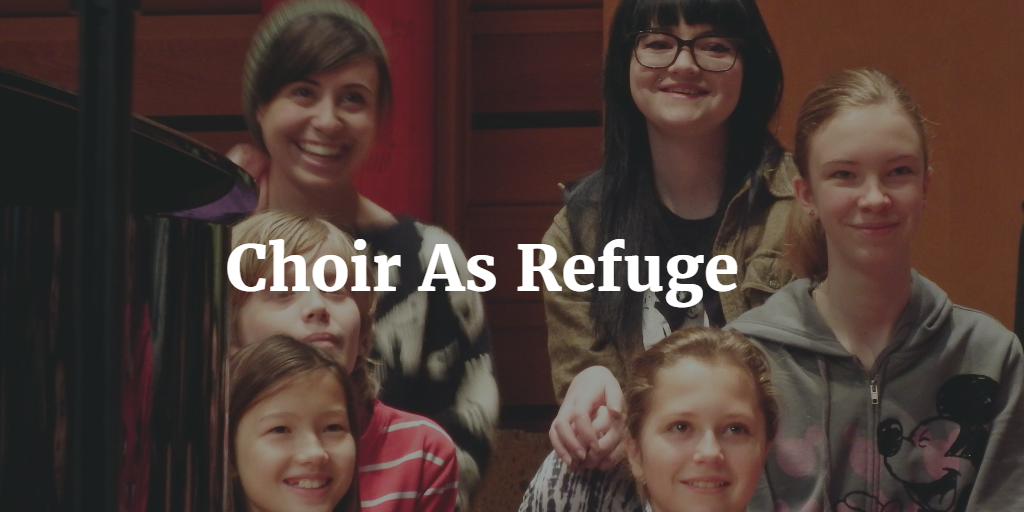
    Choir has been touted as an excellent way to form and engage in community, but it can be even more important than that, particularly for young people. Choir is often a refuge, during confusing, lonely, and difficult times in our lives.

    Because of the supportive nature of choral singing, and the emotive power of music, choir can act as a safe space for people. During difficult, turbulent times in our lives, choir creates a connected, compassionate group of people who care not only about our musical contributions, but about who we are as a person. A choir is a collective, a family, and it allows people to feel that others understand the core aspects of themselves.

    This is essential in our young lives, when we are growing and changing, and it feels as though external forces are working against us. Through choir, we know that we always have people on our side, that we’re part of a team, working together towards something about which we care deeply. Music allows us to communicate emotions that are larger and more complex than language can allow. To be able to share that with a larger group of people creates a bond like no other, a safe place to explore the world, and ourselves, through a shared love of music.

    When has choir been a refuge for you? Tell us in the comments below!
    Calgary Children's Choir

  • The Music of Karl Jenkins – Concert Roundup!

    CCC Mass Choir concert

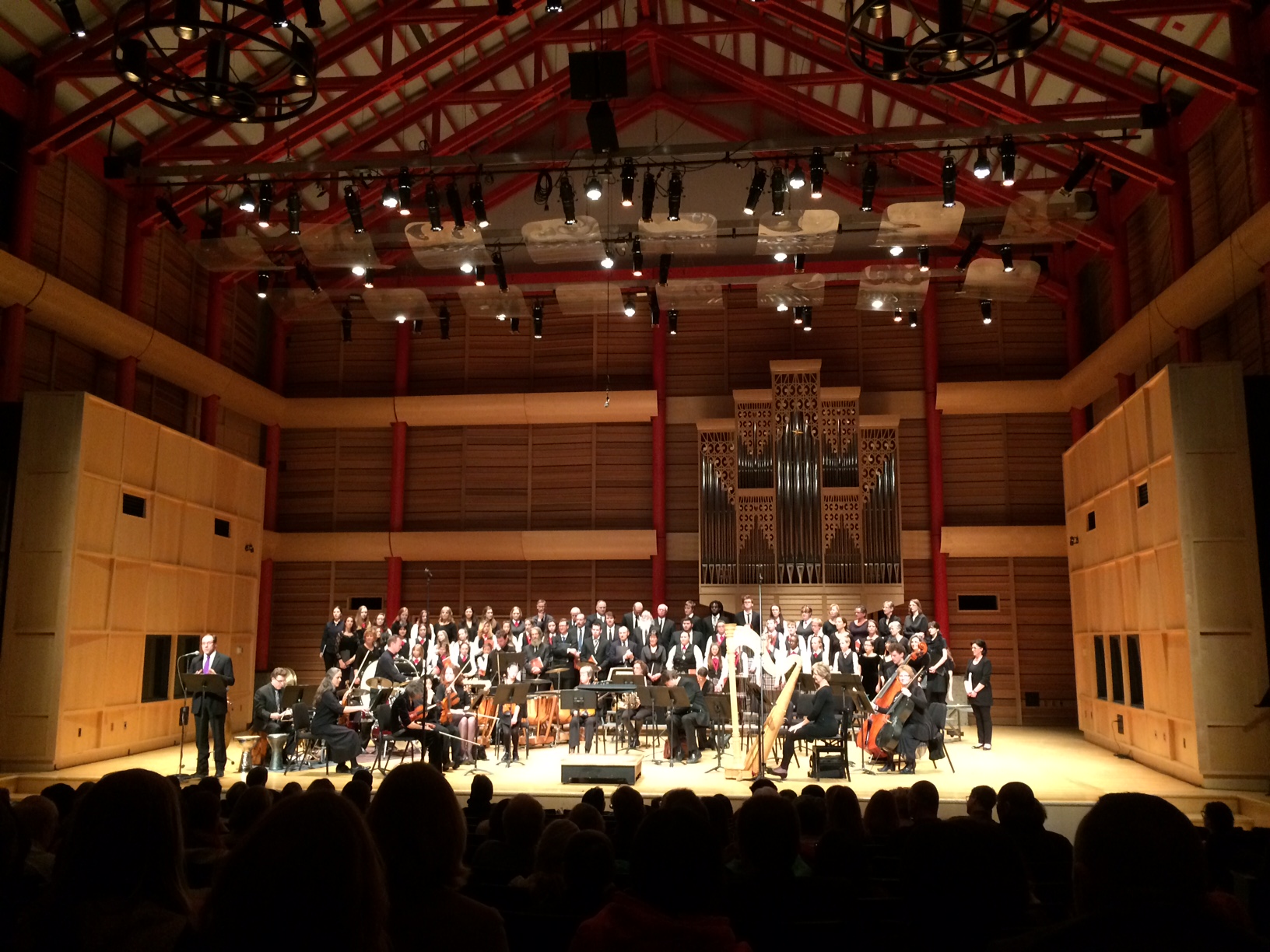
    What was the highlight of Saturday night’s concert? Was it seeing Brent Van Dusen, Rob Maciak, and Bob Fenske cover six percussion parts between the three of them – often a different instrument and rhythm in hands and feet (!)?

    Was it the beautiful solos sung by Paul Grindlay, Jessica Lutzak and Win Hume? Was it the virtuosic harp solos (Gianetta Baril), and saxophone improvisation (Brendan Oberhamer)? Perhaps it was Tim Janz, playing flute to sound like a Shakuhachi, and singing all the lines in between…

    Could it be the choir, made up of the Calgary Children’s Choir, St. Giles Choir, friends, family, and alumni who nailed it – every movement? The junior choir also made two cameos in the Jenkins work. They crept in like quiet mice, and then, standing in the aisles, joined in the singing. They also performed for an attentive audience in the lobby during intermission!

    Was it the absolute professionalism of the orchestral ensemble, including two violin students, Stephanie and Leo? Perhaps it was the great camaraderie and relaxed interaction between the singers and players. Maybe it was the total focus and concentration of everyone, who passionately played and sang their parts – even bringing a sense of fun to the whole evening?

    Whatever the highlight was for you, for me it was all of the above. As a choir, we feel like a family. After the past two months of rehearsals, and Saturday night’s concert, I think we feel very much like an extended family! I’m not sure if I’m ready to say goodbye to that music, and I sure look forward to another opportunity for us all to work together again.

    – Marnie Strome

    What was your favourite part of the concert? Tell us in the comments below!
    Calgary Children's Choir

  • The Benefits of Sight Singing

    The Benefits of Sight Singing

    Sight-singing means taking a piece you’ve never seen, or heard before, and singing your way through it, or a section of it. This can be an intimidating process, but it can be very beneficial for singers:

    #1. Conquering fear:
    Many people don’t like sight-singing because it makes them incredibly vulnerable. The risk of singing a wrong note (or several!) is exponentially higher when sight-singing. But sight singing your way through a piece of music can be of great benefit to one’s confidence; it is such a comfort to know that you’ve sung through the piece once, and now every iteration of that piece will be an improvement.

    #2. Musical literacy:
    Learning to read music fluently can be a difficult process, and one that takes many years. More than just learning to read the notes in the staff, sight singing teaches how to understand the overall structure of a piece of music, including phrasing, cadences, and dynamics.

    #3. Improving aural skills:
    Sight singing is just as much about hearing the music, as it is about reading it. The best sight singers also have an excellent ability to hear, and interpret what they’re reading on the page as sound. Developing an understanding of intervals, changing tonalities, and intonation are all important aspects of singing, and can be greatly improved by practicing your sight singing skills!

    How else can sight singing benefit singers? Tell us in the comments below!

    Calgary Children's Choir

  • Winter Retreat 2016!

    Calgary Children's Choir Winter Retreat

    Our second Winter Choir camp retreat was a lot of fun, thanks to the caring leadership of chaperones, hard-working and enthusiastic kids, and great weather! We spent much of the day Saturday rehearsing Requiem and In These Stones Horizons Sing, by Karl Jenkins, for our mass concert on February 27.

    IMG_1884

    Three of our chaperones are also singing with us, so they joined in. We all love this music so much, that rehearsals are very gratifying. Our rehearsal time was broken up with coloring sheets drawn by artist, and former chorister, Kat Long-Jones. We enjoyed coloring and listening to these two spectacular works.

    IMG_1887

    IMG_1890

    IMG_1894

    IMG_1896

    We also went snowshoeing, and spent time rehearsing for skit night, which followed a theme suggested by the Calgary Youth Choir, of Greek mythology. All of the CYC choristers chose a god, and created skits around their particular characteristics and eccentricities. Everyone was involved, and between the costumes and the antics, we had a lot of laughs. Turns out, our choristers can improvise, and many have great comic timing.

    IMG_1900

    IMG_1905

    IMG_1907

    IMG_1906

    IMG_1886

    We completed our camp time on Sunday morning, singing O Canada in a circle, with improvised harmonies, in honour of the up-coming citizenship ceremony of one of our choristers and her family.

    We thank all of our parents for recognizing what a valuable experience choir camp is, both musically and socially, and for supporting your child to be there!

    What was your favourite part of the winter retreat? Tell us in the comments below!

    Calgary Children's Choir

  • Choir As Community

    Choir As Community

    There have been many studies in recent years that describe the physical and psychological benefits of singing. Choral music is unique in that it combine the benefits of singing, with the added benefits of being part of a community:

    #1. Shared interests:
    Those people who choose to join a choir are joining for a variety of reasons, but particularly because they love singing as part of a group. This means that everyone in a choir has a vested interest in being there, and being together. There is an inherent understanding that singing together means providing your voice as one of many, and this lends itself well to being part of a larger community. A choir is an excellent way to meet new people who love something that you love!

    #2. Diverse interests:
    While choir members are all there because they love music, they also bring their own unique talents and interests into the group, which creates a wonderful tapestry of diversity. It is such a boon to a community to have unique and interesting talents to share with one another, and it exposes choristers to a variety of backgrounds, cultures, languages, and interests.

    #3. Supporting each other:
    Success in a choir depends on each member of the choir supporting the others. This is done musically, by providing a voice as one of many, to create a fluid and blended sound. But it is also done socially and emotionally, by investing in the people sitting next to one another in the room. Choir provide a safe and welcoming environment, in which everyone feels as though they belong, and are supported by the group.

    How else is choir a community? Tell us in the comments below!

    Calgary Children's Choir

  • The Value of Singing Acapella

    The Value of Singing Acapella

    The term acapella refers to singing without any accompaniment by instruments. The word is Italian, and means, ‘of the chapel’. It refers to early sacred music, when instrumentation was not permitted inside the church, and specifically the chapel. Only human voices were permitted, and thus acapella music was created.

    There are many benefits to singing with instruments; it creates rich layers, and the timbres of the different instruments can sound so beautifully together. But there is also great value in singing acapella:

    #1. The vocal sound:
    There is something truly unique about the human voice. To hear it by itself, without other instruments distracting the ear, can often be a very intimate and human experience. It allows an audience to truly appreciate the breadth and beauty of the voice.

    #2. Intonation:
    Singing acapella music, is a unique opportunity for singers to focus on intonation in a manner that is much more internal than when singing with instruments. Without an instrument to act as a tether, singers focus on tuning their voices to one another, creating a wonderful resonance of tone, and even heartbeats!

    #3. Overtones:
    As discussed in the post, Math and Science in Music – Harmonics, different instruments create a series of different pitches above the fundamental pitch, called overtones. These pitches create the unique timbre of different instruments, and nowhere is this more evident than in the human voice. The full timbre of rich overtones in the human voice can be heard to greatest benefit when singing is acapaella.

    Why else might it be valuable to sing acapella? Tell us in the comments below!

    Calgary Children's Choir

  • 5 Ways In Which Singing Makes You Happier

    5 Ways In Which Singing Makes You Happier

    #1. Endorphins:
    Singing releases the same chemicals in your brain that exercise does. These chemicals, called endorphins are responsible for positive feelings. The more one sings, the more our brain is flooded with these chemicals, and the happier we feel! This also serves as positive reinforcement for our behavior, and it is likely why people continue to keep music in their lives!

    #2. Stress relief:
    Beyond the release of endorphins in your brain when singing, there are other beneficial physical effects from singing. In particular, proper breathing techniques; breath management, deep breathing are all associated with greater well being. The deep breathing required from singing, helps regulate breath, has been shown to improve circulation, and lower the level of cortisol (the stress hormone) in our bodies. Less stress makes for a much happier person!

    #3. Focus on the present:
    The immediacy of singing, the requirements of focus, and engagement mean that a singer has to be fully in the present moment. This may seem irrelevant, but focusing on the present is one of the tenants of meditation, and in various psychological studies, meditation has been shown to greatly increase mental well being, and one’s sense of contentment. Having a regular activity that requires this prolonged focus on the present moment, is a great boon to one’s happiness.

    #4. Learning:
    Music is an extremely complicated field, incorporating elements of science, as well as art. It is a constantly evolving field, with many areas of nuance and interpretation. As a result, those who study music, are continually learning new aspects of the field. Life-long learning has long been shown to keep our brains active and engaged, and to help stave off depression and feelings of isolation and loneliness.

     #5. Community:
    Singing in a choir means you have a built in support system. The very nature of singing in a choir, demands that you pay attention to what others are doing, that you lend your own voice and talents in support of a cause larger than yourself, and that you work to perceive the world from the view of others. This is incredibly important to our sense of happiness, because humans are social beings. The support and sense of community that a choir provides are second to none!

    How else does singing make you happy? Tell us in the comments below!

    Calgary Children's Choir

  • Welcome To 2016!

    7d854bb8-4249-4e22-9da6-412c9c5d5f6b

    We’re very excited to begin the second half of our 2016 singing season!

    Coming up on February 27th, 2016, we have a very special mass choir and orchestral performance. We will be performing two works by Karl Jenkins, In These Stones Horizons Sing, and Requiem.

    We are inviting any parents, friends, and our CCC alumni to join us at this mass choir concert! No choral experience is necessary – just a love of music and a willingness to try! You can join the CCC/CYC rehearsals on Tuesday, 4:45-8:00pm, or the St. Giles rehearsal on Thursdays 7:30-9:00pm. There will be two important dress rehearsals for this concert:

    Saturday February 20th at Crescent Heights Baptist 9:30-12:30
    Saturday February 27th at the Rozsa Centre 9:30-12:30

    Coming up on May 14th, 2016, we will have our annual Spring Concert! Stay tuned for more information as these concerts approach!

    What are you most looking forward to in 2016? Tell us in the comments below!
    Calgary Children's Choir

  • A Child’s Carol 2015 – Concert Roundup!

    Calgary Youth Choir
    I think that even more important than singing well, is the camaraderie and sense of ensemble that our choristers bring to every rehearsal and performance event. The performing comes out of a deep respect and love for the music and each other. This is what is rewarding for me, in the experience of a concert, and every rehearsal.

    One of our choristers remarked that our program reflected the progression through Christmas eve to Christmas day – and in looking at it, she was right, although I hadn’t noticed. As she characterized it, we began with early Christmas Eve – with celebration and caroling songs, such as Gatatumba (Spanish), and Caroling, Caroling (a Nat King Cole classic). From there, we sang Lullabies: Seal Lullaby by Eric Whitacre, and Lullaby by Billy Joel. Then we entered the deepest part of winter (or evening) with songs about dark, cold and lonely winters/nights, such as Gordon Lightfoot’s Song for a Winters’ Night, and then entered the morning with three versions of Sunny Bank – the one by Eleanor Daley was a personal favourite.

    Our junior choir, conducted by Esther Woelfle, sang three contrasting pieces that were polished; with dynamic contrast, beautiful head tone, and clear words. They added some claps and swaying, and received rousing applause for their efforts.

    The Chandler Zawalykut Scholarship was awarded to the very deserving Josh Carr this year.

    Working with these kids, for me, is like working with professionals. They know where they need to be, they know their music, they are respectful of others on stage, and they perform with artistic integrity. I can’t think of anywhere I’d rather have been than onstage with the Calgary Children’s Choir on Saturday night.

    – Marni Strome, Artistic Director

    (The photo is of the Calgary Youth Choir….. small yet mighty ! 12 dedicated and intelligent singers having a moment of levity before the concert)

    What was your favourite part of the concert? Tell us in the comments below!
    Calgary Children's Choir